Mandaviya Highlights Rural Youth in Space Startup Push
Synopsis
Union Minister Mansukh Mandaviya on 13 June 2026 celebrated Hitendra Singh, a rural-origin youth who entered India's space startup sector, framing the story as evidence that PM Modi's decade-long push to democratise high-technology entrepreneurship is yielding real results for non-urban Indians.
Key Takeaways
Union Minister Mansukh Mandaviya posted on 13 June 2026 under #12YearsOfYuvaShakti , spotlighting Hitendra Singh as a rural-origin entrant into India's space startup ecosystem.
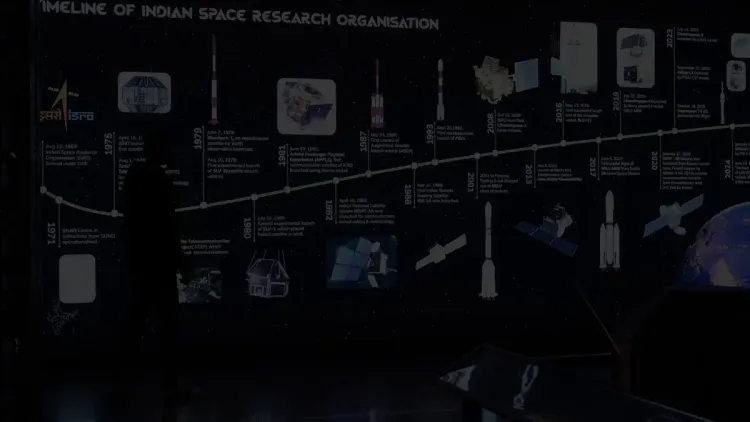
IN-SPACe , established in 2020 , opened space-sector participation to non-government and private entities, directly enabling startups like those Hitendra Singh is associated with.
The Indian Space Policy 2023 further codified private-sector roles across end-to-end space activities, reducing regulatory barriers for new entrants.
The Startup India initiative, launched in January 2016 , provides the horizontal entrepreneurship support framework — including tax incentives and compliance relief — that space-tech founders can access.
The minister's post frames rural youth entrepreneurship in space as both a personal achievement and a national strategic goal under the Atmanirbhar Bharat and demographic-dividend narrative.
A dedicated Space Activities Bill and a potential Budget funding window for space-tech startups remain key policy milestones to watch.
Union Labour and Sports Minister Mansukh Mandaviya on Saturday, 13 June 2026, spotlighted Hitendra Singh, a young entrepreneur from a rural background who has carved a place in India's space startup ecosystem, citing the achievement as proof that Prime Minister Narendra Modi's vision is enabling every young Indian to realise outsized ambitions without barriers.
Context
Mandaviya's post, shared under the hashtag #12YearsOfYuvaShakti, declared in Hindi: 'Gaon se seedha antariksh!' ('Straight from the village to space!'). The minister highlighted that Hitendra Singh, emerging from a rural milieu, has established himself in India's cutting-edge space startup sector — presenting the story as emblematic of a wider generational shift in who gets to participate in high-technology enterprise.
The post credits Prime Minister Modi's consistent encouragement as the enabling force, framing individual achievement within a state-backed ecosystem rather than as an isolated success story.
Policy Backdrop
India's space sector has undergone significant structural liberalisation over the past decade. The establishment of IN-SPACe (Indian National Space Promotion and Authorisation Centre) in 2020 opened the door for non-government entities to participate in satellite manufacturing, launch services, and downstream applications. The Indian Space Policy of 2023 further codified private-sector roles across end-to-end space activities, creating a regulatory architecture that startups can navigate.
These reforms dovetail with the Startup India initiative launched in January 2016, which built a broader entrepreneurship support framework — including tax incentives, easier compliance, and dedicated funding windows — that space-tech ventures can access alongside peers in other sectors.
Together, the two pillars — sector-specific liberalisation and horizontal startup support — have lowered entry barriers for founders from any geography, a point the minister's post implicitly underlines by foregrounding Hitendra Singh's rural origins.
Stakeholders and Impact
The immediate beneficiaries of this policy architecture are rural and semi-urban youth who historically lacked the metropolitan networks and institutional affiliations that dominated access to high-technology careers. By amplifying individual stories, the government signals to this demographic that the space sector is not the exclusive preserve of urban engineering colleges or legacy public-sector institutions.
For the space startup ecosystem itself, consistent ministerial attention translates into reputational capital and can influence investor sentiment, talent pipelines, and the pace of IN-SPACe authorisations. Mandaviya's portfolio spanning Youth Affairs and Sports as well as Labour and Employment positions him as a natural amplifier of youth-entrepreneurship narratives that cut across sectoral lines.
What's Next
Parliamentary progress on a dedicated Space Activities Bill remains a key legislative marker for the sector, as it would provide statutory certainty beyond the current policy framework. Analysts will also watch the next Union Budget for a dedicated funding window targeting space-tech startups, particularly those founded by entrepreneurs from non-metropolitan backgrounds.
As the #12YearsOfYuvaShakti campaign builds momentum, the government's ability to convert individual success stories into systemic, measurable outcomes — job creation, startup valuations, launch milestones — will determine whether the narrative translates into durable policy dividends for India's rural youth.
Point of View
The minister reinforces the 'Yuva Shakti' brand while simultaneously crediting PM Modi's policy architecture rather than any single ministry or scheme. The timing under #12YearsOfYuvaShakti suggests a coordinated campaign to document and publicise a decade of youth-focused governance ahead of potential electoral or budgetary cycles. The broader pattern is clear: the government is investing heavily in the idea that geography and social origin are no longer destiny in high-technology India, and space is its most aspirational proof point.
NationPress
19 Sept 2026
Frequently Asked Questions
Who is Hitendra Singh mentioned by Mansukh Mandaviya?
Hitendra Singh is a young entrepreneur from a rural background whom Minister Mandaviya cited on 13 June 2026 as having made his mark in India's space startup ecosystem. Specific verified biographical details are not yet widely available in public records.
What is IN-SPACe and how does it help space startups in India?
IN-SPACe, or the Indian National Space Promotion and Authorisation Centre, was established in 2020 to authorise and promote non-government entities — including private startups — in satellite manufacturing, launch services, and related space activities, effectively opening a sector previously dominated by ISRO.
What is the #12YearsOfYuvaShakti campaign?
#12YearsOfYuvaShakti is a hashtag campaign used by BJP leaders and government ministers to mark and celebrate twelve years of the Modi government's youth-focused policies, highlighting individual success stories across sectors including technology, sports, and entrepreneurship.
How has India's space policy changed to support private startups?
India liberalised its space sector through the creation of IN-SPACe in 2020 and the release of the Indian Space Policy in 2023, which together gave private companies and startups the regulatory framework to participate in end-to-end space activities alongside ISRO.
What role does Startup India play in the space sector?
Startup India, launched in January 2016, provides horizontal support to entrepreneurs across all sectors — including space-tech — through tax incentives, simplified compliance, and funding access, complementing the space-specific framework provided by IN-SPACe and the 2023 Space Policy.