Mandaviya: India to Host 2030 Commonwealth, Eyes 2036 Olympics
Synopsis
Union Sports Minister Mansukh Mandaviya confirmed on 9 July 2026 that India will host the 2030 Commonwealth Games and is contending for the 2036 Olympics, quoting PM Modi. The announcements mark a major step in India's decade-long push to become a global sports-hosting powerhouse.
Key Takeaways
India is set to host the 2030 Commonwealth Games , as announced by Union Sports Minister Mansukh Mandaviya on 9 July 2026 .
India is also a formal contender to host the 2036 Olympic Games , according to the minister's post quoting PM Narendra Modi .
India previously hosted the 2010 Commonwealth Games in Delhi — its last major international multi-sport event.
The Khelo India scheme (2017) and Target Olympic Podium Scheme (2014) form the policy backbone supporting India's sports hosting ambitions.
Formal hosting rights are subject to processes governed by the Commonwealth Games Federation and the International Olympic Committee respectively.
A successful double-hosting outcome would mark an unprecedented decade of global sporting events on Indian soil .
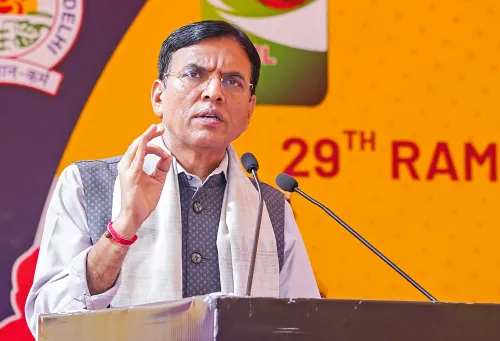
Union Labour and Sports Minister Mansukh Mandaviya announced on Thursday, 9 July 2026 that India is set to host the 2030 Commonwealth Games and is also a contender to host the 2036 Olympic Games, attributing the landmark sporting ambition to Prime Minister Narendra Modi.
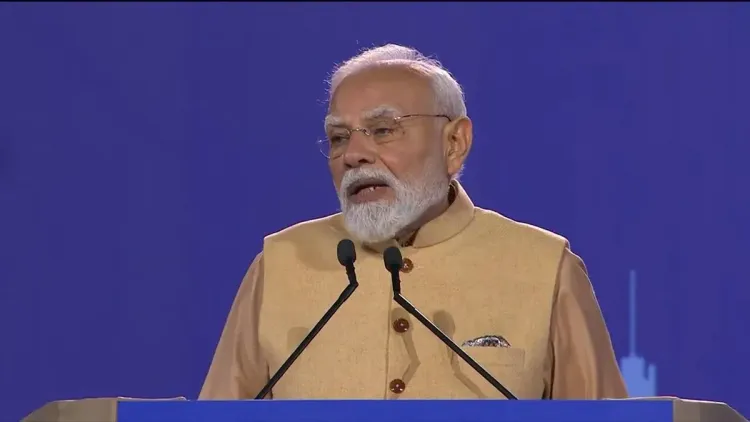
Quoting PM Modi directly, Mandaviya wrote: '2030 कॉमनवेल्थ गेम्स भारत होस्ट कर रहा है। भारत 2036 ओलंपिक को भी होस्ट करने का दावेदार है।' ('India is hosting the 2030 Commonwealth Games. India is also a contender to host the 2036 Olympics.') The post, shared on the minister's official X account, signals the government's intent to position India as a premier destination for global multi-sport events.
Context
India last hosted a major multi-sport international event at the 2010 Commonwealth Games in Delhi, which marked a turning point in the country's ambition to build world-class sports infrastructure. In the years since, successive governments have expanded that vision, investing in facilities, talent pipelines, and international sports diplomacy. The announcement of 2030 Commonwealth Games hosting rights — if formalised — would mark India's return to the global sporting stage at the highest level after a gap of two decades.
The Commonwealth Games Federation governs the award of hosting rights, and any confirmed bid would require a formal host-city contract. The International Olympic Committee (IOC) similarly runs a structured evaluation and selection process for Olympic hosts, with the 2036 edition among the most actively contested future Games.
Policy Backdrop
India's sports hosting ambitions are underpinned by a broader policy architecture built over the past decade. The Khelo India scheme, launched in 2017, targets grassroots infrastructure development and early talent identification across the country. Complementing it, the Target Olympic Podium Scheme (TOPS), introduced in 2014, channels direct support to elite athletes with realistic medal prospects at the Olympics.
Together, these schemes reflect a dual-track strategy: building a domestic base of sporting talent while simultaneously pursuing the infrastructure and international credibility required to host mega-events. Hosting bids have consistently been positioned as catalysts for accelerated investment in stadiums, training academies, and anti-doping frameworks across Indian states.
Stakeholders and Impact
A confirmed hosting role for the 2030 Commonwealth Games would directly benefit elite athletes, national sports federations, and state governments that stand to receive infrastructure investment tied to event preparation. Home-soil competition typically boosts athlete participation, public engagement with sport, and long-term grassroots interest — outcomes the government has explicitly targeted through the Khelo India framework.
For the 2036 Olympic bid, the stakes are considerably higher. An Olympic host city must demonstrate not only infrastructure capacity but also organisational credibility, environmental sustainability plans, and broad public support. India's rising economic profile and youthful demographic dividend have been cited as structural advantages in international sporting forums.
What's Next
Attention will now turn to formal processes: the Commonwealth Games Federation's host-city contract proceedings and the IOC evaluation commission's scheduled visits and shortlisting decisions for the 2036 Games. Minister Mandaviya and the Ministry of Youth Affairs and Sports are expected to coordinate with state governments and the Indian Olympic Association to advance both bids through their respective international governance channels.
If India secures both events, it would represent an unprecedented concentration of global sporting prestige on Indian soil within a single decade — cementing the country's emergence as a major force in international sports governance and soft-power projection.
Point of View
Framed explicitly as a quote from PM Modi, is a deliberate act of political signalling — placing the Prime Minister at the centre of India's most ambitious sports-hosting narrative to date. The dual announcement of the 2030 Commonwealth Games and a 2036 Olympic bid in a single breath suggests the government is building a coherent decade-long sports diplomacy arc, not merely reacting to individual opportunities. This fits a broader pattern in which mega-events are instrumentalised as infrastructure triggers and soft-power assets, consistent with India's rising global positioning. The critical variable remains the formal status of both bids, and any gap between political declaration and institutional confirmation will be closely watched by international sports bodies.
NationPress
9 Jul 2026
Frequently Asked Questions
Is India confirmed to host the 2030 Commonwealth Games?
Union Sports Minister Mansukh Mandaviya stated on 9 July 2026 that India is hosting the 2030 Commonwealth Games, quoting PM Modi; however, formal confirmation through a Commonwealth Games Federation host-city contract is the authoritative step to watch.
Is India bidding for the 2036 Olympics?
Yes, India has been identified as a contender for the 2036 Olympic Games. The International Olympic Committee runs a structured evaluation and selection process, and India's bid is subject to that formal procedure.
Where did India host the Commonwealth Games before?
India hosted the Commonwealth Games in Delhi in 2010, which was the country's first major international multi-sport event and a landmark in its sports infrastructure development.
What is the Khelo India scheme?
Khelo India is a government scheme launched in 2017 to develop grassroots sports infrastructure and identify talent across India. It forms a key part of the policy framework supporting India's ambitions to host and compete at global sporting events.
What role does Mansukh Mandaviya play in Indian sports?
Mansukh Mandaviya is the Union Minister of Youth Affairs and Sports, responsible for national sports policy, infrastructure investment, and overseeing schemes like Khelo India and the Target Olympic Podium Scheme.