Mandaviya Thanks Amit Shah for 'Inspiring Words'
Synopsis
Union Labour and Sports Minister Mansukh Mandaviya on June 1, 2026, expressed public gratitude to Home and Cooperation Minister Amit Shah, calling his words 'emotionally resonant and inspiring' in a post on X. The gesture underscores the collegial dynamic between two senior BJP cabinet figures.
Key Takeaways
Mansukh Mandaviya publicly thanked Amit Shah on June 1, 2026 , via X for his 'emotionally resonant and inspiring words.' The message was written in Hindi with the honorific Maanniya [Honourable], reflecting formal respect within the cabinet.
The exact event or speech that prompted the gratitude has not been confirmed publicly.
Amit Shah holds the dual portfolio of Home Affairs and Cooperation , the latter added in July 2021 .
The two ministries share overlapping policy interests in migrant worker welfare and cooperative labour reforms .
Such public exchanges are a common feature of BJP cabinet communication, signalling intra-party cohesion.
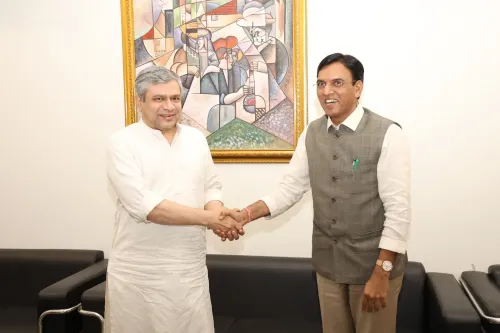
Union Labour and Sports Minister Mansukh Mandaviya on Monday, June 1, 2026, publicly thanked Union Home and Cooperation Minister Amit Shah, expressing heartfelt gratitude for what he described as 'emotionally resonant and inspiring words.' The message, posted on X, reflects the collegial exchanges that regularly mark public communication between senior BJP cabinet colleagues.
Context
In his post, Mandaviya wrote in Hindi: 'Aapke bhaavpurn aur preranadayi shabdon ke liye hriday se aabhar' [Heartfelt gratitude for your emotionally resonant and inspiring words], addressing Amit Shah with the honorific Maanniya [Honourable]. The brief but warm message was addressed directly to the Home and Cooperation Minister, signalling a gesture of appreciation within the cabinet.
The exact occasion or speech that prompted the thank-you has not been independently confirmed. However, such exchanges between senior ministers are a recurring feature of BJP's public communication culture, often following internal party events, policy addresses, or governance milestones.
Policy Backdrop
Amit Shah holds the dual portfolio of Home Affairs and Cooperation — the latter added in July 2021 — making him a key figure in cooperative sector reforms alongside internal security. Mandaviya's Labour and Employment Ministry has overlapping interests with Shah's Cooperation Ministry, particularly on issues affecting migrant workers and cooperative labour structures across states.
Both ministers are senior figures within the BJP and have been central to the party's governance agenda under Prime Minister Narendra Modi. Coordination between their respective ministries has been notable on policy areas spanning worker welfare and rural cooperative economies.
Stakeholders and Impact
Public affirmations between cabinet ministers serve multiple purposes: they reinforce intra-party cohesion, signal alignment on policy direction, and communicate to party cadres and the broader public that the government's senior leadership is operating in concert. For stakeholders in the labour and cooperative sectors, such visible solidarity between the two ministers can indicate continued policy coordination on shared priorities.
Workers in cooperative enterprises, trade unions, and state-level cooperative bodies are among those who closely monitor the working relationship between the Labour Ministry and the Cooperation Ministry, given the direct bearing it has on wage standards and employment conditions in the cooperative ecosystem.
What's Next
Observers will watch for any forthcoming joint initiatives or policy announcements emerging from the Labour Ministry and the Home and Cooperation Ministry, particularly on migrant worker protections and cooperative labour reforms. The public exchange may presage closer coordination on pending legislative or administrative actions in these domains.
Point of View
The tribute to the Home and Cooperation Minister also hints at the continued policy proximity between two ministries with shared stakes in cooperative labour and migrant worker governance. While the post is ceremonial in tone, the relationship it reflects has substantive policy implications. Analysts will note that such gestures, however routine, often precede or follow moments of coordinated governance action between the concerned portfolios.
NationPress
18 Oct 2026
Frequently Asked Questions
Why did Mansukh Mandaviya thank Amit Shah on June 1 2026?
Mandaviya posted on X to express heartfelt gratitude for what he called Amit Shah's 'emotionally resonant and inspiring words,' though the specific event prompting the message has not been publicly confirmed.
What portfolio does Mansukh Mandaviya hold?
Mansukh Mandaviya is the Union Minister of Labour and Employment and Youth Affairs and Sports, and is a senior BJP leader from Gujarat.
What are Amit Shah's current ministerial responsibilities?
Amit Shah serves as Union Minister of Home Affairs and Cooperation, with the Cooperation portfolio added to his charge in July 2021.
Do the Labour Ministry and Cooperation Ministry work together on any issues?
Yes, the two ministries share overlapping interests on issues such as migrant worker welfare and cooperative labour reforms, making coordination between them significant for workers in cooperative enterprises.
Is it common for BJP ministers to publicly thank each other on social media?
Yes, public expressions of gratitude and appreciation between senior BJP cabinet colleagues are a regular feature of the party's communication culture, often following internal events, policy speeches, or governance milestones.