Manipur CM reopens NH-2, NH-37 after 2 years of ethnic violence blockade
Synopsis
For the first time since ethnic violence paralysed Manipur in May 2023, the state's two critical national highways are set to reopen — a move announced jointly by Chief Minister Yumnam Khemchand Singh and tribal leaders at Kangpokpi. Whether the ground holds is the real question.
Key Takeaways
Manipur CM Yumnam Khemchand Singh announced the reopening of NH-2 and NH-37 on 8 August , more than two years after ethnic violence disrupted movement.
The announcement was made jointly with tribal leaders at Kangpokpi District Headquarters — the first such high-level visit to Kuki-Zo areas since the May 2023 crisis.
Kangpokpi District Hospital is to be upgraded to a 100-bed facility with a CT Scan unit; new health centres announced at Motbung , T.
Waichong , and Saikul .
Benefits under PM-JAY , PM-Kisan , PM Surya Ghar , and other central schemes were distributed to residents, including internally displaced persons.
Deputy CM Nemcha Kipgen called the day historic; Independent MLA Haokholet Kipgen noted NH-2 has been a shared lifeline since World War II .
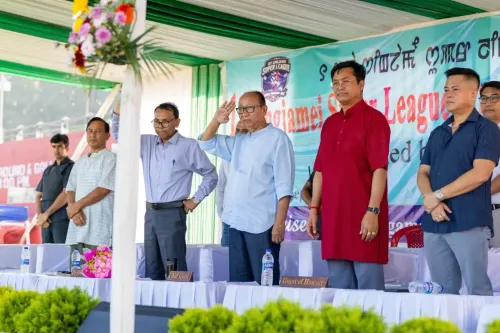
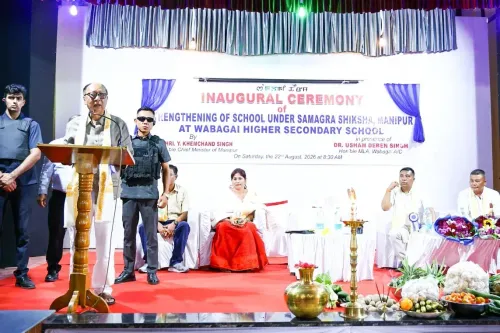
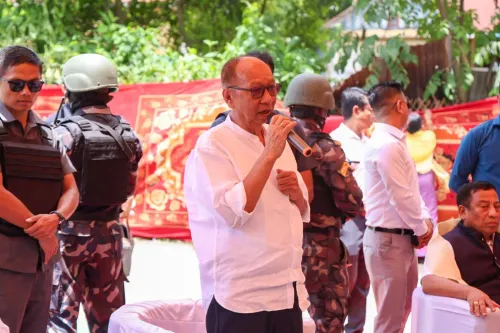
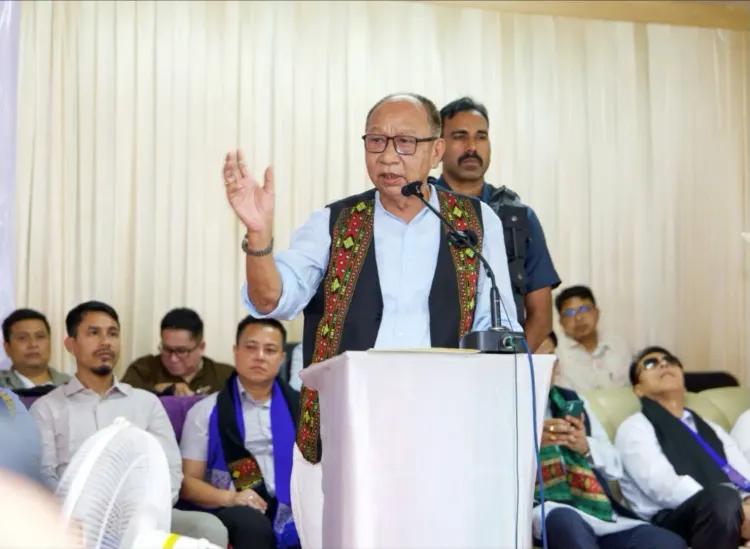
Manipur Chief Minister Yumnam Khemchand Singh, flanked by Deputy Chief Minister Nemcha Kipgen and tribal leaders, on Saturday, 8 August jointly announced the immediate reopening of the state's two critical National Highways — NH-2 (Imphal–Dimapur) and NH-37 (Imphal–Jiribam) — to enable free movement of all communities and essential goods. The declaration came during a landmark visit to Kangpokpi District Headquarters, the first such high-level engagement with Kuki-Zo tribal areas since ethnic violence erupted on 3 May 2023.
Background: Two Years of Disrupted Lifelines
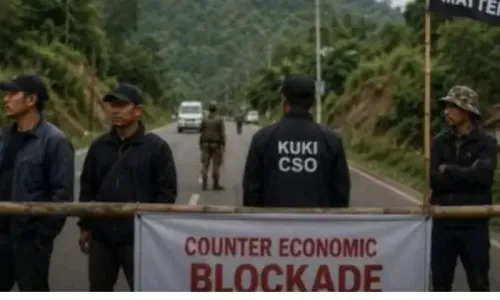
NH-2 and NH-37 are widely regarded as Manipur's economic and logistical lifelines. Since the outbreak of ethnic conflict in May 2023, movement along NH-2 in particular has been severely disrupted by law-and-order breakdowns and repeated blockades. The prolonged closure has choked the supply of essential commodities to hill districts and deepened the humanitarian strain on communities already displaced by violence. This reopening, if sustained, would mark the most significant restoration of connectivity since the crisis began.
What the Chief Minister Said
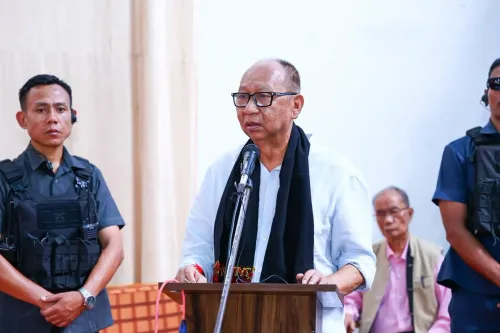
Addressing community leaders and residents at Kangpokpi, Khemchand Singh drew on Manipur's 3,000-year history, invoking the 19th-century 'Seven Years' Devastation' as a reminder of collective suffering and shared resilience. He stressed that the state's boundaries had been formed and protected by all communities together, and urged people to identify as Indians first and Manipuris second. 'India's development will be incomplete without the Northeast, and Manipur's development will be incomplete without Kangpokpi,' he said. At the inauguration of a dialysis unit, the Chief Minister quoted a verse from the Bible, framing reconciliation as both a civic and moral imperative.
Development Projects Unveiled
The visit was accompanied by a slate of infrastructure and welfare announcements. Kangpokpi District Hospital is to be upgraded to a 100-bed facility equipped with a CT Scan unit. New Primary Health Centres were announced at Motbung and T. Waichong, and the Community Health Centre at Saikul is to be upgraded. The Chief Minister also inaugurated a Dialysis Unit and a District Blood Storage facility at Kangpokpi District Hospital, and handed over ambulances to the Chief Medical Officer, Kangpokpi. Additional announcements covered flood-control measures, new sports facilities, a City Convention Hall cum Guest House, and a dedicated computerised examination centre.
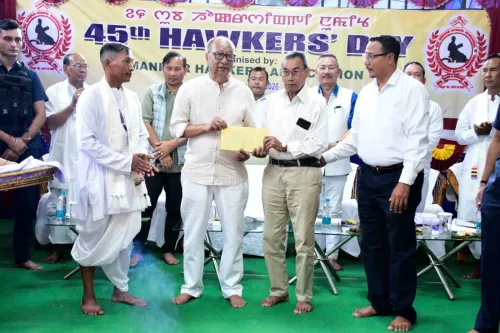
Benefits under central schemes — including PM-JAY, TB Mukt Bharat, Mission Vatsalya, PM-Kisan, PM Surya Ghar, and PM-KUSUM — were distributed to beneficiaries. Sprayers, cheques to internally displaced persons and dialysis patients, and solar pumps were also handed out. Two young athletes were felicitated for international-level achievements.
Voices from the Visit
Deputy Chief Minister Nemcha Kipgen, elected from Kangpokpi constituency on a Bharatiya Janata Party (BJP) ticket, called the occasion historic and emphasised that equal progress in both valley and hill areas was essential for Manipur's complete development. She appealed to civil society and community leaders to actively support peace efforts.
Independent MLA Haokholet Kipgen said he was moved to reunite with colleagues after four years, and appealed to all communities to let go of the past and return to normalcy. He noted that NH-2 had served as a shared lifeline for all communities since World War II.
What Comes Next
The reopening announcement is a diplomatic and political signal, but its durability will depend on ground-level security conditions along both highways. Observers note that previous attempts at normalisation in Manipur have been fragile, and the sustained presence of security forces along these corridors will be critical. The government's stated intent to deepen reconciliation through development spending in hill districts — rather than security measures alone — represents a shift in approach that will be closely watched by displaced communities and civil society groups alike.
Point of View
But symbol and reality diverge sharply in Manipur. NH-2 has been 'reopened' in rhetoric before, only for blockades to resume within days. The government's decision to pair the announcement with visible development spending in Kangpokpi is a smarter tactic — it gives tribal leaders something tangible to show constituents. But the deeper ethnic fault lines that fractured the state in May 2023 remain unresolved, and no political visit, however goodwill-laden, substitutes for a negotiated settlement between Meitei and Kuki-Zo communities. The durability of this opening will be tested not at the podium but on the highway itself.
NationPress
22 Sept 2026
Frequently Asked Questions
Which highways have been reopened in Manipur?
The Manipur government announced the reopening of NH-2 (Imphal–Dimapur) and NH-37 (Imphal–Jiribam), the state's two primary national highways. Both had been severely disrupted since ethnic violence broke out on 3 May 2023.
Why were Manipur's national highways blocked for so long?
Movement along the highways, particularly NH-2, was disrupted by law-and-order breakdowns and repeated blockades stemming from ethnic conflict between communities that began in May 2023. The closures choked the supply of essential goods to hill districts and displaced thousands of residents.
What development projects were announced at Kangpokpi?
Chief Minister Yumnam Khemchand Singh announced an upgrade of Kangpokpi District Hospital to a 100-bed facility with a CT Scan unit, new Primary Health Centres at Motbung and T. Waichong, an upgraded Community Health Centre at Saikul, flood-control measures, sports facilities, a City Convention Hall cum Guest House, and a computerised examination centre.
Who attended the Kangpokpi visit?
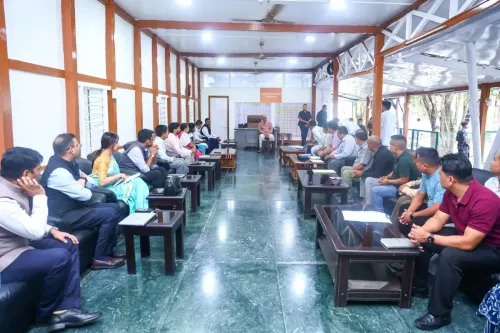
The visit was attended by Chief Minister Yumnam Khemchand Singh, Deputy Chief Minister Nemcha Kipgen, Independent MLA Haokholet Kipgen, several other MLAs, and senior officials including the Commissioner (Home), Commissioner (Health), and Heads of Departments.
What is the significance of the Kangpokpi visit for Manipur's peace process?
Kangpokpi is the headquarters of a Kuki-Zo tribal-dominated district, and a senior government delegation visiting the area is seen as a step toward reconciliation after more than two years of ethnic conflict. The joint announcement by the Chief Minister and tribal leaders signals an attempt to rebuild trust, though the sustainability of the peace effort depends on conditions on the ground.