Manjhi urges Bihar to convert seized liquor into sanitisers
Synopsis
Rather than destroying tonnes of liquor seized under Bihar's strict 2016 prohibition law, Union Minister Jitan Ram Manjhi wants the state to turn it into sanitiser. The idea has economic logic and pandemic-era precedent — but the Bihar government has twice refused to revisit the prohibition regime, making a policy shift a long shot.
Key Takeaways
Jitan Ram Manjhi , Union MSME Minister, proposed on 3 October that Bihar convert seized prohibition liquor into sanitisers rather than destroying it.
He argued the move could reduce wastage and generate revenue for the state, subject to legal and safety compliance.
The Bihar Prohibition and Excise Act has been in force since April 2016 , banning manufacture, sale, and consumption of liquor statewide.
In April 2026 , Manjhi had already called for a review of the law's implementation, citing impact on economically weaker sections and spurious liquor circulation.
In February 2026 , Parliamentary Affairs Minister Vijay Kumar Chaudhary ruled out any reconsideration of the prohibition policy.
The Bihar government has not yet responded to Manjhi's latest sanitiser proposal.
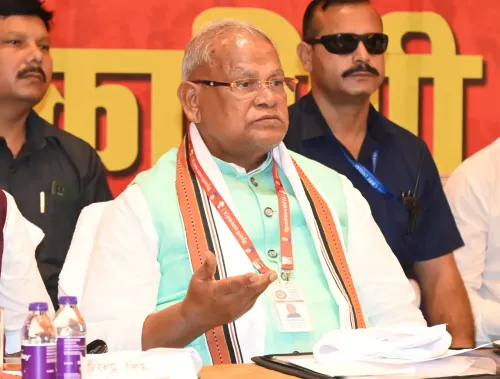
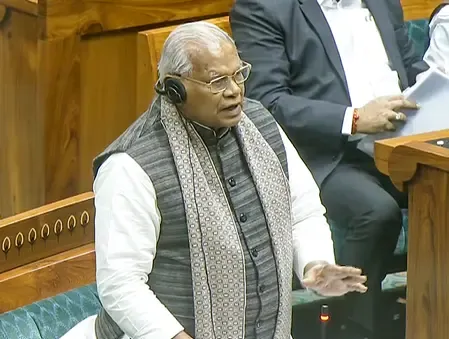
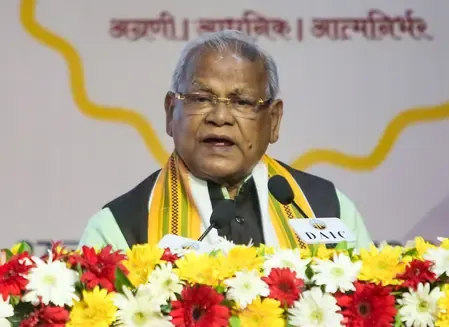
Union MSME Minister and Hindustani Awam Morcha (Secular) patron Jitan Ram Manjhi has proposed that the Bihar government explore productive uses for liquor confiscated under the state's prohibition regime, rather than simply destroying the seized stock. Speaking to reporters in Gaya on Saturday, 3 October, Manjhi suggested the confiscated alcohol could be processed into sanitisers and allied products, contingent on legal compliance, safety standards, and technical feasibility.
What Manjhi Proposed
Manjhi argued that the government could systematically collect seized liquor and channel it toward industrial applications instead of letting it go to waste. According to him, such an approach could simultaneously reduce wastage and generate a revenue stream for the state. He stopped short of prescribing a specific mechanism, acknowledging that any such move would need regulatory clearance and rigorous quality checks.
Bihar's Prohibition Backdrop
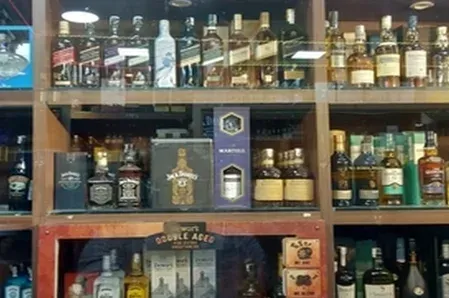
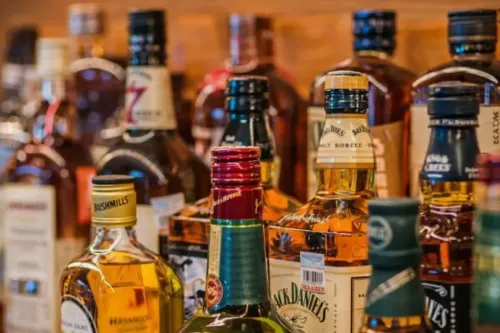
The Bihar Prohibition and Excise Act, which came into force in April 2016, bans the manufacture, sale, and consumption of liquor across the state. Enforcement has led to the continuous seizure of illicit alcohol, raising questions about how the confiscated stock is handled and disposed of. Critics have long pointed to the dual problem of spurious liquor circulation and the economic burden the ban places on lower-income households.
Manjhi's History With the Prohibition Debate
This is not the first time Manjhi has weighed in on Bihar's liquor policy. In April 2026, he publicly called for a review of the prohibition law's implementation, citing its adverse impact on economically weaker sections and the proliferation of spurious alcohol. He was careful, however, to distinguish between the policy's intent — which he did not oppose outright — and the manner in which it has been enforced.
The Bihar government has so far resisted pressure to revisit the law. In February 2026, Parliamentary Affairs Minister Vijay Kumar Chaudhary stated categorically that there was no proposal to reconsider the prohibition policy, effectively closing the door on a formal review at that point.
Regulatory and Technical Hurdles
Experts note that converting seized ethanol-based liquor into industrial sanitiser is technically feasible but requires a clearly defined legal framework governing custody, processing, and quality assurance. Any such initiative would need sign-off from multiple agencies, including state excise authorities and drug regulators, given that sanitiser falls under pharmaceutical-adjacent categories. Notably, India explored similar liquor-to-sanitiser conversions during the COVID-19 pandemic, when several distilleries were temporarily repurposed — lending some precedent to Manjhi's idea.
What Happens Next
The Bihar government has not yet responded to Manjhi's latest suggestion. Given the ruling coalition's earlier reluctance to revisit prohibition, a formal policy shift appears unlikely in the near term — but the proposal keeps the debate alive and adds a pragmatic economic dimension to what has largely been a political and social argument. All eyes are now on whether the state administration will commission a feasibility study or continue with the status quo of destroying seized stock.
Point of View
More than anything, is expose the absence of a coherent post-seizure policy in Bihar: the state bans liquor vigorously but has no clear framework for handling what it catches. The Bihar government's reflexive rejection of any prohibition-adjacent debate risks leaving a genuine administrative gap unaddressed, one that costs money and, in the case of spurious liquor, lives.
NationPress
3 Oct 2026
Frequently Asked Questions
What did Jitan Ram Manjhi suggest about Bihar's seized liquor?
Manjhi proposed on 3 October that the Bihar government process liquor seized under the state's prohibition law into sanitisers and other useful products instead of destroying it. He said this could reduce wastage and potentially generate revenue, provided legal, safety, and technical conditions are met.
What is the Bihar Prohibition and Excise Act?
The Bihar Prohibition and Excise Act came into force in April 2016 and bans the manufacture, sale, and consumption of liquor across Bihar. Enforcement has resulted in continuous seizures of illicit alcohol, raising questions about disposal of confiscated stock.
Has Manjhi raised concerns about Bihar's prohibition policy before?
Yes. In April 2026, Manjhi called for a review of the prohibition law's implementation, citing its impact on economically weaker sections and the spread of spurious liquor. He has consistently distinguished between the policy's intent, which he has not opposed outright, and its execution.
How has the Bihar government responded to calls for a prohibition review?
In February 2026, Parliamentary Affairs Minister Vijay Kumar Chaudhary stated there was no proposal to reconsider the prohibition policy. The government has not yet responded to Manjhi's latest sanitiser suggestion.
Is converting seized liquor into sanitiser technically feasible?
It is broadly feasible — India's distilleries were temporarily repurposed for sanitiser production during the COVID-19 pandemic. However, any such scheme in Bihar would require regulatory clearance from state excise authorities and drug regulators, along with defined custody and quality-assurance protocols.