CM Bhagwant Mann Announces ₹50 Lakh Grant for Mandi Kalan Village
Synopsis
Punjab CM Bhagwant Mann, at a Lok Milni in Bathinda's Mandi Kalan village on 23 June 2026, announced a ₹50 lakh development grant, a new library, renovation of a 55-year-old dharamshala, July 2026 payouts under the Mawan-Dhiyan Satkar Yojana, and life imprisonment under a new sacrilege law.
Key Takeaways
₹50 lakh development grant announced for Mandi Kalan village in Bathinda 's Maur constituency during a Lok Milni on 23 June 2026 .
A new library will be opened and a 55-year-old dharamshala will be renovated in the village.
The Mawan-Dhiyan Satkar Yojana will begin disbursing three months of consolidated financial assistance to women from 1 July 2026 .
A new sacrilege law proposes life imprisonment until death and fines of up to ₹50 lakh for those convicted.
Canal water utilisation for farmers is claimed to have risen from 22 per cent to 80 per cent , with daytime power supply for agriculture ensured.
CM Mann framed the announcements as a contrast to 'traditional leaders', reinforcing AAP 's anti-establishment positioning in rural Punjab.
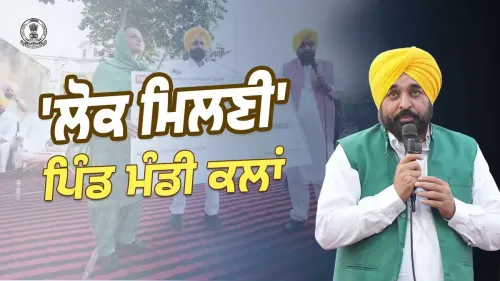
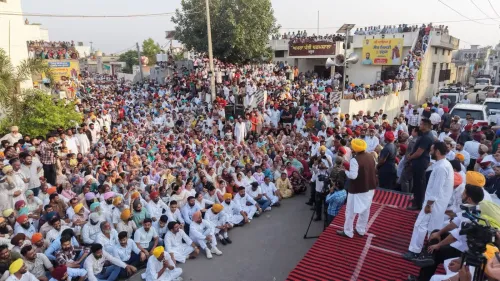
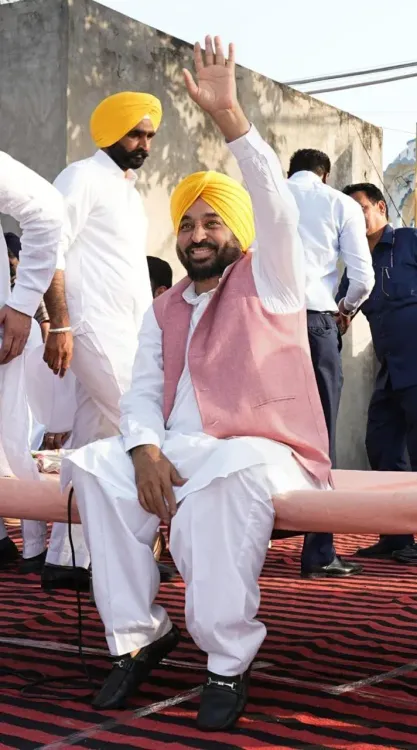
Punjab Chief Minister Bhagwant Mann, during a Lok Milni (public outreach) event at the historic village of Mandi Kalan in the Maur constituency of Bathinda district on 23 June 2026, announced a development grant of ₹50 lakh for the village along with a series of welfare and law-and-order measures.
Context
Posting on X in Punjabi, Mann thanked residents for their 'overwhelming affection' during the Lok Milni programme — a grassroots public-interaction format his administration has used regularly since taking office in 2022. The announcements made at Mandi Kalan span village infrastructure, women's welfare, religious sacrilege law, and agricultural water supply — a combination that reflects the Aam Aadmi Party's standard policy messaging bundle in rural Punjab.
The post states that alongside the ₹50 lakh development grant, the government announced the opening of a new library and the renovation of a 55-year-old dharamshala (community rest-house) in the village.
Policy Backdrop
A central announcement concerns the Mawan-Dhiyan Satkar Yojana ('Mothers and Daughters Respect Scheme'), a state welfare programme providing direct financial assistance to women. Mann stated that from 1 July 2026, beneficiaries will begin receiving three months' worth of accumulated financial support in a single disbursement — signalling the scheme's transition from announcement to active payout.
On law and order, the post references a new, stricter law targeting sacrilege — a politically sensitive issue in Punjab that has recurred across successive governments. Under the proposed provisions, those convicted face life imprisonment until death and a fine of up to ₹50 lakh. The AAP government had indicated intent to strengthen sacrilege-related legislation as early as 2022, and this announcement represents a public restatement of those penal provisions.
On agriculture, Mann claimed that canal water utilisation for farmers has been increased from 22 per cent to 80 per cent, and that daytime electricity supply for agricultural use has been ensured. These figures are drawn directly from the Chief Minister's post; independent verification of the precise statistics was not available at the time of publication.
Stakeholders and Impact
The announcements directly affect three groups: women in the state who are enrolled or eligible under the Mawan-Dhiyan Satkar Yojana; farmers in the Bathinda region and across Punjab who depend on canal irrigation and agricultural power supply; and residents of Mandi Kalan who stand to benefit from the village-level infrastructure spending.
The sacrilege law provisions, if enacted or reinforced through legislative action, would have statewide implications, given the deep religious sensitivities around the issue in Punjab's Sikh-majority population. Mann's framing — contrasting 'your government' with 'traditional leaders' — is a direct political signal aimed at differentiating AAP's tenure from that of the Congress and Shiromani Akali Dal governments that preceded it.
What's Next
The most immediate milestone is 1 July 2026, when the Mawan-Dhiyan Satkar Yojana is scheduled to begin disbursing three months of consolidated payments to enrolled women. Any delay or shortfall in that rollout will be closely watched given the public commitment made at a well-attended village event.
Legislative movement on the stricter sacrilege law — whether through an amendment bill in the Punjab Vidhan Sabha or an ordinance route — will be the other key development to track. The combination of welfare disbursements and high-visibility law-and-order announcements suggests the AAP government is calibrating its rural outreach ahead of future electoral cycles in the state.
Point of View
While any slippage will hand opponents ready ammunition. The sacrilege law announcement, made at a public rally rather than through a legislative statement, keeps a volatile issue alive in the political conversation without committing to a parliamentary timeline. Taken together, these moves suggest the AAP administration in Punjab is actively consolidating its rural base well ahead of the next assembly election cycle.
NationPress
22 Sept 2026
Frequently Asked Questions
What is the Mawan-Dhiyan Satkar Yojana and when will payments start?
The Mawan-Dhiyan Satkar Yojana is a Punjab state welfare scheme providing direct financial assistance to women. CM Bhagwant Mann announced that from 1 July 2026, beneficiaries will receive three months of accumulated payments in a single disbursement.
What did Bhagwant Mann announce for Mandi Kalan village?
CM Bhagwant Mann announced a ₹50 lakh development grant for Mandi Kalan in Bathinda's Maur constituency, along with the opening of a new library and renovation of a 55-year-old dharamshala.
What does Punjab's new sacrilege law propose?
According to CM Mann's announcement, the new sacrilege law proposes life imprisonment until death and fines of up to ₹50 lakh for those convicted of sacrilege offences. The AAP government had signalled intent to strengthen such laws since 2022.
What has the Punjab government done for farmers' irrigation and power supply?
CM Mann stated that canal water utilisation for farmers has been increased from 22 per cent to 80 per cent, and that daytime electricity supply for agricultural use has been ensured across Punjab.
What is a Lok Milni programme?
Lok Milni is a public outreach format used by CM Bhagwant Mann's administration where the Chief Minister or government representatives meet citizens directly at the village or constituency level to hear grievances and make local announcements.