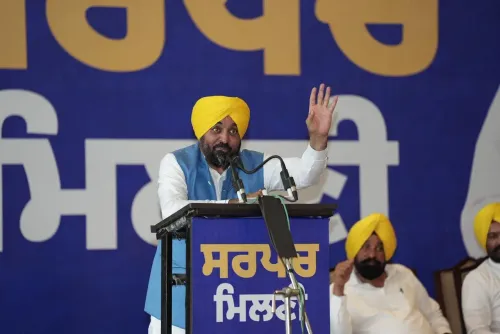
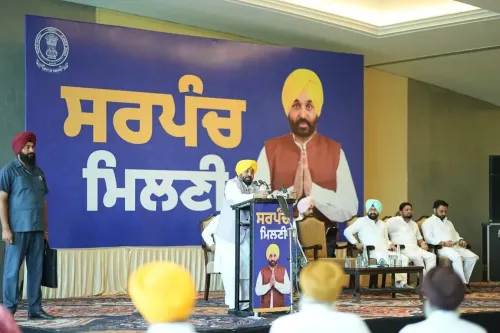
CM Bhagwant Mann announces Rs 10,000 monthly salary for Punjab sarpanches
Synopsis
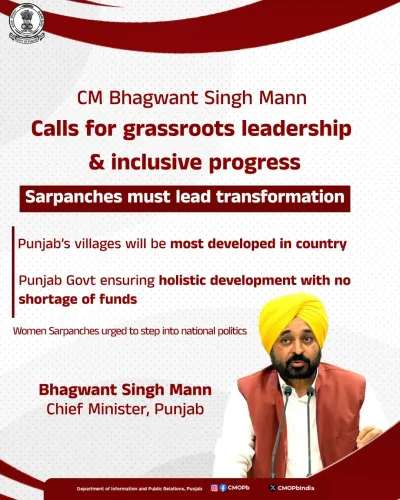
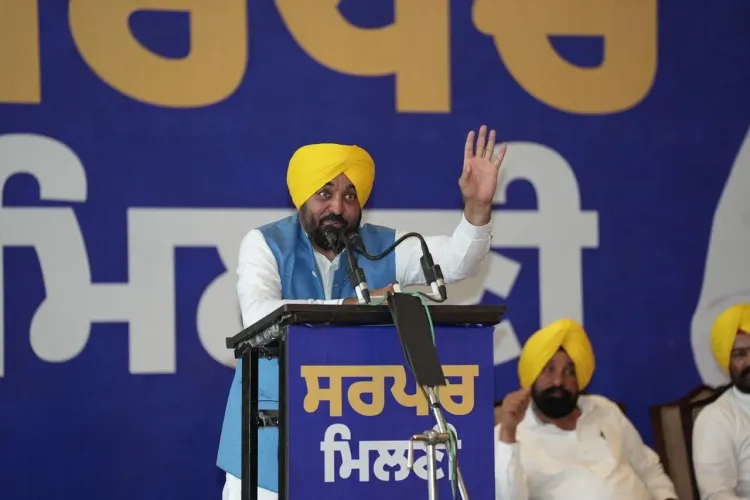
Punjab Chief Minister Bhagwant Mann announced on 24 June 2026 that every sarpanch in the state will receive a monthly salary of Rs 10,000 starting 15 August 2026, calling panchayats the first step of democracy and framing the move as recognition of village-level elected representatives' service.
Key Takeaways
Punjab CM Bhagwant Mann announced a Rs 10,000 per month salary for every sarpanch in the state on 24 June 2026 .
The salary will come into effect from 15 August 2026 (Independence Day).
Punjab has approximately 13,000 gram panchayats, making this a large-scale financial commitment to village-level elected representatives.
Sarpanches have historically served on a voluntary or nominal-honorarium basis despite significant administrative duties.
The move aligns with a pattern seen in states like Rajasthan and Madhya Pradesh , which introduced sarpanch honorariums during the 2010s.
The precise funding source and total annual fiscal burden have not yet been publicly detailed by the state government.
Punjab Chief Minister Bhagwant Mann on Wednesday, 24 June 2026 announced that every sarpanch in the state will receive a monthly salary of Rs 10,000 starting 15 August 2026, marking one of the most significant expansions of financial support for village-level elected representatives in the state's recent history.
Posting in Punjabi on X, Mann wrote: 'Ajj ikk vadda faisla liya hai' ('Today a big decision has been taken') — announcing the salary and framing it as a recognition of the round-the-clock service sarpanches render to their villages. 'The panchayat is the first step of democracy,' he wrote. 'Sarpanches serve the village day and night — they deserve a salary. Now they will be able to live well with their families and accelerate village development. When the village progresses, Punjab will progress. We will keep working for the people — this is our promise.'
Context
Sarpanches are the elected heads of gram panchayats — the foundational tier of India's rural self-government system. Across much of the country, these officials have historically served on a largely voluntary basis or received only nominal honorariums, despite carrying significant administrative responsibilities ranging from overseeing local infrastructure to certifying beneficiary lists for government schemes.
Punjab has approximately 13,000 gram panchayats, meaning the announcement, if implemented as stated, would extend a structured monthly payment to a comparable number of elected sarpanches beginning on Independence Day, 15 August.
Policy Backdrop
The constitutional basis for panchayati raj institutions lies in the 73rd Constitutional Amendment of 1993, which mandated elected panchayats as institutions of self-government across rural India. However, the amendment left questions of remuneration to individual states, resulting in a patchwork of honorariums that varied widely in amount and regularity.
States including Rajasthan and Madhya Pradesh introduced monthly honorariums for sarpanches during the 2010s to provide baseline financial support to village heads. Mann's announcement positions Punjab among states that have moved toward a more formalised salary structure rather than a discretionary honorarium, though the precise funding mechanism and total annual fiscal outlay have not yet been detailed publicly.
The Aam Aadmi Party government in Punjab, in office since March 2022, has pursued a series of rural-focused measures linking local leadership incentives with development outcomes. This announcement fits that broader pattern of using direct remuneration to strengthen the base tier of India's federal democratic structure.
Stakeholders and Impact
The most immediate beneficiaries are the sarpanches themselves, many of whom belong to farming households and have had to balance their elected duties against their primary livelihoods. A guaranteed monthly income of Rs 10,000 is expected to reduce that financial pressure and, the government argues, allow them to devote more consistent attention to village administration.
Rural households across Punjab stand to benefit indirectly if the salary incentive translates into more active and accountable local governance — faster resolution of civic complaints, more diligent implementation of welfare schemes, and better coordination with the state's Department of Rural Development and Panchayats.
What's Next
The 15 August 2026 rollout date gives the state government roughly seven weeks to finalise disbursement mechanisms, budgetary allocations, and any eligibility or compliance conditions attached to the salary. Observers will watch for formal orders from the Punjab Department of Rural Development and Panchayats and any legislative or budgetary proceedings that follow. The announcement is also likely to draw comparisons with honorarium structures in other states, potentially adding pressure on neighbouring governments to revisit their own panchayat remuneration frameworks.
Point of View
Directly addressing a long-standing grievance of village-level functionaries. By timing the rollout to Independence Day, the AAP government frames it as a democratic milestone rather than a routine administrative order — maximising its symbolic resonance. The decision also fits a broader AAP governance playbook of using direct financial transfers to consolidate support among key constituency groups, in this case the sarpanches who serve as critical last-mile intermediaries for state welfare delivery. Whether the measure translates into measurably improved rural governance outcomes will depend heavily on the disbursement architecture and accountability conditions the government attaches to the salary.
NationPress
22 Sept 2026
Frequently Asked Questions
How much salary will Punjab sarpanches get from August 2026?
Punjab sarpanches will receive Rs 10,000 per month starting 15 August 2026 , as announced by Chief Minister Bhagwant Mann on 24 June 2026.
Who announced the sarpanch salary in Punjab?
Punjab Chief Minister Bhagwant Mann of the Aam Aadmi Party made the announcement on his official X account on 24 June 2026 .
When will the Rs 10,000 sarpanch salary start in Punjab?
The salary is set to begin from 15 August 2026 , coinciding with India's Independence Day.
Do sarpanches in other Indian states also get a salary?
Yes, states like Rajasthan and Madhya Pradesh introduced monthly honorariums for sarpanches during the 2010s. Punjab's move formalises a similar structure, though the amount and conditions vary by state.
How many sarpanches will benefit from this Punjab government decision?
Punjab has approximately 13,000 gram panchayats, so a comparable number of elected sarpanches are expected to benefit from the Rs 10,000 monthly salary.