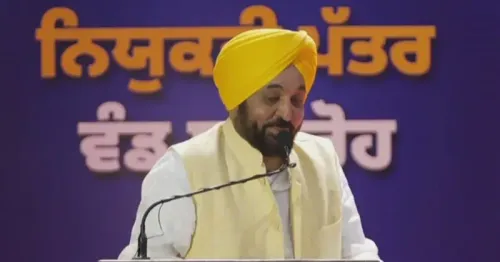
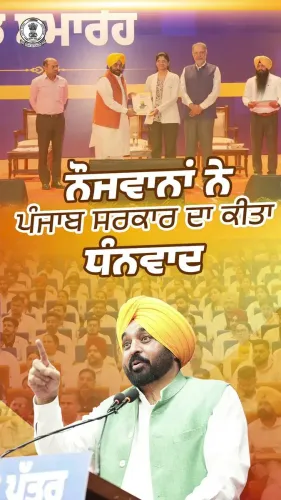
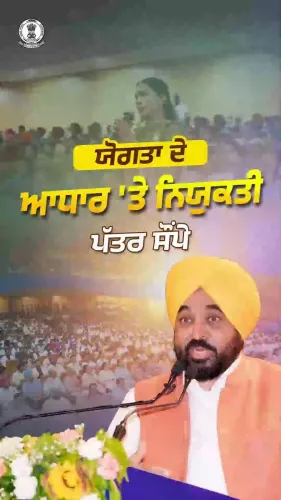
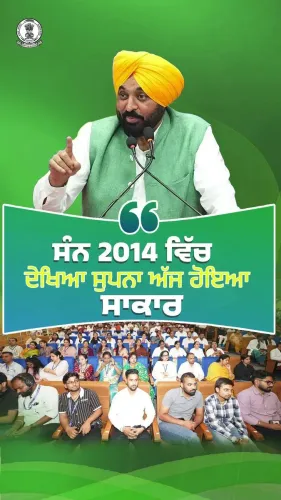
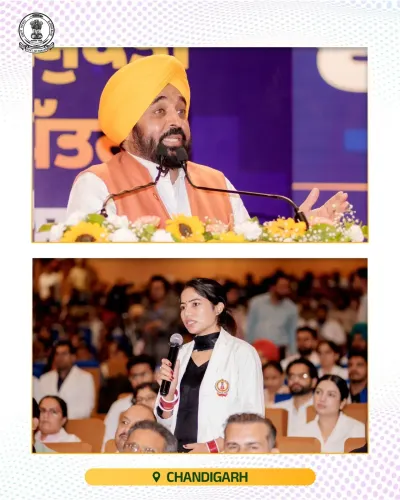
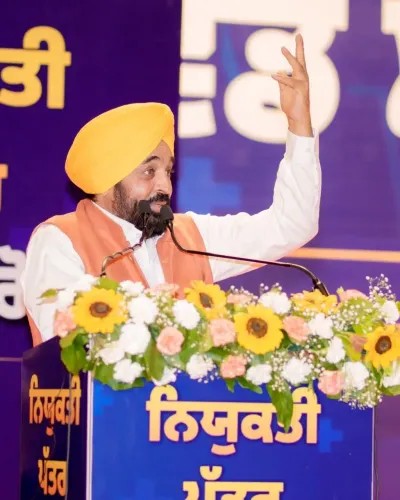
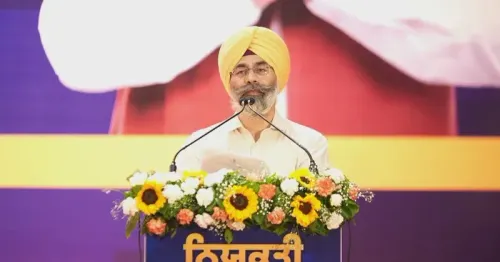
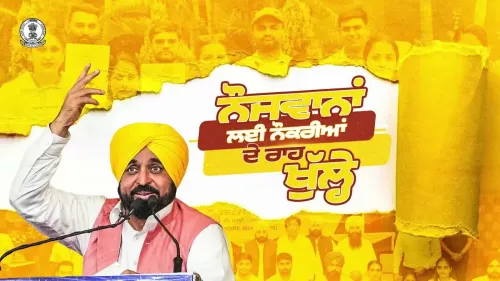
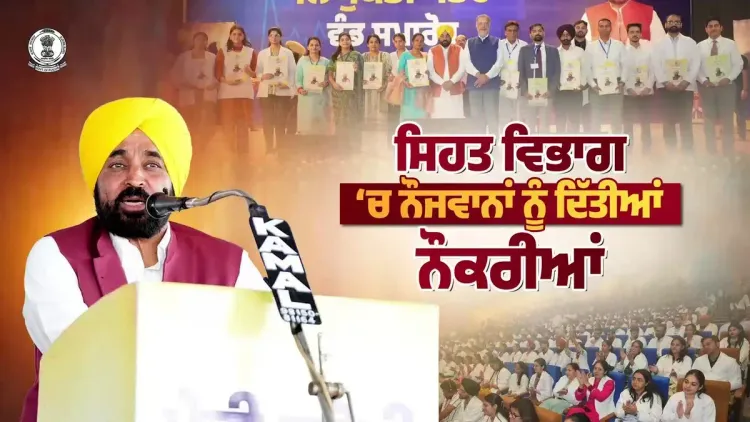
CM Bhagwant Mann hands appointment letters to 523 health staff in Mohali
Synopsis
Chief Minister Bhagwant Mann distributed appointment letters to 523 merit-selected candidates for the Punjab Health Department at a ceremony in Mohali on 19 June 2026, urging new recruits to serve with honesty and diligence as the state presses ahead with its transparent hiring drive.
Key Takeaways
523 youth received government appointment letters for positions in the Punjab Health Department .
The ceremony was held in Mohali on 19 June 2026 , presided over by Chief Minister Bhagwant Mann .
All selections were made strictly on the basis of merit , in line with the AAP government's recruitment policy since 2022 .
CM Mann urged the new employees to discharge their duties with 'complete honesty and diligence.' The appointments address chronic staff shortages in Punjab's public health infrastructure , benefiting patients at government hospitals.
Further recruitment rounds for remaining health-sector vacancies are anticipated as the statewide drive continues.
The Chief Minister's Office of Punjab announced on Friday, 19 June 2026 that Chief Minister Bhagwant Mann distributed government appointment letters to 523 youth selected on merit for positions in the Punjab Health Department at a ceremony held in Mohali.
The post, shared in Punjabi, stated that the Chief Minister handed over appointment letters to young candidates chosen on the basis of merit — 'ਮੈਰਿਟ ਦੇ ਆਧਾਰ 'ਤੇ' ('on the basis of merit') — and urged the newly appointed employees to discharge their responsibilities with 'complete honesty and diligence.'
Context
The event was held in Mohali, the Punjab district adjacent to Chandigarh that houses several state government directorates and has become a regular venue for such recruitment ceremonies. The 523 appointees join the state's public health infrastructure at a time when government facilities across Punjab have faced persistent shortages of doctors, nurses, and paramedical staff.
Chief Minister Bhagwant Mann personally presided over the letter-distribution event, congratulating the recruits and calling on them to serve with integrity. His presence underscored the ruling administration's stated commitment to transparent, merit-based hiring.
Policy Backdrop
Since the Aam Aadmi Party came to power in Punjab in March 2022, the state government has repeatedly pledged to fill long-pending vacancies in government departments through written examinations and published merit lists, departing from earlier processes that drew allegations of irregularities and favouritism. The Punjab Health Department was among the first departments earmarked for a large-scale recruitment drive.
Centralised, examination-based recruitment is also intended to reduce litigation — a recurring problem in earlier hiring cycles where manual selection processes were challenged in courts. By anchoring appointments to verifiable merit lists, the administration aims to insulate placements from legal disputes.
Stakeholders and Impact
The immediate beneficiaries are the 523 newly appointed health workers themselves, predominantly young Punjabis who cleared a competitive selection process. Beyond them, rural and semi-urban patients who rely on government hospitals stand to gain from improved staffing levels at public healthcare facilities.
Healthcare unions and aspirants awaiting results in other ongoing recruitment cycles will also watch this development closely. A successful, litigation-free appointment round strengthens the case for extending the same model to remaining vacancies in the health sector and to other state departments.
What's Next
The government is expected to issue further recruitment advertisements for remaining vacancies in the Punjab Health Department as the statewide drive continues. Observers will track whether the merit-based selection framework is extended to other departments through legislative or administrative measures, consolidating it as the standard hiring model across Punjab's public services.
Point of View
The administration is also building a paper trail that limits future legal challenges, a lesson drawn from the litigation-heavy recruitment cycles of predecessor governments. The health sector focus is strategically sound: staffing gaps in rural hospitals are among the most visible governance failures that ordinary voters experience. If the model proves durable and free of controversy, it creates a template the government will likely extend across other departments ahead of the next electoral cycle.
NationPress
23 Sept 2026
Frequently Asked Questions
How many people got government jobs in Punjab health department in June 2026?
523 candidates selected on merit received appointment letters for positions in the Punjab Health Department at a ceremony in Mohali on 19 June 2026 .
Who distributed the appointment letters in Mohali?
Chief Minister Bhagwant Mann personally handed over the appointment letters to the newly recruited health department employees at the Mohali event.
How does Punjab select candidates for government health jobs?
The Punjab government under Chief Minister Bhagwant Mann uses written examinations and published merit lists to select candidates, a system introduced after the Aam Aadmi Party came to power in March 2022 to ensure transparency and reduce litigation.
Why is Punjab focusing on health department recruitment?
Punjab's public hospitals have faced chronic shortages of doctors, nurses, and paramedical staff for years. The current recruitment drive is aimed at filling long-pending vacancies to improve healthcare delivery, especially in rural areas.
What did CM Bhagwant Mann say to the newly appointed health workers?
CM Mann congratulated the recruits and urged them to discharge their responsibilities with 'complete honesty and diligence,' according to the official statement from the Chief Minister's Office of Punjab.