CM Mann to Frame State Policy on Unauthorised Colonies in Punjab
Synopsis
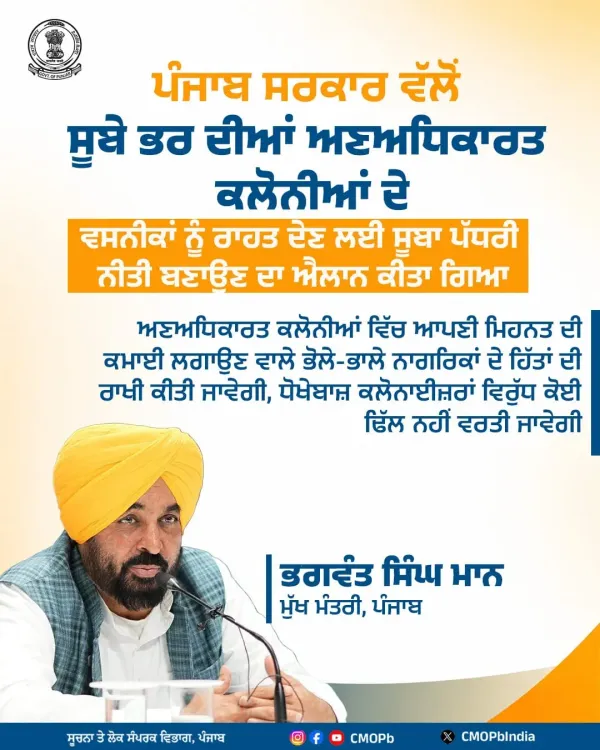
Chief Minister Bhagwant Mann announced on 11 June 2026 that the Punjab Government will formulate a comprehensive state-wide policy to permanently resolve long-pending issues of citizens who have invested in unauthorised property plots across the state.
Key Takeaways
CM Bhagwant Mann announced on 11 June 2026 that Punjab will draft a comprehensive state-wide policy on unauthorised colonies.
The policy aims to permanently resolve long-pending issues faced by citizens who invested savings in unauthorised property plots.
The announcement was made by the Chief Minister's Office of Punjab via the official X account in both Punjabi and English.
Unauthorised colonies in Punjab are largely built on agricultural land without requisite government approvals or layout sanctions.
Similar regularisation frameworks have previously been implemented in Haryana , Delhi , and Rajasthan .
Next steps include formation of a drafting committee, cabinet approval, and possible legislative action before the policy can take effect.
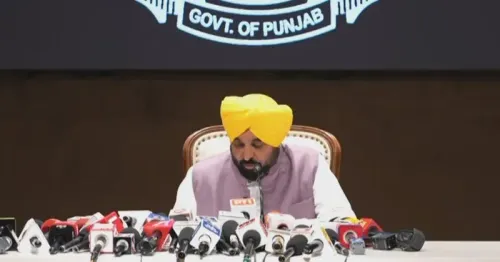
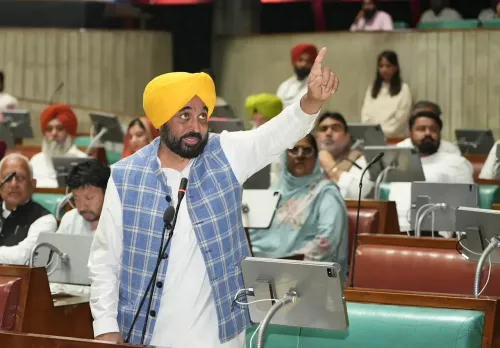
The Chief Minister's Office of Punjab announced on Thursday, 11 June 2026 that Chief Minister Bhagwant Singh Mann will formulate a comprehensive, state-wide policy to permanently resolve the long-pending grievances of citizens who have invested their savings in unauthorised property plots across Punjab.
Addressing the issue in both Punjabi and English, Mann stated that the Punjab Government will draft a policy aimed at providing lasting relief to residents of unauthorised colonies — people who, in his words, have 'invested their hard-earned savings' in plots that currently lack legal standing. The announcement was made through the official Chief Minister's Office of Punjab account on X.
Context
Unauthorised colonies are residential or mixed-use developments built on land — often agricultural — without requisite government approvals, layout sanctions, or completion certificates. Across Punjab, thousands of families have purchased plots and constructed homes in such settlements over decades, leaving them in a legal grey zone: unable to obtain formal title deeds, utility connections, or building permits through standard channels. The problem is not unique to Punjab. States such as Haryana, Delhi, and Rajasthan have at various points introduced regularisation frameworks to grant legal titles, reduce litigation backlogs, and bring informal settlements into mainstream urban planning. Mann's announcement signals that Punjab intends to pursue a similar but state-specific path.Policy Backdrop
When the Aam Aadmi Party swept to power in Punjab in March 2022, regularisation of unauthorised colonies featured in its early governance agenda. However, a comprehensive, legally enforceable state-wide policy had not been finalised in the intervening years, leaving residents in continued uncertainty. The proposed policy, as announced, is intended to be ਸਥਾਈ ਤੌਰ 'ਤੇ ਹੱਲ ('permanently resolved') — language that suggests the government is aiming for a durable legislative or regulatory instrument rather than a one-time administrative order. The drafting process, cabinet clearance, and any required legislative steps will determine the policy's ultimate scope and enforceability.Stakeholders and Impact
The primary beneficiaries of any such policy would be residents of unauthorised colonies spread across urban and peri-urban Punjab — a constituency that cuts across income groups, from lower-middle-class families to small investors who bought plots as long-term assets. Legal title would allow them to access formal housing finance, sell or transfer property without encumbrances, and demand civic infrastructure such as roads, drainage, and electricity connections as a matter of right. Local urban bodies, revenue departments, and town-planning authorities would be key implementing agencies. Developers and plot sellers operating in the informal market could face tighter scrutiny as part of any accompanying regulatory framework designed to prevent fresh unauthorised development.What's Next
The immediate milestones to watch are the constitution of a drafting committee, a defined timeline for policy finalisation, and whether the measure will require an amendment to existing Punjab urban development or land-use legislation. Cabinet approval and, potentially, a legislative session would follow before the policy can be operationalised. If the Punjab Government delivers a workable regularisation framework, it could serve as a model for other states grappling with the same challenge — and would represent a significant governance milestone for the Mann administration ahead of the next electoral cycle.Point of View
Cross-class voter base with emotional and financial stakes in property regularisation. By framing the policy as 'permanent' and 'state-wide', the AAP government is signalling legislative ambition rather than ad hoc relief, a distinction that will matter when the drafting details emerge. The move fits a broader pattern of Indian state governments using colony regularisation as both a governance deliverable and an electoral asset in the run-up to assembly polls. The real test will be whether the policy clears the legal and administrative hurdles that have stalled similar efforts in Punjab since 2022.
NationPress
26 Oct 2026
Frequently Asked Questions
What did CM Bhagwant Mann announce about unauthorised colonies in Punjab?
CM Bhagwant Mann announced on 11 June 2026 that the Punjab Government will formulate a comprehensive state-wide policy to permanently resolve the long-pending issues of citizens who have invested in unauthorised property plots across the state.
What are unauthorised colonies in Punjab?
Unauthorised colonies in Punjab are residential or mixed-use developments built on land — often agricultural — without government layout approvals or completion certificates, leaving residents without formal title deeds or access to civic services.
How will the Punjab unauthorised colony policy help residents?
A formal regularisation policy would grant legal titles to plot holders, enabling them to access housing loans, transfer property, and demand civic infrastructure such as roads, drainage, and electricity connections as a right.
Has Punjab tried to regularise unauthorised colonies before?
Regularisation of unauthorised colonies was part of the AAP government's agenda when it came to power in March 2022, but a comprehensive state-wide policy had not been finalised before this June 2026 announcement.
Which other Indian states have regularised unauthorised colonies?
States including Haryana, Delhi, and Rajasthan have previously introduced regularisation frameworks to grant legal titles and integrate informal settlements into urban planning, a pattern Punjab now appears set to follow.