CM Bhagwant Mann Announces Sanman Rashi Instalment from Nov 1
Synopsis
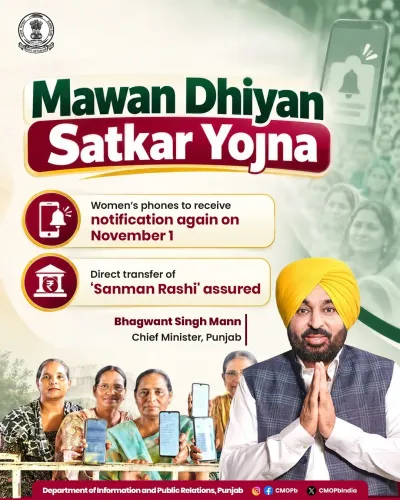
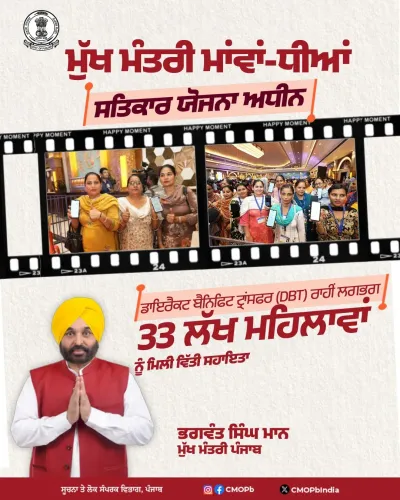
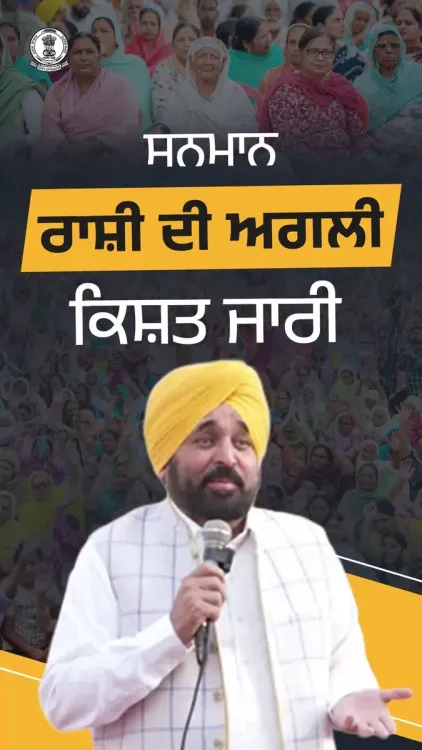
Chief Minister Bhagwant Mann announced at a Lok Milni gathering in Kamalplura village, Jagraon, Ludhiana, that the next instalment of Punjab's Sanman Rashi women's cash-assistance scheme will be disbursed from November 1, 2026.
Key Takeaways
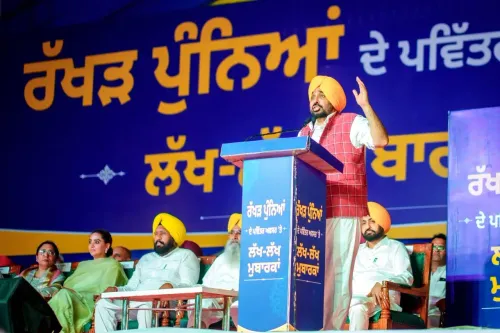
CM Bhagwant Mann attended a Lok Milni programme at village Kamalplura under the Jagraon constituency in Ludhiana district on October 30, 2026 .
He announced that the next instalment of the Sanman Rashi scheme will be released from November 1, 2026 .
The scheme provides periodic cash assistance to women beneficiaries to help cover household expenses.
The announcement was made during a public outreach session — a format the AAP government regularly uses to deliver welfare news directly to rural communities.
The disbursement is part of a broader AAP Punjab push on direct cash transfers targeting women and low-income groups since March 2022.
A rural gathering in village Kamalplura, Jagraon constituency, Ludhiana district turned into a policy moment on Friday, October 30, 2026, when Chief Minister Bhagwant Mann announced that the next instalment of the Sanman Rashi — Punjab's cash-assistance scheme for women — would be released starting November 1.
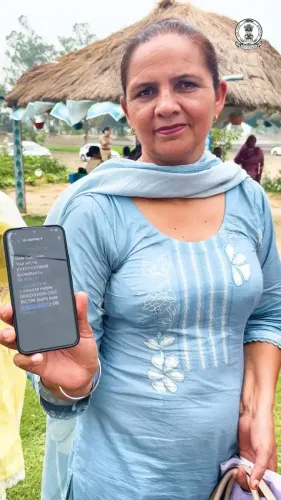
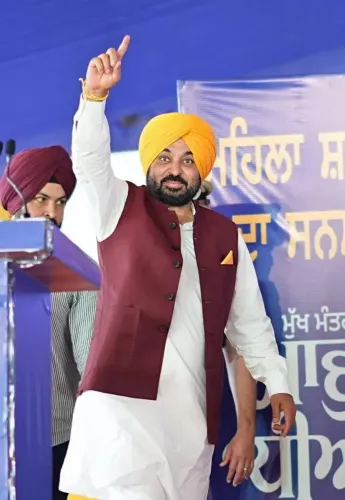
Speaking at a Lok Milni (public outreach) programme, Mann said the upcoming disbursement would help women beneficiaries meet their everyday household needs. The Chief Minister's Office of Punjab posted the announcement directly on X, quoting Mann's words at the event.
What the Sanman Rashi scheme does for Punjab's women
The Sanman Rashi programme is among a cluster of direct cash-transfer initiatives the Aam Aadmi Party (AAP) government has rolled out since taking office in March 2022. Designed to put money directly in women's hands, the scheme targets low-income and rural households across the state. The November 1 disbursement date announced by Mann is specific and imminent — meaning thousands of beneficiary women can expect the credit within days.
Why Jagraon — and what 'Lok Milni' reveals about Mann's outreach model
The choice of Kamalplura village in the Jagraon assembly segment is deliberate. Jagraon falls inside Ludhiana, Punjab's largest industrial city and a key electoral district. By holding Lok Milni programmes — structured face-to-face sessions between the Chief Minister and ordinary citizens — in rural pockets of urban-adjacent constituencies, the AAP government has made a conscious practice of announcing welfare milestones on the ground rather than from Chandigarh's corridors.
It is a format Mann has used repeatedly since 2022: arrive in a village, hear grievances, and pair the listening session with a concrete policy announcement that travels home with every resident present.
Punjab's broader direct-transfer push under AAP
The Sanman Rashi announcement sits inside a wider arc. Since assuming power, the AAP government in Punjab has positioned women-focused cash transfers as a signature plank — alongside free electricity units and subsidised atta — to demonstrate that governance can be felt at the household level. Each new instalment becomes both a welfare action and a political reaffirmation of that promise.
With the November 1 release date now public, attention shifts to whether the disbursement reaches beneficiaries on schedule — and how the government communicates coverage numbers once the transfer cycle closes.
Point of View
Which also coincides with Punjab Day — Mann ties the payment to a symbolic calendar moment, reinforcing the government's brand of governance-as-felt-service. With the 2027 Punjab assembly cycle on the horizon, sustaining the cadence and credibility of these transfer programmes will be a key test of whether AAP can hold its rural and women voter base. The real metric to watch is not the announcement but the on-ground disbursement rate once the cycle closes.
NationPress
30 Oct 2026
Frequently Asked Questions
What is Sanman Rashi in Punjab?
Sanman Rashi is a Punjab government scheme that provides periodic cash assistance to women beneficiaries to help them meet household expenses. It is one of several direct-transfer programmes launched by the AAP government since March 2022.
When will the next Sanman Rashi instalment be released?
Chief Minister Bhagwant Mann announced on October 30, 2026, that the next instalment of Sanman Rashi will be released from November 1, 2026.
Where did Bhagwant Mann make the Sanman Rashi announcement?
He made the announcement at a Lok Milni programme held in village Kamalplura, under the Jagraon assembly constituency in Ludhiana district, Punjab.
What is a Lok Milni programme?
Lok Milni is a structured public outreach event where the Chief Minister meets ordinary citizens directly, hears their grievances, and often pairs the session with welfare or policy announcements.
Who benefits from the Sanman Rashi scheme?
Women beneficiaries — particularly from rural and low-income households across Punjab — are the primary recipients of the Sanman Rashi cash assistance.