Punjab's Mawan Dhiyan Satkar Yojana installment due Oct 1
Synopsis
The Chief Minister's Office of Punjab announced that women beneficiaries under the Mawan Dhiyan Satkar Yojana will receive their next installment — ₹3,000 or ₹4,500 — directly in their bank accounts on 1 October 2026, under CM Bhagwant Singh Mann's AAP government.
Key Takeaways
The Mawan Dhiyan Satkar Yojana installment will be credited on 1 October 2026 .
Two installment amounts apply: ₹3,000 and ₹4,500 , suggesting differentiated beneficiary categories.
Funds will be deposited directly into women's bank accounts via direct benefit transfer.
The scheme was launched under Chief Minister Bhagwant Singh Mann 's AAP government, in power since March 2022 .
The announcement was made by the Chief Minister's Office of Punjab on 30 September 2026 .
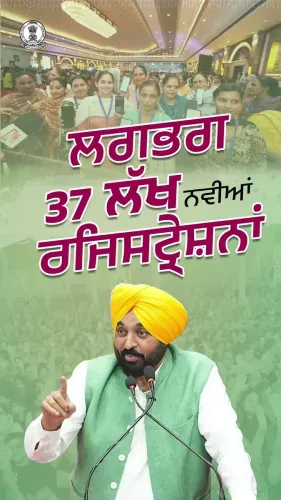
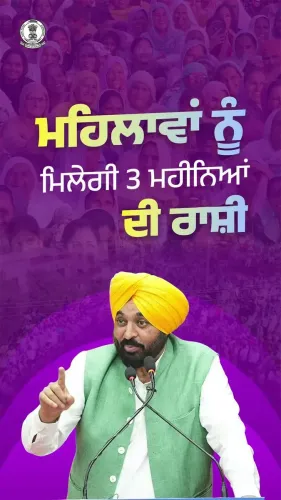
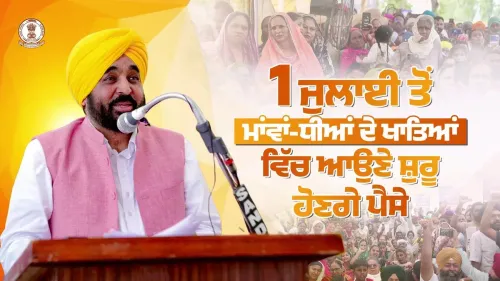
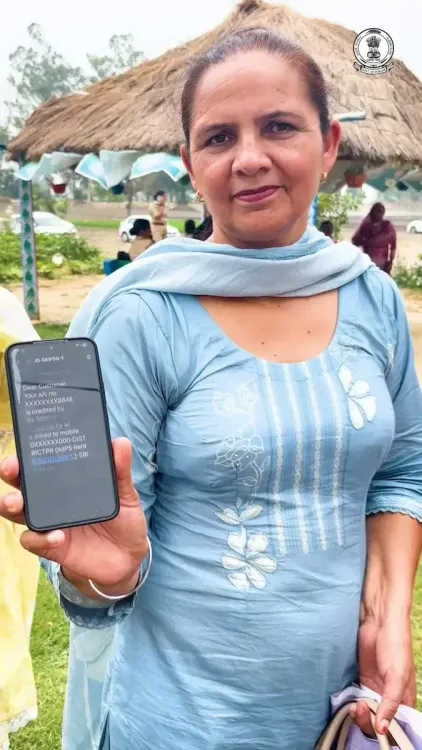
Tomorrow is payday for women across Punjab. The Chief Minister's Office of Punjab confirmed on Wednesday, 30 September 2026 that the next installment under the Mawan Dhiyan Satkar Yojana — Chief Minister Bhagwant Singh Mann's direct cash transfer scheme for women — will land in beneficiaries' bank accounts on 1 October 2026, with amounts of ₹3,000 and ₹4,500 depending on category.
What the scheme pays — and to whom
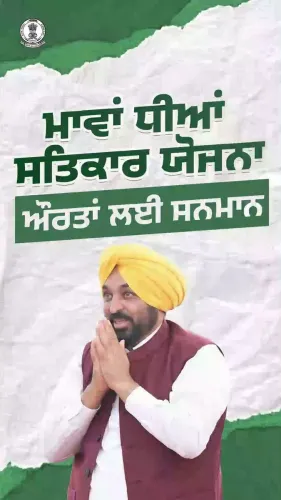
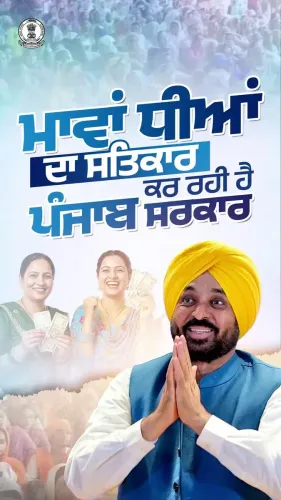
The post, written in Punjabi, states: 'Mawan Dhiyan Satkar Yojana tahat 1 October noo Punjab di mahilawan de khatian vich ₹3,000 ate ₹4,500 di agli kishth jama hogi' — meaning the next installment of ₹3,000 and ₹4,500 will be credited to the bank accounts of Punjab's women under the scheme on 1 October. The two-tier payout structure suggests differentiated eligibility categories within the programme, though the precise criteria have not been detailed in the official post.
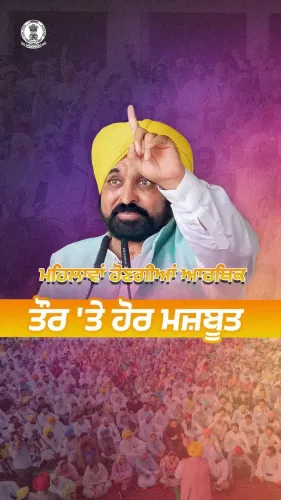
The Mawan Dhiyan Satkar Yojana — loosely translated as the 'Respect for Mothers and Daughters Scheme' — is a periodic direct benefit transfer initiative launched under CM Bhagwant Singh Mann's Aam Aadmi Party government, which came to power in Punjab in March 2022. The scheme fits squarely within a broader national pattern of state governments deploying direct cash transfers targeted at women as a core pillar of social welfare delivery.
DBT politics and Punjab's women-first wager
Across India, direct benefit transfer schemes aimed at female beneficiaries have become a defining feature of competitive state politics — from Delhi to Tamil Nadu to Madhya Pradesh. Punjab's AAP government has leaned heavily into this playbook, using periodic installments to maintain a tangible, recurring touchpoint with women voters and households. Each fresh credit cycle is both a welfare delivery and a visible signal of administrative follow-through.
The crediting of funds directly into individual bank accounts — bypassing intermediaries — is designed to reduce leakage and ensure women retain autonomous control over the transfer. For many beneficiaries, especially in semi-urban and rural Punjab, these installments represent a predictable, meaningful supplement to household income.
With the October disbursement confirmed, the next question for watchers of Punjab's welfare architecture is whether the state's fiscal headroom allows the scheme to scale further — or holds steady through the current budget cycle.
Point of View
Predictable cash credits to women reinforce the government's 'governance that reaches you' brand identity, differentiating AAP from traditional patronage politics. Sustaining such schemes, however, tests Punjab's already stretched fiscal position, making each successive installment announcement implicitly also a statement about the state's financial management. How the government balances scheme continuity against budgetary constraints will be a key indicator of AAP's second-term governance strategy.
NationPress
30 Sept 2026
Frequently Asked Questions
What is the Mawan Dhiyan Satkar Yojana in Punjab?
The Mawan Dhiyan Satkar Yojana is a direct cash transfer scheme for women in Punjab launched under Chief Minister Bhagwant Singh Mann's AAP government. It provides periodic installments of ₹3,000 or ₹4,500 credited directly to eligible women's bank accounts.
When will the next Mawan Dhiyan Satkar Yojana installment be credited?
The next installment will be credited on 1 October 2026, as confirmed by the Chief Minister's Office of Punjab.
How much money will women receive under the scheme in October 2026?
Eligible women will receive either ₹3,000 or ₹4,500, depending on their beneficiary category under the scheme.
Who launched the Mawan Dhiyan Satkar Yojana?
The scheme was launched under Chief Minister Bhagwant Singh Mann, who leads the Aam Aadmi Party government in Punjab since March 2022.
How is the Mawan Dhiyan Satkar Yojana payment delivered?
Payments are transferred directly into beneficiaries' bank accounts through the direct benefit transfer mechanism, bypassing intermediaries.