Meghalaya HC orders 9% interest on decade-old judicial reimbursement delays
Synopsis
The Meghalaya High Court found that a ₹57,680 reimbursement bill for a Judicial Officer had been stuck in the state's e-Proposal system since October 2014 — with no sanction order issued in nearly 11 years. The court's response: 9% annual interest, a two-week deadline, and a formal enquiry into the officials responsible.
Key Takeaways
The Meghalaya High Court directed the state to pay 9% annual interest on Judicial Officers' reimbursement bills delayed from 2014 to 2022 .
A bill of ₹57,680 has been pending in the e-Proposal system since October 2014 with no sanction order issued.
Claims of ₹15,860 (pending since 2017) and ₹22,126 (pending since June 2018) were also cited by the court.
The government committed to clearing all pending bills within two weeks ; the court ordered compliance on bills from 2022 onwards within the same timeframe.
The Commissioner and Secretary of the Law Department have been directed to enquire into the delays and act against responsible officials.
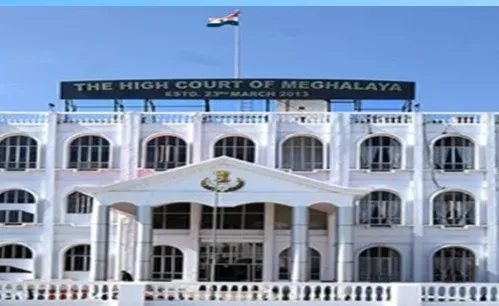
The Meghalaya High Court has sharply criticised the state government for failing to clear medical and travel reimbursement bills of Judicial Officers for nearly a decade, directing payment of 9 per cent annual interest on all delayed claims dating from 2014 to 2022. The order was passed on Thursday, 13 August, with the court expressing alarm that even trivially small amounts had gone unsettled for years.
What the Court Found
A Division Bench comprising Chief Justice Revati Mohite Dere and Justice W. Diengdoh was hearing a petition filed by the Registrar General of the High Court of Meghalaya. The Bench had previously summoned the Secretaries of the Law and Finance departments after taking serious note of the prolonged pendency of reimbursement claims.
Among the specific cases cited, a bill of ₹57,680 had been languishing in the e-Proposal system since October 2014 with no sanction order issued. A claim of ₹15,860 had reportedly been pending with the Law Department since 2017, while ₹22,126 had remained unsettled since June 2018.
'Some of the amounts are extremely negligible and small, yet they have not been disbursed till date,' the court observed, pressing the government on the reasons behind the inordinate delay.
Government's Assurance and Court's Directions
Appearing for the state government, Advocate General A. Kumar assured the Bench that all proposals forwarded by the High Court would be taken up on priority and processed expeditiously. He committed to clearing the pending bills of Judicial Officers within two weeks.
The court, however, went further. It directed the government to pay 9 per cent interest per annum on delayed claims, calculated from the respective dates of submission of each bill until the date of actual payment. All pending bills from 2022 onwards were ordered to be processed and disbursed within two weeks.
Accountability Measures Ordered
Beyond the financial directions, the Bench ordered the Commissioner and Secretary of the Law Department to conduct a formal enquiry into the delays and take appropriate action against officials found responsible. This signals that the court views the non-payment not merely as administrative backlog but as a potential dereliction of duty.
Notably, the failure to disburse reimbursements to sitting Judicial Officers raises broader questions about the state's commitment to judicial independence — officers dependent on the executive for routine expense settlements face an institutional vulnerability that courts across the country have consistently flagged.
GPO Land Issue Also Reviewed
The court also took up a separate matter concerning GPO land near the High Court premises. It directed the Advocate General and the Deputy Solicitor General of India to convene a joint meeting with officials from the GPO, PWD, and Urban Affairs Department to work out a resolution to the land dispute.
The matter is expected to come up for further hearing once the government files a compliance report on the reimbursement payments and the enquiry into the delays.
Point of View
680 reimbursement bill for a sitting Judicial Officer in eleven years is not dealing with administrative backlog — it is dealing with institutional indifference. The Meghalaya High Court's decision to impose 9% interest and order an accountability enquiry is a proportionate response, but the deeper issue is structural: when the executive controls routine expense settlements for the judiciary, it creates a subtle leverage that undermines judicial independence at the margins. This case is unlikely to be unique to Meghalaya; it is a reminder that judicial infrastructure — including the dignity of officers who run the system — demands the same urgency as headline court reforms.
NationPress
28 Sept 2026
Frequently Asked Questions
Why did the Meghalaya High Court criticise the state government?
The court criticised the Meghalaya government for failing to clear medical and travel reimbursement bills of Judicial Officers, with some claims pending for nearly a decade. Bills as small as ₹57,680 had received no sanction order despite being submitted as far back as October 2014.
What interest rate did the court order on delayed payments?
The Meghalaya High Court directed the state government to pay 9 per cent interest per annum on all delayed reimbursement claims from 2014 to 2022, calculated from the date of submission of each bill until the date of actual payment.
What is the deadline set by the court for clearing the pending bills?
The court ordered all pending bills from 2022 onwards to be processed and disbursed within two weeks. The state's Advocate General also committed to clearing all outstanding Judicial Officers' bills within the same two-week window.
Who has been directed to conduct an enquiry into the delays?
The Bench directed the Commissioner and Secretary of the Law Department to conduct a formal enquiry into the reasons for the prolonged delays and to take appropriate action against officials found responsible.
Which judges passed the order in the Meghalaya High Court case?
The directions were passed by a Division Bench comprising Chief Justice Revati Mohite Dere and Justice W. Diengdoh, while hearing a petition filed by the Registrar General of the High Court of Meghalaya.