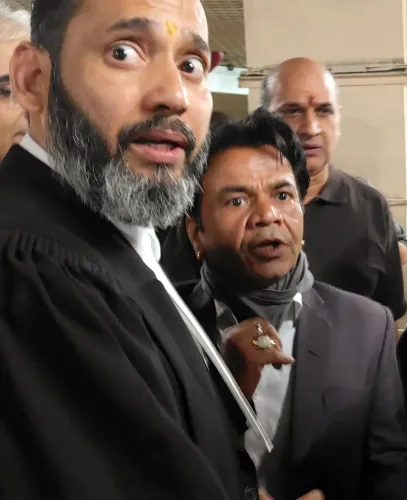
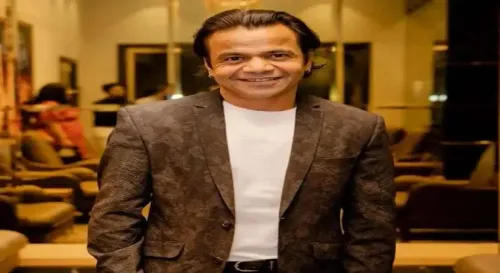
Supreme Court grants Rajpal Yadav relief from surrender in cheque bounce cases
Synopsis
The Supreme Court stepped in to shield actor Rajpal Yadav from immediate imprisonment in seven cheque dishonour cases — but at a steep price: a ₹5 crore deposit by Wednesday. The case turns on a contested 2013 consent agreement that, the actor argues, should have rendered the original cheques unenforceable — a legal question the apex court will now have to settle.
Key Takeaways
The Supreme Court on 8 September granted Rajpal Yadav and his wife exemption from surrendering in seven cheque dishonour cases , subject to depositing ₹5 crore with the court registry by Wednesday.
The bench of CJI Surya Kant , Justice Joymalya Bagchi , and Justice V.
Mohana issued notice returnable on 15 September .
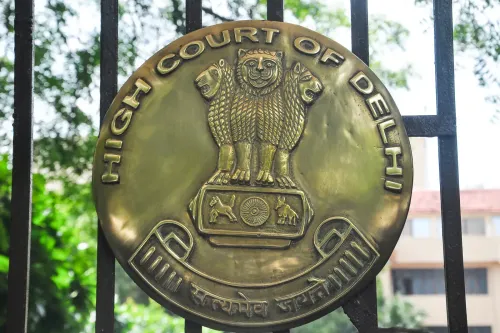
The Delhi High Court on 10 July had upheld the conviction, reducing the sentence to three months and the fine to ₹1.05 crore per case — totalling ₹7.35 crore across seven cases.
The petitioners argue a consent agreement dated 21 April 2013 rendered the original cheques unenforceable, a contention the lower courts did not accept.
The High Court had noted an extraordinary delay of 1,894 days in challenging the conviction and observed that Yadav had failed to honour multiple court undertakings.
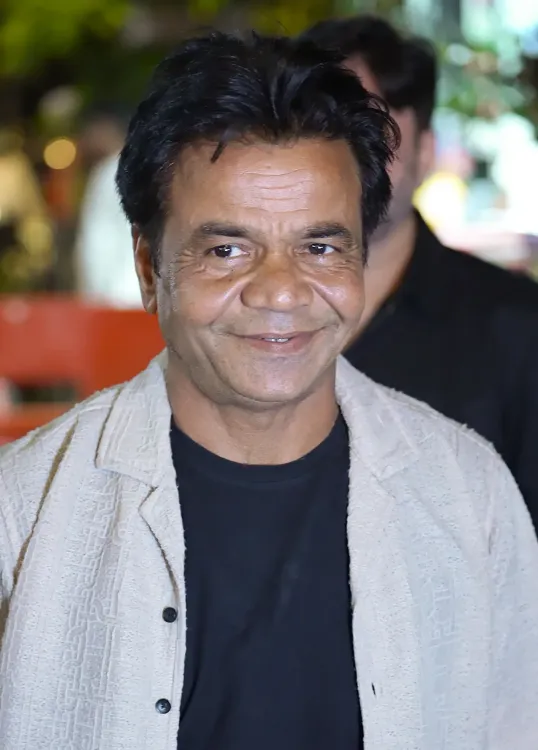
The Supreme Court on Tuesday, 8 September agreed to hear special leave petitions filed by actor and comedian Rajpal Yadav and his wife challenging the Delhi High Court judgment that upheld their conviction in seven cheque dishonour cases, granting them exemption from surrendering subject to a deposit of ₹5 crore with the court's registry by Wednesday. The bench also issued notice returnable on 15 September.
What the Supreme Court Ordered
A bench comprising Chief Justice of India (CJI) Surya Kant, Justice Joymalya Bagchi, and Justice V. Mohana took up the petitions after they were mentioned before the apex court. The bench directed that the petitioners would be exempted from surrendering only upon depositing ₹5 crore with the registry of the top court.
'Subject to deposit of ₹5 crore by the petitioners with the Registry of this Court by tomorrow, they are granted exemption from surrendering,' the Supreme Court ordered. The notice issued in the matter is returnable on 15 September.
Background: The Delhi High Court Judgment
The Delhi High Court had on 10 July upheld Rajpal Yadav's conviction while reducing his sentence from six months to three months' simple imprisonment in each of the seven cases. The fine was also reduced from ₹1.60 crore to ₹1.05 crore in each case, with all substantive sentences directed to run concurrently — bringing the total fine liability to ₹7.35 crore. Of that amount in each case, ₹1,04,75,000 was directed to be paid to complainant M/s Murli Projects Pvt Ltd, while ₹25,000 was to be credited to the State.
The High Court had earlier dismissed revision petitions filed by the actor and his wife, noting a delay of 1,894 days in challenging the conviction and observing that Yadav had failed to honour multiple undertakings given before the court despite repeated opportunities for an amicable settlement.
Justice Swarana Kanta Sharma had remarked pointedly: 'Law is not a script that can be rewritten at the will of an actor, nor can legal positions be altered with every change of strategy, whosoever the litigant may be. Courts adjudicate on the basis of settled legal principles and the record before them.'
The Petitioners' Key Arguments
The special leave petitions contend that the High Court failed to consider a subsequent consent agreement between the parties, under which the earlier security cheques were allegedly to be returned and fresh cheques were issued. According to the petition, the parties had entered into four agreements in connection with a film being produced by Rajpal Yadav, after earlier agreements could not be fulfilled within stipulated timelines.
Specifically, the petitioners claim that under a fourth agreement — described as a consent agreement dated 21 April 2013 — the eight security cheques issued under the previous agreement were to be returned, and four fresh cheques of ₹10 crore were issued. They allege the respondent did not return the eight security cheques and instead proceeded with prosecution after seven of those cheques were dishonoured.
The petitioners have relied on the Supreme Court's judgment in M/s Gimpex Private Limited v. Manoj Goel, arguing that the subsequent agreement between the parties ought to have brought an end to the original complaint proceedings and that the cheques in question were no longer legally enforceable.
What Happens Next
The Supreme Court will take up the matter on 15 September, by which date the ₹5 crore deposit must have been made for the exemption from surrender to remain in force. The High Court had earlier suspended the modified sentence for two months to allow the petitioners to pursue legal remedies — a window the Supreme Court's intervention now extends. Whether the apex court will ultimately accept the consent-agreement argument and set aside the conviction remains to be seen, with the case raising significant questions about the enforceability of cheques after subsequent agreements between parties.
Point of View
Even as it agrees to examine the legal merits. The core question the apex court must now resolve is whether a subsequent consent agreement can extinguish liability under the Negotiable Instruments Act, a point with implications well beyond this case. The High Court's sharp observation that 'law is not a script that can be rewritten at the will of an actor' reflects judicial frustration with what it saw as serial delay tactics — a context the Supreme Court bench will have to weigh carefully. If the apex court accepts the consent-agreement argument, it could create a significant precedent for how cheque bounce prosecutions interact with later settlements.
NationPress
25 Oct 2026
Frequently Asked Questions
What relief did the Supreme Court grant Rajpal Yadav in the cheque bounce case?
The Supreme Court granted Rajpal Yadav and his wife exemption from surrendering in seven cheque dishonour cases, subject to depositing ₹5 crore with the court's registry by Wednesday, 9 September. The matter has been listed for further hearing on 15 September.
What was the Delhi High Court's verdict in the Rajpal Yadav cheque case?
The Delhi High Court on 10 July upheld Rajpal Yadav's conviction in seven cheque dishonour cases under the Negotiable Instruments Act, reducing his sentence from six months to three months' simple imprisonment per case and the fine from ₹1.60 crore to ₹1.05 crore per case, totalling ₹7.35 crore.
What is Rajpal Yadav's main argument before the Supreme Court?
Yadav and his wife contend that a consent agreement dated 21 April 2013 required the original eight security cheques to be returned, making them unenforceable. They argue the complainant, M/s Murli Projects Pvt Ltd, did not return those cheques and instead proceeded with prosecution after seven were dishonoured.
Who is the complainant in the Rajpal Yadav cheque bounce case?
The complainant is M/s Murli Projects Pvt Ltd. The cases arose from financial agreements connected to a film being produced by Rajpal Yadav, under which security cheques were issued that were subsequently dishonoured.
What happens if Rajpal Yadav does not deposit ₹5 crore by the deadline?
If the ₹5 crore is not deposited with the Supreme Court registry by Wednesday, the exemption from surrendering will not take effect and Yadav and his wife would be required to surrender as directed by the Delhi High Court's judgment.