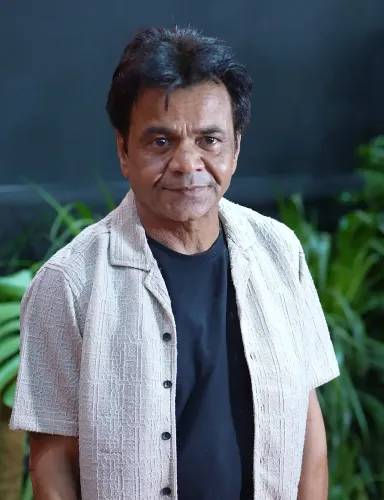
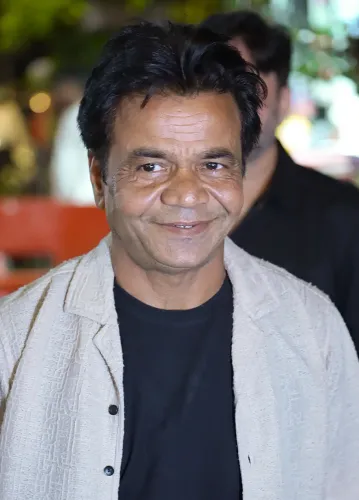
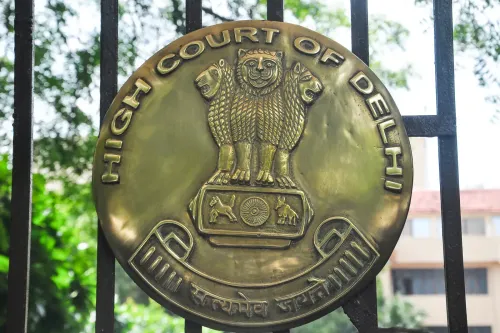
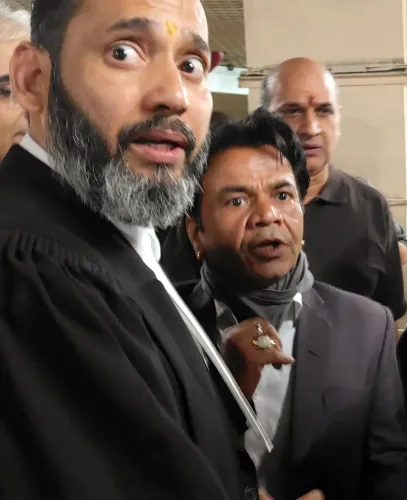
Delhi HC upholds Rajpal Yadav's conviction, imposes ₹7.35 crore penalty
Synopsis
The Delhi High Court has upheld Rajpal Yadav's conviction in seven cheque bounce cases and slapped a ₹7.35 crore penalty, calling his conduct 'dubious' after years of missed payments and court-granted leniency. The actor now has two months to take his fight to the Supreme Court — his last avenue to avoid the full weight of the sentence.
Key Takeaways
The Delhi High Court on 10 July upheld actor Rajpal Yadav's conviction in multiple cheque dishonour cases under the Negotiable Instruments Act .
The court imposed a combined penalty of ₹7.35 crore — ₹1.05 crore in each of seven cases.
Justice Swarana Kanta Sharma termed Yadav's conduct 'dubious' , citing repeated failure to honour payment commitments despite multiple opportunities.
Approximately ₹4.25 crore had already been paid to complainant M/s Murli Projects Pvt Ltd prior to the final ruling.
Yadav has been granted two months to challenge the High Court's order before the Supreme Court .
The actor was originally convicted and sentenced in 2024 ; his sentence had been suspended during the pendency of the High Court proceedings.
The Delhi High Court on Friday, 10 July upheld actor Rajpal Yadav's conviction in multiple cheque bounce cases, dismissing his petitions that challenged the trial court's verdicts. The court simultaneously imposed a combined penalty of ₹7.35 crore on the actor, marking a significant legal setback for the Bollywood comedian.
Key Ruling and Penalty Breakdown
Justice Swarana Kanta Sharma pronounced the judgment in a batch of criminal miscellaneous petitions and criminal revision petitions arising from proceedings under the Negotiable Instruments Act. The court levied a fine of ₹1.05 crore in each of the seven cases, totalling ₹7.35 crore. Of this, ₹1.04 crore per case will be paid to the complainant, M/s Murli Projects Pvt Ltd, and ₹25,000 per case to the state.
Justice Sharma termed Yadav's conduct 'dubious', observing that he was given multiple opportunities to repay the dues but repeatedly failed to honour his commitments. The court has granted the actor two months to challenge its order before the Supreme Court.
A Long-Running Legal Battle
Yadav was convicted and sentenced in 2024 in multiple cheque dishonour cases under the Negotiable Instruments Act. His legal troubles with M/s Murli Projects Pvt Ltd have stretched over several years, marked by a pattern of partial payments and missed deadlines.
During earlier hearings, counsel for Yadav had informed the court that approximately ₹4.25 crore had already been paid to the complainant company, including a demand draft of ₹25 lakh handed over before the court. Noting the substantial payments, Justice Sharma had at one stage remarked orally that the court was not inclined to send the actor back to jail immediately.
Repeated Leniency, Repeated Breach
The High Court's journey in this case reflects an unusually patient approach. The court had earlier extended the interim suspension of Yadav's sentence multiple times, acknowledging that he had made partial payments. However, in February, Justice Sharma took a stern view after the actor repeatedly breached undertakings given to the court, directing him to surrender before the concerned Jail Superintendent.
Despite 'considerable leniency', according to the court's own observations, Yadav failed to comply with payment timelines fixed on multiple occasions. He was subsequently released from jail after depositing part of the settlement amount, with the interim suspension of sentence continuing while the High Court heard the main petitions. The complainant had also filed an application seeking cancellation of the interim relief, which the court declined.
What Happens Next
With the High Court now upholding the conviction and imposing the full penalty, Yadav has a two-month window to approach the Supreme Court. The interim suspension of sentence, which shielded him from imprisonment during the proceedings, had remained operative throughout. Whether the Supreme Court grants similar relief will determine his immediate legal standing. The case underscores the judiciary's position that celebrity status does not insulate individuals from accountability under financial laws.
Point of View
Declining to cancel interim relief, even orally signalling reluctance to jail the actor — yet the actor's side could not convert that goodwill into full settlement. That pattern, more than the legal technicalities, is what Justice Sharma's 'dubious conduct' observation captures. For courts handling high-profile Negotiable Instruments Act cases, this verdict reinforces that partial payments and celebrity standing cannot indefinitely defer accountability. The real question now is whether the Supreme Court will grant fresh interim relief, or whether Yadav will finally face the full consequence of a conviction that dates to 2024.
NationPress
9 Oct 2026
Frequently Asked Questions
What is the Rajpal Yadav cheque bounce case about?
Actor Rajpal Yadav was convicted in multiple cheque dishonour cases filed by M/s Murli Projects Pvt Ltd under the Negotiable Instruments Act. The Delhi High Court upheld his conviction on 10 July and imposed a combined penalty of ₹7.35 crore across seven cases.
How much penalty has been imposed on Rajpal Yadav?
The Delhi High Court imposed a fine of ₹1.05 crore in each of the seven cases, totalling ₹7.35 crore. Of this, ₹1.04 crore per case goes to the complainant and ₹25,000 per case to the state.
Can Rajpal Yadav appeal the Delhi High Court verdict?
Yes. The High Court has granted Yadav two months to challenge its order before the Supreme Court. His interim suspension of sentence had remained operative throughout the High Court proceedings.
What did the Delhi High Court say about Rajpal Yadav's conduct?
Justice Swarana Kanta Sharma termed Yadav's conduct 'dubious', observing that despite considerable leniency and multiple opportunities to repay, the actor repeatedly failed to honour his payment commitments and breached undertakings given to the court.
How much has Rajpal Yadav already paid to the complainant?
According to submissions made before the court, approximately ₹4.25 crore had already been paid to M/s Murli Projects Pvt Ltd, including a demand draft of ₹25 lakh handed over in court. The full penalty now stands at ₹7.35 crore.