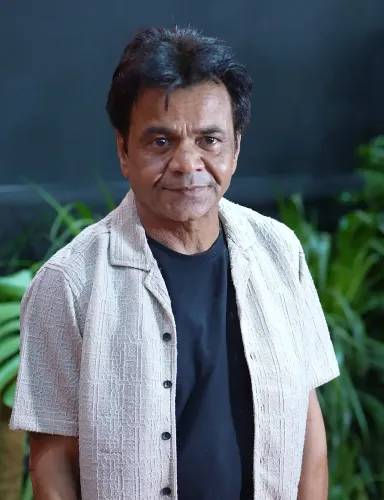
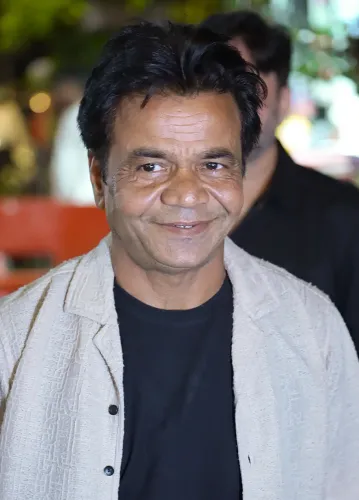
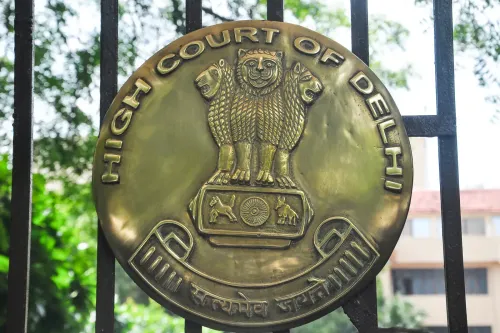
Delhi HC upholds Rajpal Yadav's conviction in cheque bounce cases, cuts sentence to 3 months

Synopsis
The Delhi High Court refused to let Rajpal Yadav rewrite the legal script — upholding his conviction across seven cheque dishonour cases while noting he had declared he would 'rather go to jail five times than return the money.' The sentence is cut to three months and suspended for two months, giving him a narrow window to seek higher-court relief.
Key Takeaways
The Delhi High Court on 10 July upheld Rajpal Yadav 's conviction in seven cheque dishonour cases under the Negotiable Instruments Act .
Sentence reduced from six months to three months ' simple imprisonment per case; all sentences to run concurrently.
Fine per case cut from ₹1.60 crore to ₹1.05 crore , after crediting ₹2.25 crore already deposited by Yadav.
Co-convict Radha Rajpal Yadav 's fine reduced to ₹5,51,380 per case.
Revision petitions dismissed for delay of 1,894 days ; probation plea rejected.
Modified sentence suspended for two months to allow petitioners to seek further legal remedies.
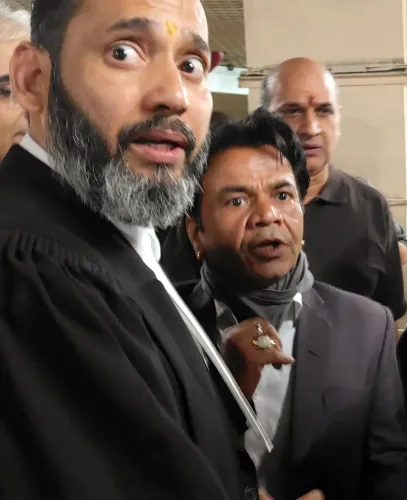
The Delhi High Court on Friday, 10 July upheld Bollywood actor Rajpal Yadav's conviction in multiple cheque dishonour cases under the Negotiable Instruments Act, while reducing his sentence from six months to three months' simple imprisonment and lowering the fine, after crediting the amount already deposited by him to the complainant. The ruling came in a batch of criminal miscellaneous and revision petitions heard by a single-judge Bench of Justice Swarana Kanta Sharma.
What the Court Decided
Justice Sharma dismissed Yadav's challenge to his conviction, holding that his revision petitions were barred by limitation — specifically, an extraordinary delay of 1,894 days for which no sufficient cause was demonstrated. The court also rejected his plea seeking quashing of the complaint cases, ruling that such petitions amounted to an indirect challenge to convictions that had already attained finality after trial and appellate proceedings.
The court, however, modified the sentence by crediting ₹2.25 crore already deposited by the actor and released in favour of the complainant, M/s Murli Projects Pvt Ltd. The fine in each of the seven complaint cases was reduced from ₹1.60 crore to ₹1.05 crore, of which ₹1,04,75,000 will be paid to the complainant and ₹25,000 credited to the State. All substantive sentences were directed to run concurrently.
Co-Convict's Sentence Also Reduced
The judgment also reduced the fine imposed on co-convict Radha Rajpal Yadav to ₹5,51,380 in each complaint case. The court did not interfere with the conviction of either petitioner.
Court's Sharp Observations
Justice Sharma was unsparing in her remarks, noting that despite repeated opportunities and indulgence extended by the court to facilitate an amicable settlement, Yadav failed to honour undertakings given before it. The court recorded that at the conclusion of the hearing, Yadav had stated he was 'not willing to pay any amount to the complainant and would rather go to jail five times than returning the money.'
In its judgment, the court stated: 'Law is not a script that can be rewritten at the will of an actor, nor can legal positions be altered with every change of strategy whosoever the litigant may be. Courts adjudicate on the basis of settled legal principles and the record before them.'
The court also declined his request for release on probation, citing this stated unwillingness to comply with settlement commitments.
Background and What Comes Next
Yadav was convicted and sentenced in 2024 in multiple cheque dishonour cases. Earlier this year, the Delhi High Court had directed him to surrender before the Jail Superintendent after taking a stern view of his repeated failure to honour settlement commitments. He was subsequently granted an interim suspension of sentence after depositing part of the settlement amount.
The court has now suspended the modified sentence for two months from the date of judgment to enable the petitioners to avail of such legal remedies as may be available to them. Upon expiry of that period, both petitioners are required to undergo the sentence in accordance with law. Whether Yadav approaches a higher court within this window will be closely watched.
Point of View
894-day delay in filing revision petitions, explained away as a 'misconception,' was always a long shot, and the court's refusal to condone it reinforces that procedural timelines are not elastic for high-profile defendants. The two-month suspension of sentence is standard practice, but it also means the real legal battle — likely before the Supreme Court — is yet to begin. What this case ultimately demonstrates is the slow grind of cheque-bounce litigation and how creative delay can outlast judicial patience for only so long.
NationPress
9 Oct 2026
Frequently Asked Questions
What is the Delhi High Court's ruling on Rajpal Yadav's cheque bounce case?
The Delhi High Court upheld Rajpal Yadav's conviction in seven cheque dishonour cases on 10 July, while reducing his sentence from six months to three months' simple imprisonment per case and lowering the fine from ₹1.60 crore to ₹1.05 crore per case. The court credited ₹2.25 crore already deposited by him to the complainant, M/s Murli Projects Pvt Ltd.
Why did the Delhi High Court refuse to condone the delay in Rajpal Yadav's revision petitions?
The court found that Yadav had not shown sufficient cause to excuse an extraordinary delay of 1,894 days in filing his revision petitions. Justice Swarana Kanta Sharma rejected the explanation that the petitioners remained under a 'misconception' for over five years that their conviction had already been challenged, saying it was neither supported by the record nor credible.
Can Rajpal Yadav appeal the Delhi High Court verdict?
Yes. The court has suspended the modified sentence for two months from the date of judgment, specifically to allow the petitioners to pursue such legal remedies as may be available to them. Yadav could approach the Supreme Court within this window.
What did the court say about Rajpal Yadav's refusal to settle?
Justice Sharma noted that at the conclusion of the hearing, Yadav had stated he was 'not willing to pay any amount to the complainant and would rather go to jail five times than returning the money.' The court declined his request for release on probation on this basis and observed that it was 'entirely his choice' to prefer imprisonment over honouring court undertakings.
Who is the complainant in Rajpal Yadav's cheque dishonour cases?
The complainant is M/s Murli Projects Pvt Ltd. Of the reduced fine of ₹1.05 crore per case, ₹1,04,75,000 is to be paid to the complainant, while ₹25,000 is to be credited to the State.