Minister Joshi Shares PM Modi's Tribute to Syama Prasad Mookerjee
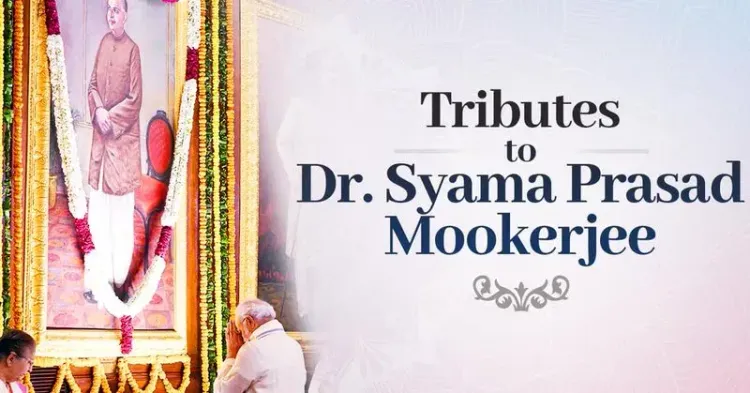
Synopsis
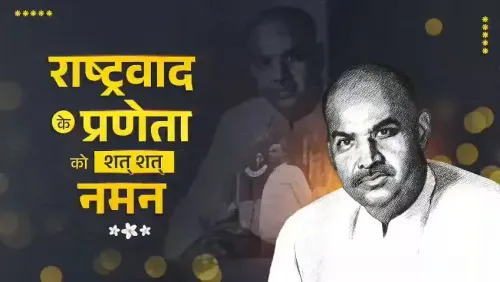
Union Minister Pralhad Joshi shared Prime Minister Narendra Modi's article on Dr. Syama Prasad Mookerjee's 125th birth anniversary on 6 July 2026, underscoring the BJP founding ideologue's legacy of national unity, democratic values, and self-reliance.
Key Takeaways
Union Minister Pralhad Joshi shared PM Narendra Modi's article on 6 July 2026 , the 125th birth anniversary of Dr.
Syama Prasad Mookerjee .
Mookerjee founded the Bharatiya Jana Sangh in 1951 , the direct ideological predecessor of the BJP .
He died in 1953 while protesting the special constitutional status of Jammu and Kashmir .
The Prime Minister's article focuses on Mookerjee's legacy of national unity, democratic values, institution-building, and self-reliance.
Senior BJP leaders amplifying the tribute signals the anniversary is being marked with greater-than-routine significance in 2026 .
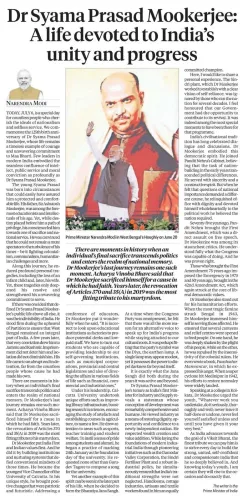
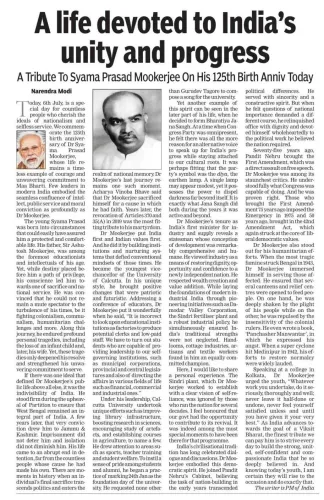
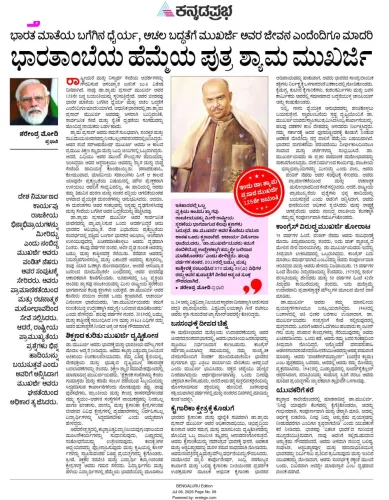
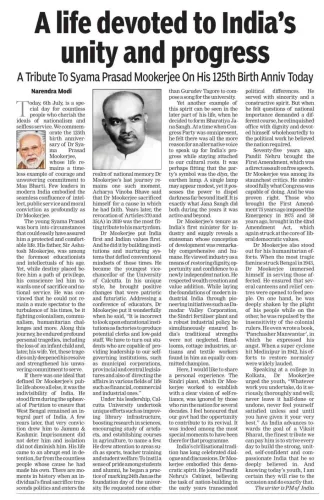
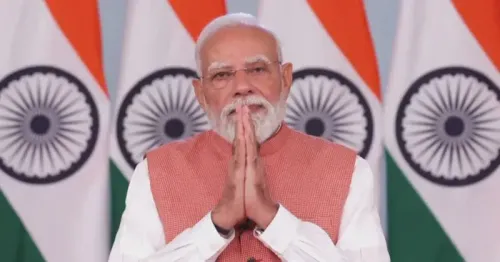
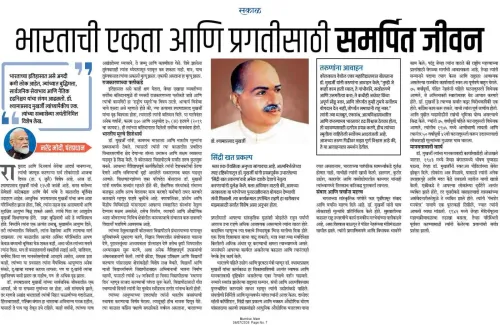
Union Consumer Affairs Minister Pralhad Joshi on Monday, 6 July 2026, shared an article authored by Prime Minister Narendra Modi marking the 125th birth anniversary of Dr. Syama Prasad Mookerjee, calling it an 'insightful' reflection on the founding ideologue's life of 'courage, conviction and selfless service to the nation.'
Context
Dr. Syama Prasad Mookerjee was born on 6 July 1901 and remains one of the most consequential figures in post-independence Indian politics. He founded the Bharatiya Jana Sangh in 1951, a party that championed integral nationalism and is widely regarded as the direct ideological predecessor of the Bharatiya Janata Party (BJP). He died in 1953 while in detention during his protest against the special status accorded to Jammu and Kashmir.
Minister Joshi, sharing the Prime Minister's piece on X, wrote that it 'reflects on Dr. Mookerjee's enduring legacy of national unity, democratic values, institution-building and his unwavering commitment to a strong, united and self-reliant India.' The post directed followers to read the full article via a shared link.
Policy Backdrop
The BJP has consistently traced its ideological lineage to the Bharatiya Jana Sangh and to Dr. Mookerjee's vision of an undivided, self-reliant India. The Jana Sangh later merged into the Janata Party before its successor formation evolved into the BJP. Anniversary commemorations of Mookerjee serve as a recurring occasion for the party's leadership to articulate continuity between its founding principles and current governance priorities.
The themes highlighted in Minister Joshi's post — national unity, democratic values, and self-reliance — align closely with policy messaging that has defined the BJP-led National Democratic Alliance government's communication in recent years, including the Atmanirbhar Bharat (self-reliant India) framework.
Stakeholders and Impact
The anniversary and the Prime Minister's article are primarily addressed to BJP cadre, nationalist historians, and citizens interested in India's post-independence political history. Senior party leaders sharing such content amplifies its reach across the party's organisational network and signals ideological solidarity ahead of any state-level commemoration events.
For the broader public, tributes of this nature keep Dr. Mookerjee's contributions to institution-building and parliamentary democracy in public discourse, particularly his role in articulating a vision of complete national integration at a time when India's constitutional architecture was still being settled.
What's Next
Official events and state-level commemorations are expected around 6 July 2026 to mark the 125th birth anniversary. References to Dr. Mookerjee's legacy may also surface in parliamentary debates touching on federalism, internal security, and national integration. The Prime Minister's decision to author a dedicated article — rather than issue a routine social-media tribute — signals that the anniversary is being accorded significance beyond ceremonial acknowledgment, and further commemorative programming from central and state BJP governments is likely to follow.
Point of View
Not mere commemoration. Senior ministers like Pralhad Joshi amplifying it through their own channels extends the message across the party's organisational base ahead of what are likely to be coordinated state-level events. The themes invoked — national integration, self-reliance, institution-building — map directly onto the current government's policy vocabulary, creating a through-line from the Jana Sangh's founding moment to present-day governance. This pattern of connecting contemporary policy priorities to early nationalist figures is a well-established BJP communication strategy that deepens its ideological identity among core supporters.
NationPress
6 Jul 2026
Frequently Asked Questions
Who was Dr. Syama Prasad Mookerjee?
Dr. Syama Prasad Mookerjee was an Indian politician born on 6 July 1901 who founded the Bharatiya Jana Sangh in 1951 and is considered the ideological progenitor of the modern BJP . He died in 1953 while in detention during a protest against the special status of Jammu and Kashmir .
Why is 6 July 2026 significant for the BJP?
6 July 2026 marks the 125th birth anniversary of Dr. Syama Prasad Mookerjee , founder of the Bharatiya Jana Sangh , which the BJP regards as its direct ideological predecessor. The milestone prompted PM Modi to author a dedicated article on Mookerjee's legacy.
What did PM Modi write about Mookerjee?
According to Minister Pralhad Joshi's post, PM Modi's article pays tribute to Dr. Mookerjee's 'extraordinary life of courage, conviction and selfless service' and reflects on his legacy of national unity, democratic values, institution-building, and commitment to a strong, self-reliant India.
What is the connection between Syama Prasad Mookerjee and the BJP?
Dr. Mookerjee founded the Bharatiya Jana Sangh in 1951 . The Jana Sangh later merged into the Janata Party and its successor formation became the BJP , which considers Mookerjee's ideology of integral nationalism as a foundational influence.
What is Pralhad Joshi's role in the Union Cabinet?
Pralhad Joshi is a senior BJP leader from Karnataka who serves as Union Minister of Consumer Affairs, Food and Public Distribution and Minister of New and Renewable Energy in the Modi Cabinet .