Anurag Thakur Marks 5 Years of Ministry of Cooperation
Synopsis
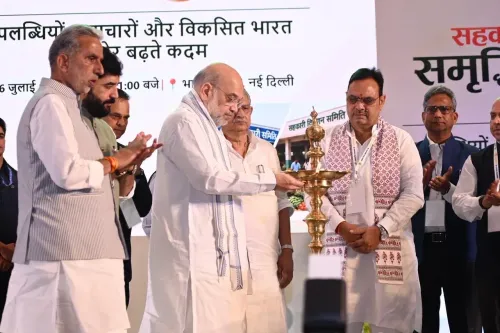
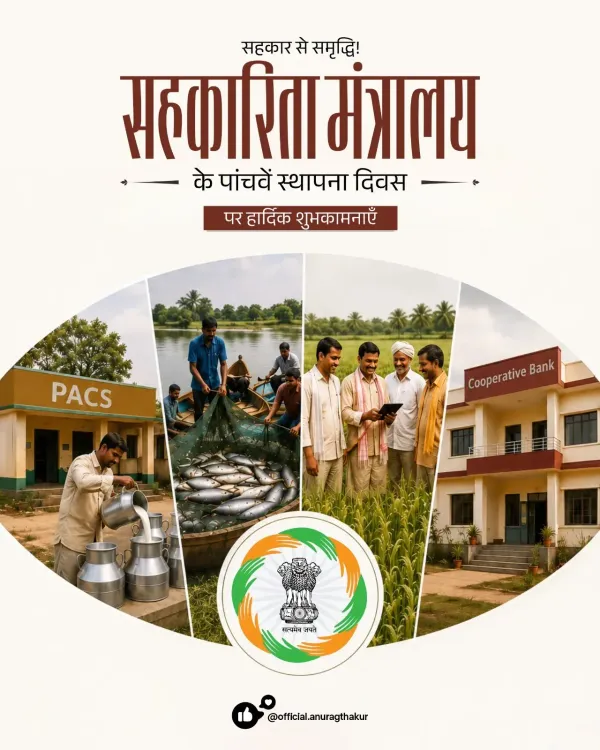
BJP MP Anurag Thakur marked the fifth Foundation Day of India's independent Ministry of Cooperation on 6 July 2026, hailing five years of cooperative sector reforms driven by PM Modi's vision and Amit Shah's leadership under the 'Sahakar se Samriddhi' framework.
Key Takeaways
The Ministry of Cooperation completed five years on 6 July 2026 , having been established on 6 July 2021 as India's first independent central ministry for the sector.
Amit Shah has served as India's first and continuing Union Minister of Cooperation since the ministry's inception.
The Multi-State Cooperative Societies (Amendment) Act, 2023 introduced a new Cooperative Election Authority and governance reforms.
Over 63,000 Primary Agricultural Credit Societies (PACS) are targeted for computerisation under the ministry's agenda.
The ministry has expanded the cooperative model beyond agriculture into housing, health, and retail sectors.
A proposed National Cooperative Policy is awaited as the sector enters its next phase of growth.
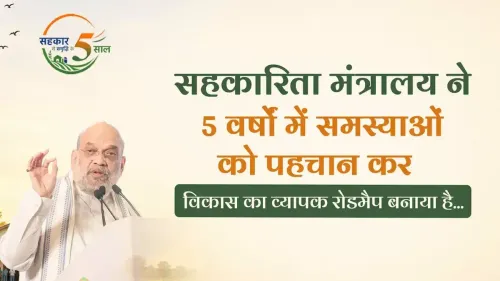
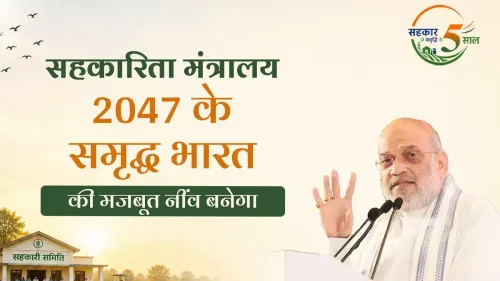
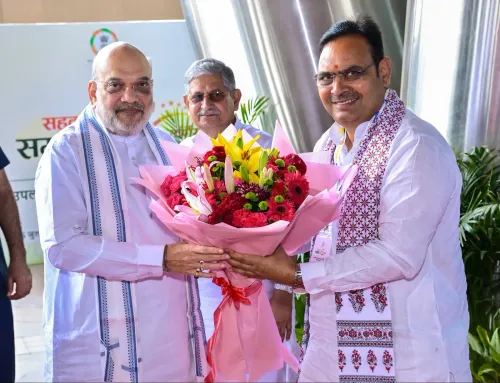
BJP MP Anurag Thakur on Monday, 6 July 2026, extended greetings to India's cooperative community on the fifth Foundation Day of the independent Ministry of Cooperation, crediting the milestone to the vision of Prime Minister Narendra Modi and the leadership of Union Home and Cooperation Minister Amit Shah.
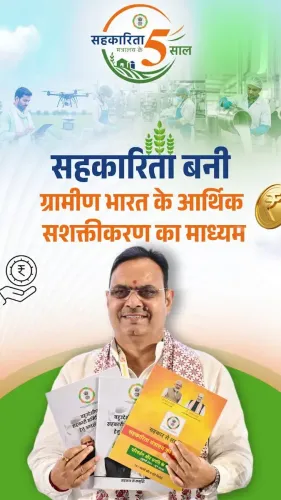
Posting in Hindi on X, Thakur wrote: 'सहकार से समृद्धि' ('Prosperity through cooperation') — extending greetings to the country's cooperative members and citizens on the occasion. He described the five years since the ministry's formation as a period in which cooperatives have registered 'unprecedented progress' and have been established as 'a powerful idea, a people's movement, and a vehicle of inclusive development.'
Context
The Ministry of Cooperation was formally notified on 6 July 2021, becoming India's first independent central ministry dedicated exclusively to the cooperative sector. Prior to this, cooperative affairs were handled under the Ministry of Agriculture and Farmers Welfare. The creation of the ministry marked a structural shift in how the central government treats cooperatives — elevating the sector alongside public and private enterprises.
Amit Shah was appointed as the country's first Union Minister of Cooperation at its inception and continues to hold the portfolio. The ministry's formation was framed under the government's guiding principle of 'Sahakar se Samriddhi' — prosperity through cooperation — which Thakur's post echoes directly.
Policy Backdrop
Over the past five years, the ministry has pursued a broad reform agenda. A landmark legislative step was the Multi-State Cooperative Societies (Amendment) Act, 2023, which introduced governance reforms and established a new Cooperative Election Authority to bring greater transparency and accountability to multi-state cooperative bodies.
The ministry also launched an ambitious programme to computerise over 63,000 Primary Agricultural Credit Societies (PACS) at the village level, aiming to improve credit access for rural farmers and reduce dependence on informal lending. The broader policy thrust has sought to expand cooperatives into new sectors including housing, health, and retail — beyond their traditional base in agriculture and dairy.
Stakeholders and Impact
The cooperative sector in India has deep roots in rural and semi-urban economies, with millions of farmers, artisans, and small producers relying on cooperative structures for credit, procurement, and marketing. Thakur's post references 30 crore cooperative members across the country — a figure the government uses to describe the scale of the sector's reach, though independent verification of this specific count is not available.
The PACS computerisation drive and the new multi-state cooperative framework are particularly significant for rural farmers, who form the largest constituency of cooperative members. Governance reforms under the 2023 amendment are intended to reduce political interference in cooperative elections and strengthen member representation.
What's Next
Attention will now turn to the proposed National Cooperative Policy, which is expected to set a long-term roadmap for the sector. The pace of PACS computerisation rollout and new multi-state cooperative registrations in the current fiscal year will serve as key indicators of the ministry's momentum as it enters its sixth year. Thakur's post signals that the BJP intends to continue positioning cooperative expansion as a pillar of its inclusive-growth narrative ahead of future electoral cycles.
Point of View
Amplifying both Modi and Shah, underscores the political ownership the party has invested in the cooperative portfolio, which spans over 30 crore members and touches rural constituencies critical to the BJP's electoral base. The ministry's legislative output — particularly the 2023 amendment — and the PACS computerisation drive give the party tangible governance deliverables to cite. The real test of the ministry's five-year record, however, will come from ground-level data on PACS digitisation completion rates and the finalisation of the long-pending National Cooperative Policy.
NationPress
5 Oct 2026
Frequently Asked Questions
When was the Ministry of Cooperation established in India?
The Ministry of Cooperation was established on 6 July 2021 , becoming India's first independent central ministry dedicated to the cooperative sector, with subjects previously handled under the Ministry of Agriculture being reallocated to it.
Who is India's Cooperation Minister?
Amit Shah has been India's Union Minister of Cooperation since the ministry was formed in July 2021, making him the country's first minister to hold this portfolio independently.
What is 'Sahakar se Samriddhi'?
'Sahakar se Samriddhi' — meaning 'Prosperity through Cooperation' — is the guiding policy principle of the Ministry of Cooperation, framing cooperative institutions as a core driver of inclusive economic growth alongside public and private sectors.
What is PACS computerisation?
PACS computerisation refers to the government's programme to digitise over 63,000 Primary Agricultural Credit Societies at the village level, aimed at improving rural credit access and reducing dependence on informal moneylenders.
What did the Multi-State Cooperative Societies Amendment Act 2023 do?
The Multi-State Cooperative Societies (Amendment) Act, 2023 introduced governance reforms for cooperatives operating across state boundaries and established a new Cooperative Election Authority to oversee elections within these bodies.