Mirwaiz rejects NC's Jantar Mantar invite, demands Kashmir resolution clause
Synopsis
Mirwaiz Maulana Umar Farooq has publicly turned down the National Conference's invitation to join its Jantar Mantar statehood protest — but not without a pointed challenge. By demanding that the protest also cover Kashmir's resolution and the release of political prisoners, the Mirwaiz has exposed a fundamental gap between the NC's electoral promises and its current protest agenda, just days before the sensitive July 13 martyrs' anniversary.
Key Takeaways
Mirwaiz Maulana Umar Farooq declined Farooq Abdullah's invitation to join the Jantar Mantar protest on 10 July .
He will only participate if the protest includes demands for Kashmir issue resolution , restoration of Articles 370 and 35A , and release of jailed separatist leaders and youth.
The Mirwaiz accused the National Conference of falling short of its 2024 election mandate to restore all usurped rights of J&K's people.
He noted that many political prisoners remain jailed even after courts grant them bail.
The July 13 martyrs' commemoration is imminent; Mirwaiz said restrictions and house arrest have been imposed on him for several consecutive years on that date.
The July 13 state holiday was also withdrawn, a move the Mirwaiz said would not reduce public reverence for the 1931 martyrs .
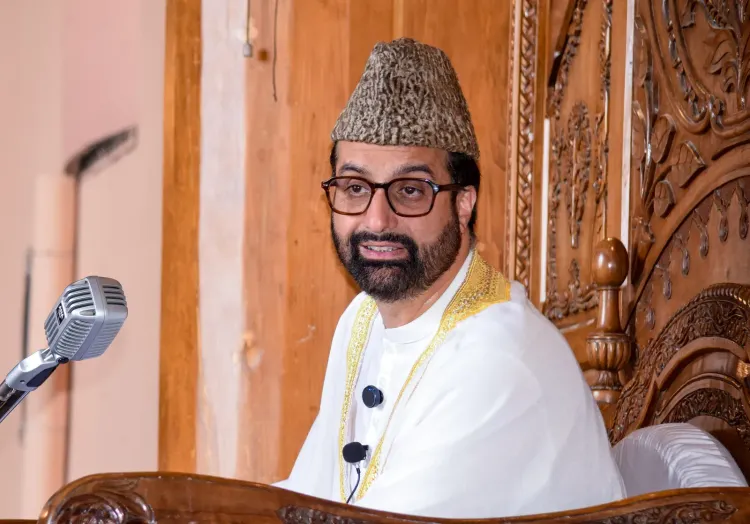
Kashmir's senior religious leader and chief cleric Mirwaiz Maulana Umar Farooq on Friday, 10 July declined an invitation from former Jammu and Kashmir Chief Minister Farooq Abdullah to participate in the Jantar Mantar protest, stating he would only join if the demonstration expanded its scope to include a demand for the resolution of the Kashmir issue and the release of jailed separatist leaders and youth. The Mirwaiz made his position clear during his Friday sermon at the Jama Masjid in Srinagar, effectively setting conditions that the National Conference (NC) has not yet agreed to.
What the Mirwaiz Said
Addressing the Friday congregation, Mirwaiz Umar Farooq confirmed he had received an invitation from Farooq Abdullah the previous day. He acknowledged that any sincere effort by a political party, group, or individual to agitate for the restoration of people's rights is 'always welcome and appreciated.' However, he drew a sharp distinction between the scope of the NC-led protest and what he considers the full spectrum of J&K's grievances.
He argued that the proposed protest should not have been confined to the restoration of statehood alone. According to him, it should have explicitly included demands for the restoration of Articles 370 and 35A, the reinstatement of J&K's original status as a full state, and the release of leaders and youth held in various jails — many of whom, he said, remain imprisoned even after courts grant them bail.
NC's Mandate and the Accountability Question
The Mirwaiz pointedly questioned the National Conference, which won a clear mandate in the 2024 J&K Assembly elections, on what he described as its core electoral promise. He said voters backed the NC on the explicit understanding that the party, once in government, would fight for the restoration of all rights stripped from the people of J&K. In his view, a protest limited to statehood falls short of that commitment.
This comes amid growing debate within the Valley over whether the NC government has moved decisively enough on its pre-election pledges regarding constitutional guarantees and political prisoners. Critics argue that the party's protest agenda reflects political pragmatism over its original mandate.
July 13 Martyrs' Day and Restrictions
The Mirwaiz also used the sermon to address the approaching July 13 commemoration — the anniversary of the 1931 revolt against autocratic rule in Kashmir, when the first martyrs fell while agitating for social, religious, and political rights. He recalled that the funeral prayers of those martyrs were offered at the Jama Masjid lawns, led by the late Mirwaiz Maulana Yusuf Shah, before they were buried at the Naqashband Sahib mosque grounds.
He noted that for several consecutive years, authorities have imposed restrictions on July 13 and placed him under house arrest, preventing him from leading a tribute procession to the martyrs' graveyard. He also pointed out that the state holiday on July 13 was withdrawn — a move he said would not diminish the people's reverence for those who sacrificed their lives. He stated that if the administration permits public movement, afternoon prayers would be held at the Jama Masjid followed by a procession to the Naqashband Sahib graveyard.
The Broader Context
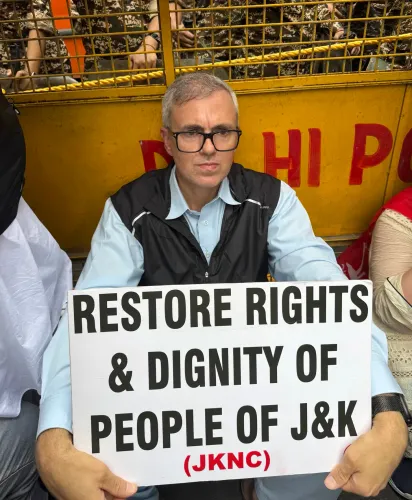
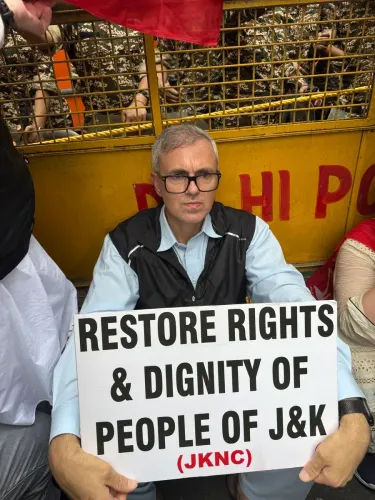
The Jantar Mantar protest, being organised by the National Conference and allied parties, is primarily focused on demanding the restoration of full statehood to Jammu and Kashmir, which was downgraded to a Union Territory in August 2019 following the abrogation of Article 370. The Mirwaiz's conditions — adding the Kashmir resolution and prisoner release demands — would significantly broaden the protest's political character, making it harder for mainstream national parties to associate with it.
With July 13 days away and the statehood protest drawing national attention, the Mirwaiz's stance is likely to intensify the debate over who speaks for J&K's political aspirations and on what terms.
Point of View
Prisoner releases, and a dialogue framework — he has drawn a line that the NC cannot easily cross without alienating its coalition partners in Delhi. The NC won in 2024 on a platform of restoration; a protest limited to statehood alone risks looking like a managed retreat from that mandate. The timing, days before July 13, amplifies the pressure: the Mirwaiz is reminding both the government and the NC that the Valley's political memory is longer than any single protest banner.
NationPress
9 Oct 2026
Frequently Asked Questions
Why did Mirwaiz Umar Farooq reject the National Conference's Jantar Mantar protest invitation?
Mirwaiz Umar Farooq declined the invitation because the proposed protest is limited to demanding the restoration of J&K's statehood. He said he would join only if the protest also included demands for the resolution of the Kashmir issue, restoration of Articles 370 and 35A, and the release of separatist leaders and youth held in various jails.
What is the Jantar Mantar protest about?
The Jantar Mantar protest is being organised by the National Conference and allied parties to demand the restoration of full statehood to Jammu and Kashmir, which was downgraded to a Union Territory in August 2019 following the abrogation of Article 370.
What conditions did the Mirwaiz set for joining the protest?
The Mirwaiz set three broad conditions: the protest must include a demand for the peaceful resolution of the Kashmir issue through dialogue, the restoration of Articles 370 and 35A along with J&K's original state status, and the release of political leaders and youth imprisoned in various jails — including those denied release despite court bail orders.
What is the significance of July 13 in Kashmir?
July 13 marks the anniversary of the 1931 revolt against autocratic rule in Kashmir, when the first martyrs fell while demanding social, religious, and political rights. The Mirwaiz said that for several consecutive years, authorities have imposed restrictions on this date and placed him under house arrest, and that the state holiday on July 13 has also been withdrawn.
What did the Mirwaiz say about the National Conference's 2024 election mandate?
The Mirwaiz argued that the National Conference was given a clear mandate by voters in the 2024 J&K Assembly elections specifically to fight for the restoration of all rights stripped from the people of J&K. He said a protest focused only on statehood falls short of that mandate and does not reflect the full scope of what the NC promised its electorate.