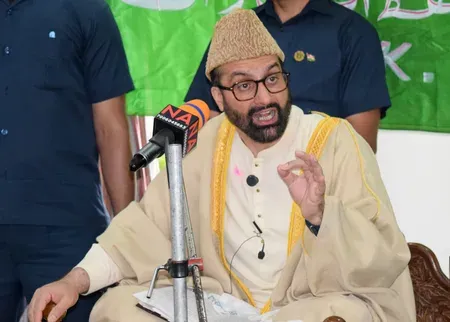
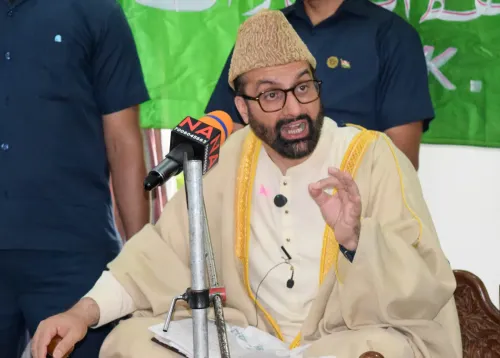
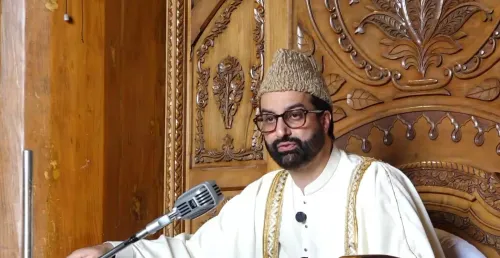
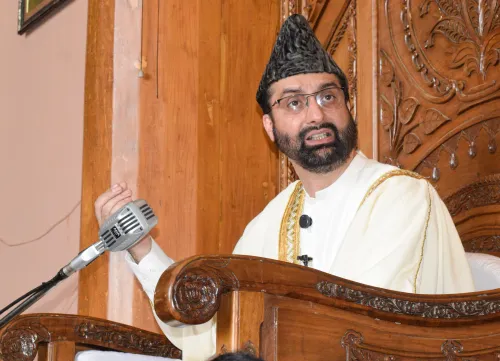
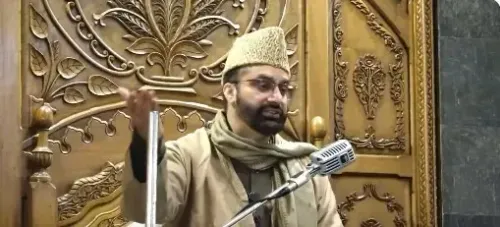
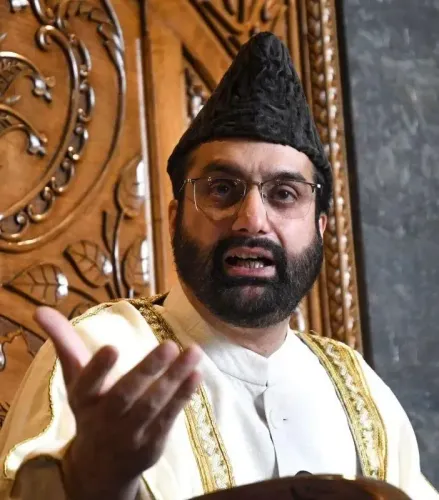
Mirwaiz Umar Farooq returns to Jama Masjid pulpit after two weeks of restrictions
Synopsis
After nearly two weeks of being reportedly barred from the pulpit, Mirwaiz Umar Farooq returned to Srinagar's Jama Masjid on 21 August and declared that attempts to silence the historic platform 'seemed to be part of state policy.' His reappearance — with the AAC banned under UAPA since March 2025 — marks a pointed moment of public defiance in an already fraught political landscape.
Key Takeaways
Mirwaiz Umar Farooq delivered the Friday sermon at Jama Masjid, Srinagar on 21 August after nearly two weeks of reported restrictions.
He said he was also denied the opportunity to address the gathering at Khwaja Digar at Naqshband Sahib during the restriction period.
Mirwaiz described attempts to silence the pulpit as reportedly 'part of state policy' at present.
He heads the Awami Action Committee (AAC) , banned for five years by the MHA under UAPA on 11 March 2025 .
The government cited alleged anti-national activities, secessionist propaganda, and support for terrorism as grounds for the AAC ban.
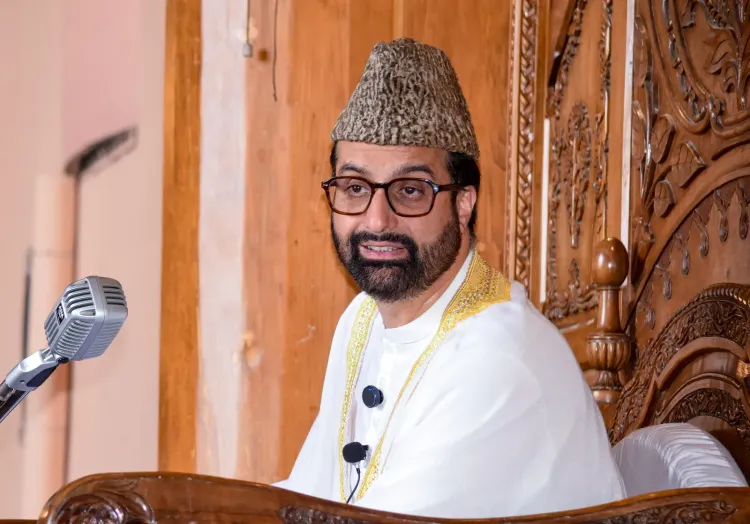
Mirwaiz Umar Farooq, Jammu and Kashmir's senior religious leader and chief cleric, returned to the historic pulpit of Jama Masjid in Srinagar on 21 August to deliver the Friday sermon, declaring that the mosque's pulpit has stood for the rights of the people across generations. His return came after nearly two weeks during which he was reportedly prevented from addressing congregations at the city's most prominent mosque.
What Mirwaiz Said at the Pulpit
Mirwaiz Farooq told the congregation that he had also been denied the opportunity to address the gathering at Khwaja Digar at Naqshband Sahib during the period of restrictions. He described each opportunity to return as 'a blessing from Allah', and said that restrictions and attempts to 'silence the pulpit, unfortunately, seemed to be part of the state policy' at present.
He called on his followers to bear the situation with patience and continue their work as best they could. 'It is the legacy of my forefathers and the shared inheritance of the people of Jammu and Kashmir,' he said, pledging that the pulpit's role would continue 'whenever given the chance.'
The Role of the Historic Pulpit
Addressing those who imposed the restrictions, Mirwaiz argued that the Jama Masjid pulpit has for generations served as an instrument of education and social guidance on religious and moral lines. 'It has helped in creating awakening and awareness among people not only regarding their rights but also their duties,' he said.
He maintained that the pulpit has historically advocated for community aspirations, promoted peaceful coexistence, and voiced minority rights. He characterised the activities associated with the pulpit as 'peaceful, principled and dignified', favouring dialogue over confrontation and issue-based engagement over personal disputes.
Background: AAC Ban and Ongoing Restrictions
Mirwaiz Farooq also heads the Awami Action Committee (AAC), which the Union Ministry of Home Affairs (MHA) declared an unlawful organisation on 11 March 2025. The AAC was banned for five years under the Unlawful Activities (Prevention) Act (UAPA).
The government cited the group's alleged involvement in anti-national activities, secessionist propaganda, and supporting terrorism as grounds for the ban. The AAC and Mirwaiz have not publicly accepted these characterisations.
Wider Context
The Jama Masjid in Srinagar has long been a focal point for religious and civic life in the Kashmir Valley. Restrictions on Friday sermons at the mosque have occurred periodically over the years, often during periods of heightened political sensitivity. Mirwaiz's return to the pulpit after a fortnight-long absence is being closely watched as a signal of the current political climate in the region. How authorities respond to his continued public engagement will likely shape the next phase of this standoff.
Point of View
But framing it as 'state policy' — as Mirwaiz now does openly — raises the political temperature. With the AAC under a five-year UAPA ban and the government's security rationale firmly on record, there is little room for either side to step back without political cost. The real question is whether this cycle of restriction and return eventually produces a negotiated framework, or simply continues as an unresolved fault line in J&K's post-Article 370 political order.
NationPress
21 Aug 2026
Frequently Asked Questions
Why was Mirwaiz Umar Farooq prevented from delivering the Friday sermon at Jama Masjid?
Mirwaiz Umar Farooq was reportedly prevented from delivering the Friday sermon at Jama Masjid, Srinagar for nearly two weeks, though the authorities did not publicly detail the specific reasons for each restriction. He also said he was denied the opportunity to address the gathering at Khwaja Digar at Naqshband Sahib during this period.
What is the Awami Action Committee and why was it banned?
The Awami Action Committee (AAC) is a socio-political organisation headed by Mirwaiz Umar Farooq. The Union Ministry of Home Affairs banned it for five years on 11 March 2025 under the Unlawful Activities (Prevention) Act (UAPA), citing alleged involvement in anti-national activities, secessionist propaganda, and support for terrorism.
What did Mirwaiz say about the role of the Jama Masjid pulpit?
Mirwaiz said the Jama Masjid pulpit has for generations educated individuals, shaped society on religious and moral lines, advocated community aspirations, promoted peaceful coexistence, and voiced minority rights. He described its activities as 'peaceful, principled and dignified', favouring dialogue over confrontation.
When did Mirwaiz return to the Jama Masjid pulpit?
Mirwaiz Umar Farooq returned to the Jama Masjid pulpit in Srinagar on 21 August to deliver the Friday sermon, ending a period of nearly two weeks during which he was reportedly barred from doing so.
What is the significance of the Jama Masjid in Srinagar?
The Jama Masjid in Srinagar is one of the most prominent mosques in the Kashmir Valley and has historically served as a centre of religious, civic, and political life. Restrictions on Friday sermons there are closely watched as indicators of the political climate in the region.