Madras HC dismisses plea to disqualify 25 rebel AIADMK MLAs
Synopsis
The Madras High Court has shut down a bid to disqualify 25 rebel AIADMK MLAs who crossed the floor during CM C. Joseph Vijay's confidence vote — ruling that once Edappadi K. Palaniswami condoned their conduct under the Tenth Schedule, no disqualification ground survived. The verdict reinforces how much power party leadership holds over anti-defection proceedings, and how little room third parties have to challenge it.
Key Takeaways
The Madras High Court dismissed a PIL seeking disqualification of 25 rebel AIADMK MLAs on 20 August .
The MLAs had voted in support of Chief Minister C.
Joseph Vijay 's confidence motion on 13 May .
AIADMK General Secretary Edappadi K.
Palaniswami condoned the conduct of 21 of the 25 legislators on 27 May , within the 15-day window under the Tenth Schedule.
Prabhakar 's decision to drop proceedings against the 21 MLAs was upheld as legally correct.
The bench found the petitioner had no legal standing as a third party to intervene in AIADMK's internal affairs.
The court called the petitioner's arguments 'baseless and misplaced.'
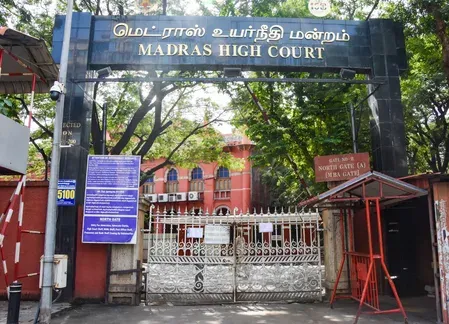
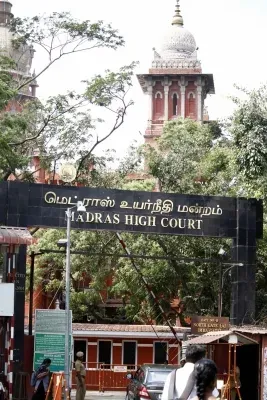
The Madras High Court on 20 August dismissed a public interest litigation seeking disqualification proceedings against 25 rebel All India Anna Dravida Munnetra Kazhagam (AIADMK) legislators who voted in favour of the confidence motion moved by Chief Minister C. Joseph Vijay on 13 May. The division bench ruled the petition was legally untenable, calling the petitioner's arguments 'baseless and misplaced.'
What the Court Decided
A division bench comprising Chief Justice Sushrut Arvind Dharmadhikari and Justice G. Arul Murugan dismissed the PIL filed by advocate P.V. Selvakumar of Tiruvallur district. The bench accepted Advocate General Vijay Narayan's argument that Selvakumar, as a third party, had no legal standing to intervene in the internal affairs of the AIADMK.
The court also declined to quash Tamil Nadu Assembly Speaker J.C.D. Prabhakar's earlier decision to drop disqualification proceedings against 21 of the 25 legislators, after AIADMK General Secretary Edappadi K. Palaniswami formally condoned their conduct.
The Legal Argument at the Centre
Selvakumar's counsel, K. Sakthivel, contended that Palaniswami had on 13 May submitted a representation to the Speaker seeking disqualification of all 25 MLAs under Paragraphs 2(1)(a) and 2(1)(b) of the Tenth Schedule to the Constitution — the anti-defection provisions. Since action was sought under both clauses, the counsel argued the Speaker could not have accepted Palaniswami's subsequent request, dated 27 May, to withdraw proceedings against 21 of the legislators.
Paragraph 2(1)(a) covers legislators who voluntarily give up party membership, while Paragraph 2(1)(b) applies to those who vote or abstain contrary to party directions — and expressly allows the party to condone such conduct within 15 days.
Why the Court Rejected the Plea
Writing the verdict, Justice Murugan held that the allegation under Paragraph 2(1)(a) was itself rooted in the MLAs' defiant voting — the same act that Paragraph 2(1)(b) explicitly permits the party to condone. Once the AIADMK General Secretary formally condoned the conduct within the prescribed period, no independent disqualification ground survived under either provision.
The bench ruled that Speaker Prabhakar had acted correctly in dropping proceedings against the 21 legislators and found no merit in the petitioner's case.
Broader Significance
The ruling reaffirms the established constitutional position that a political party retains the authority to condone a legislator's anti-whip vote within the window prescribed by the Tenth Schedule, effectively overriding any third-party challenge to that decision. This comes amid continued political turbulence in Tamil Nadu following the confidence vote, which tested the durability of the AIADMK's legislative bloc. Notably, 4 of the original 25 rebel MLAs remain outside the condoned group, and their status was not directly addressed by this ruling.
Point of View
A loose end that could resurface. More broadly, the episode illustrates the fragility of AIADMK's legislative discipline after the confidence vote: a general secretary who first sought disqualification and then withdrew it within a fortnight signals internal bargaining, not principled party management. Courts, correctly, will not referee that bargaining — but voters and political observers should.
NationPress
20 Aug 2026
Frequently Asked Questions
Why did the Madras High Court dismiss the plea against the 25 AIADMK MLAs?
The court dismissed the PIL because the petitioner, advocate P.V. Selvakumar, was a third party with no legal standing to interfere in the AIADMK's internal affairs. The bench also found that once AIADMK General Secretary Edappadi K. Palaniswami formally condoned the conduct of 21 of the legislators within the 15-day window under the Tenth Schedule, no disqualification ground survived under either Paragraph 2(1)(a) or 2(1)(b).
What is the Tenth Schedule and how does it apply here?
The Tenth Schedule of the Constitution contains India's anti-defection law. Paragraph 2(1)(b) allows a party to disqualify legislators who vote against party directions — but also permits the party to condone such conduct within 15 days. In this case, the AIADMK exercised that condonation, which the court held extinguished the disqualification proceedings.
What did the Tamil Nadu Assembly Speaker decide?
Speaker J.C.D. Prabhakar dropped disqualification proceedings against 21 of the 25 rebel MLAs after AIADMK General Secretary Edappadi K. Palaniswami submitted a request on 27 May withdrawing the earlier disqualification plea. The Madras High Court upheld this decision as legally correct.
Who filed the PIL and what was the argument?
The PIL was filed by advocate P.V. Selvakumar of Tiruvallur district. His counsel argued that since Palaniswami had originally sought disqualification under both Paragraphs 2(1)(a) and 2(1)(b), the Speaker could not accept a subsequent withdrawal of proceedings — an argument the court rejected.
What happens to the four MLAs not covered by the condonation?
The court's ruling focused on the 21 legislators whose conduct was condoned by the AIADMK. The status of the remaining four rebel MLAs, who were not included in Palaniswami's 27 May condonation request, was not directly resolved by this verdict.