Parandur airport scrapped: Stalin warns TN risks losing investors to rival states
Synopsis
Tamil Nadu's Parandur airport — years in the making, with regulatory clearances secured and land acquisition underway — has been scrapped by the TVK government in a single Assembly announcement. DMK's Stalin says rival states are already counting their windfall, and Tamil Nadu's trillion-dollar economy target just got harder to reach.
Key Takeaways
Stalin on 24 August condemned the TVK government's cancellation of the Parandur international airport project.
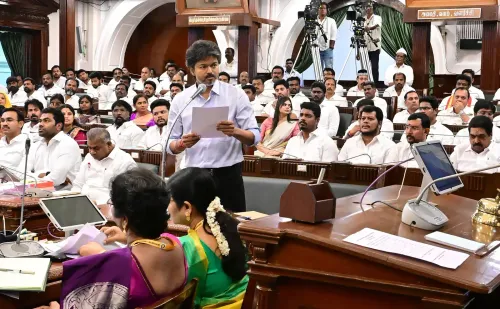
Joseph Vijay made the announcement under Rule 110 of the Assembly, which does not permit an immediate debate.
Stalin alleged the decision was driven by “petty political considerations” rather than sound policy.
Multiple regulatory clearances and land acquisition progress have reportedly been abandoned with the cancellation.
Stalin warned that rival states stand to gain industries and investments that would otherwise have come to Tamil Nadu .
Tamil Nadu's targets of a one-trillion-dollar and later 1.5-trillion-dollar economy are at risk, Stalin argued, without sustained aviation and industrial infrastructure.
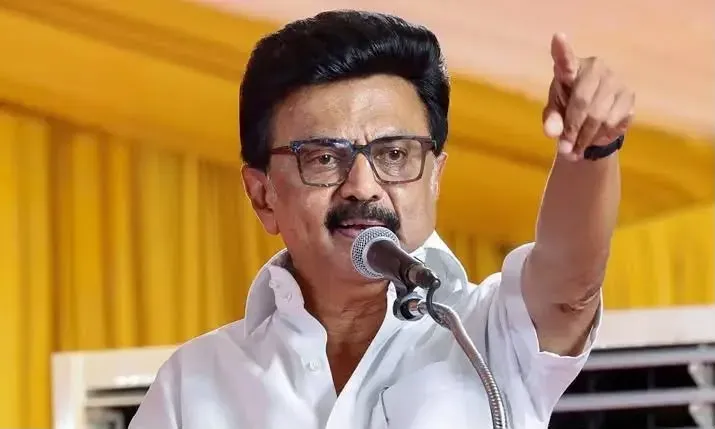
Dravida Munnetra Kazhagam (DMK) president and former Chief Minister M.K. Stalin on Monday, 24 August launched a sharp attack on the Tamilaga Vettri Kazhagam (TVK) government's decision to abandon the proposed Parandur international airport, warning that the move would set Tamil Nadu's development back by several years and erode its standing as a premier investment destination.
Stalin's Core Objection
Responding to Chief Minister C. Joseph Vijay's announcement in the Legislative Assembly, Stalin alleged the decision was driven by “petty political considerations” and accused the TVK government of sacrificing the state's long-term interests. In a social media post, he characterised the cancellation not as a policy shift but as a “major disappointment.”
Stalin also objected to the procedural manner in which the announcement was made — specifically under Rule 110 of the Assembly, a provision that does not permit an immediate floor debate. He argued that a decision of such magnitude warranted full legislative discussion, not a unilateral declaration.
Why Parandur Was Chosen
According to Stalin, the Parandur site was finalised only after a comprehensive evaluation of all feasible alternative locations. Multiple stages of planning and regulatory clearances had already been secured, and land acquisition was reportedly well underway. The previous DMK administration, he said, had been positioned to break ground immediately upon returning to office.
Tamil Nadu's leadership across sectors — from electronics exports to automobile manufacturing — made a world-class international airport not a luxury but a necessity for Chennai, Stalin argued. Expanded aviation infrastructure, he said, is directly linked to industrial growth, export competitiveness, and employment generation.
The Development Cost of Delay
Stalin warned that identifying a fresh site, obtaining new regulatory approvals, and restarting land acquisition from scratch would trigger prolonged delays. He claimed that by the time such a process concluded, Tamil Nadu's broader economic momentum could suffer serious and lasting damage.
He described Vijay's announcement as a “jackpot” for competing states actively courting industries and investments that might otherwise have flowed into Tamil Nadu. The state, he said, risked ceding ground it had built under what he called the “Dravidian Model” of governance.
The ₹1-Trillion Economy Goal at Stake
Stalin linked the airport decision to Tamil Nadu's larger economic ambition — building a one-trillion-dollar economy, with a subsequent target of 1.5 trillion dollars. He argued that sustained industrial development is a prerequisite for reaching either milestone, and that the TVK government had acted without adequate consultation or foresight.
He further warned that the cancellation could undermine employment opportunities and, in his words, shatter the aspirations of Tamil Nadu's youth. This comes amid a broader contest between southern states — Tamil Nadu, Karnataka, Telangana, and Andhra Pradesh — for manufacturing investments, particularly in semiconductors and electronics.
The TVK government has yet to detail an alternative airport plan or timeline, leaving investors and industry bodies awaiting clarity on Chennai's long-term aviation infrastructure roadmap.
Point of View
Not the politicians. Stalin's ‘jackpot for rival states’ framing is pointed: Karnataka and Andhra Pradesh have been aggressively pitching for the same semiconductor and electronics investments Tamil Nadu has courted. What mainstream coverage underplays is the sunk cost: regulatory clearances, environmental assessments, and partial land acquisition do not restart cheaply or quickly. The TVK government has offered no alternative site or timeline, which is the real story. A trillion-dollar economy target without a credible plan for Chennai's aviation capacity is aspirational arithmetic, not policy.
NationPress
25 Aug 2026
Frequently Asked Questions
Why has the Parandur international airport project been scrapped?
Chief Minister C. Joseph Vijay announced the cancellation of the Parandur airport project in the Tamil Nadu Legislative Assembly. The TVK government has not publicly detailed its full reasoning, but the announcement was made under Rule 110, which does not allow an immediate legislative debate.
What is M.K. Stalin's objection to the cancellation?
Stalin argues the decision was driven by political considerations rather than sound planning, and that it will set Tamil Nadu's development back by years. He also objected to the use of Rule 110, which prevented legislators from debating a decision of such economic significance.
How advanced was the Parandur airport project before it was cancelled?
According to Stalin, the Parandur site had been selected after evaluating all feasible alternatives, and multiple stages of planning and regulatory approvals had been completed. Land acquisition was also reportedly in progress when the TVK government cancelled the project.
Which states could benefit from Tamil Nadu scrapping the Parandur airport?
Stalin described the cancellation as a ‘jackpot’ for competing states — implicitly referencing Karnataka, Telangana, and Andhra Pradesh — which are actively courting the same electronics, semiconductor, and automobile manufacturing investments Tamil Nadu has pursued.
How does the airport cancellation affect Tamil Nadu's trillion-dollar economy goal?
Stalin linked the airport directly to Tamil Nadu's ambition of building a one-trillion-dollar economy, arguing that sustained industrial growth — which requires world-class aviation infrastructure — is a prerequisite. He warned the cancellation could undermine employment and investor confidence needed to reach that target.