Mock Parliament at NDMC Centre aims to boost civic awareness, says Delhi professor
Synopsis
A Mock Parliament organised by Citizens for Democracy at New Delhi's NDMC Convention Centre let young participants role-play as Modi, Shah, Kharge and Gandhi — but the event's stated ambition goes further: professor Niranjan Kumar wants it to become a tool for public civic education and a forum to discuss electoral roll revision, economic progress, and what he alleges are external threats to the Indian state.
Key Takeaways
Citizens for Democracy organised a Mock Parliament at the NDMC Convention Centre, New Delhi on 30 October 2026 under its 'Voice of Today's Youth' initiative.
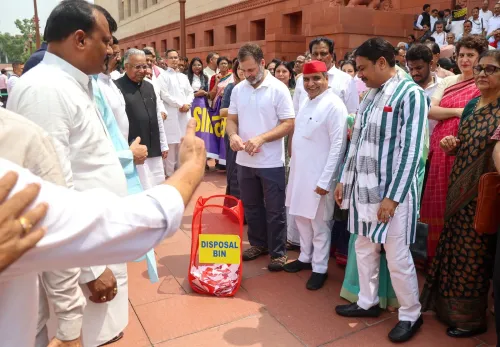
Young participants role-played senior leaders including PM Narendra Modi , Home Minister Amit Shah , Congress President Mallikarjun Kharge , and LoP Rahul Gandhi .
Delhi professor Niranjan Kumar said the initiative gains greater impact when taken before the general public rather than limited to university campuses.
The Mock Parliament was also aimed at raising awareness about the Special Intensive Revision (SIR) of electoral rolls.
Kumar alleged that external forces and a 'deep state' were working against India's progress — claims made without presented evidence.
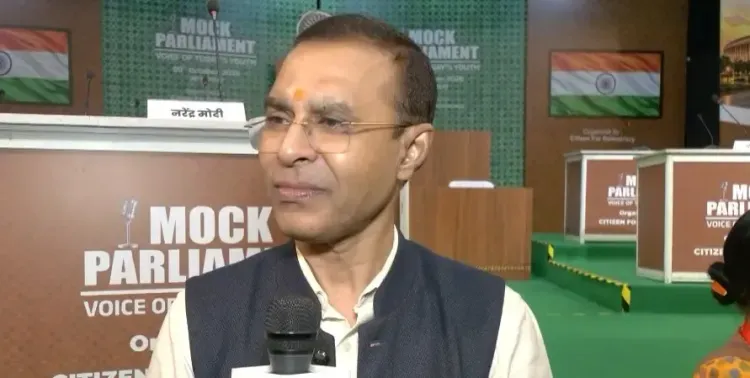
Delhi-based professor Niranjan Kumar on 30 October 2026 said that organising a Mock Parliament before a general public audience — rather than limiting it to university campuses — could significantly widen political awareness among ordinary citizens. He was speaking at an event held at the NDMC Convention Centre, New Delhi, organised by Citizens for Democracy under its 'Voice of Today's Youth' initiative.
What the Mock Parliament Involved
Young participants simulated parliamentary proceedings by taking on the roles of prominent political leaders from both the ruling party and the Opposition. Kumar confirmed that representations of senior figures — including Prime Minister Narendra Modi, Union Home Minister Amit Shah, Congress President Mallikarjun Kharge, and Leader of the Opposition in the Lok Sabha Rahul Gandhi — were among those being portrayed. Kumar described the exercise as 'a progressive act' that is common practice in leading universities worldwide, but argued its impact multiplies when taken to public spaces.
Electoral Roll Revision on the Agenda
Kumar said the Mock Parliament could also serve as a platform to inform citizens about the Special Intensive Revision (SIR) of electoral rolls and its significance. 'I believe that people should be made aware of SIR's functioning. SIR is important to remove the names of people who have died or moved to some other place. This is an important exercise,' he said. The SIR is a periodic process conducted by election authorities to ensure the accuracy of voter lists ahead of elections.
Claims About External Forces and the 'Deep State'
Kumar also urged participants to engage with what he described as the challenge posed by external forces to India's stability. 'I want the participants who will be part of this Mock Parliament to tell people how external forces are working to debilitate the Indian state,' he alleged, without naming specific countries or actors. He further alleged that certain nations did not want India to advance economically, attributing some domestic developments to what he characterised as the functioning of a 'deep state' — claims he offered without presenting supporting evidence.
India's Economic Rise and Democratic Credentials
Highlighting India's economic trajectory, Kumar said the country had moved from relative economic weakness to becoming one of the world's leading economies, expressing confidence that India would soon become the world's third-largest economy. He described India as the world's largest democracy and noted that its electoral process had attracted international attention, including a reported reference by a US president to India's voting system. He criticised the Opposition's stance alleging irregularities in India's electoral process, arguing it should be viewed against the backdrop of the country's democratic achievements. 'The American president cited our voting system, and the Opposition is fighting against that,' he said.
Broader Goal: Political Education Beyond Campuses
The event sought to immerse young participants in a simulated legislative setting, enabling them to engage directly with issues shaping public debate. Kumar framed the exercise as a form of civic and political education — one that gains additional value when it moves beyond academic institutions and reaches citizens who may have limited direct engagement with parliamentary processes. Organisers have not announced whether similar events are planned in other cities, but the initiative underscores a growing interest in experiential civic education among youth groups in India.
Point of View
But this event's framing blurs the line between neutral political education and ideological positioning. Professor Kumar's unsubstantiated allegations about a 'deep state' and unnamed 'external forces' — embedded in what is presented as a civics exercise for youth — risk politicising a format whose value depends on impartiality. The inclusion of SIR awareness is constructive, but electoral roll processes require balanced, non-partisan explanation to be credible to citizens across the political spectrum. If mock parliaments are to fulfil their democratic potential at scale, organisers and institutions will need to ensure the pedagogical framework is clearly separated from advocacy.
NationPress
30 Oct 2026
Frequently Asked Questions
What is the Mock Parliament organised by Citizens for Democracy?
It is a simulated parliamentary exercise held at the NDMC Convention Centre in New Delhi on 30 October 2026, where young participants took on the roles of senior political leaders and debated issues of national importance. The event was organised under the 'Voice of Today's Youth' initiative by Citizens for Democracy.
Who is professor Niranjan Kumar and what did he say about the event?
Niranjan Kumar is a Delhi-based academic who described Mock Parliaments as a progressive and common university practice. He argued that such exercises have a larger impact when conducted before a general public audience rather than restricted to academic settings, and called for the event to also address electoral roll revision and civic issues.
What is the Special Intensive Revision (SIR) of electoral rolls?
The Special Intensive Revision (SIR) is a periodic process conducted by election authorities to update and clean voter lists — removing entries of deceased voters or those who have moved. Kumar said the Mock Parliament could be used to explain the SIR process to the public and underscore its importance for electoral integrity.
Which political leaders were represented in the Mock Parliament?
Participants role-played senior national figures including Prime Minister Narendra Modi, Union Home Minister Amit Shah, Congress President Mallikarjun Kharge, and Leader of the Opposition in the Lok Sabha Rahul Gandhi, among others.
What were Kumar's claims about external forces and India's economy?
Kumar alleged — without presenting evidence — that certain foreign countries did not want India to advance economically and attributed some domestic developments to what he called a 'deep state.' He also highlighted India's rise as a global economy and expressed confidence that India would soon become the world's third-largest economy.