CM Himanta Thanks Centre as Modi Greenlights Delhi-Guwahati Bullet Train
Synopsis
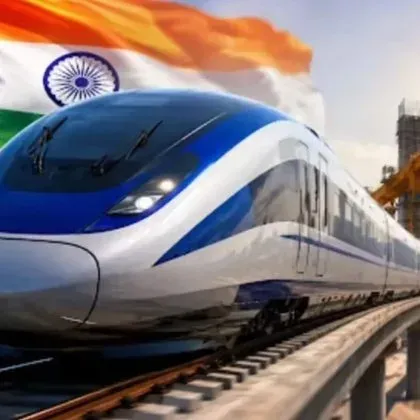
Prime Minister Narendra Modi has approved the expansion of the Delhi-Guwahati bullet train corridor via Varanasi, Patna and Siliguri, extending high-speed rail to Assam. Chief Minister Himanta Biswa Sarma welcomed the decision, marking a significant step in Northeast India's infrastructure integration.
Key Takeaways
PM Narendra Modi has approved the Delhi-Guwahati bullet train corridor , extending India's high-speed rail map to the Northeast for the first time.
The corridor will run via Varanasi , Patna , and Siliguri before reaching Guwahati , connecting four major hubs along the route.
Siliguri 's inclusion is strategically critical, as it is the sole land gateway — the 'Chicken's Neck' — linking mainland India to all seven Northeastern states.
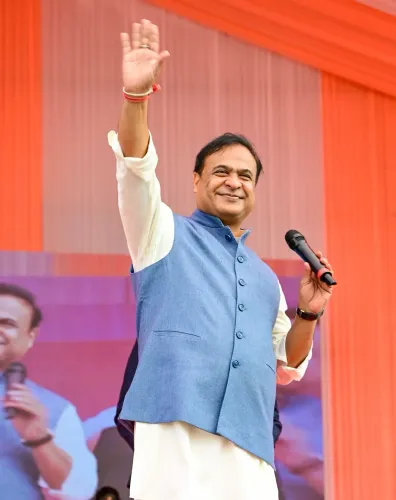
Assam CM Himanta Biswa Sarma publicly thanked the Centre, signalling strong state-level political support for the project.
India's only active bullet train project, the Mumbai-Ahmedabad corridor , received cabinet approval in 2015 and underscores the long lead time such projects require.
Critical next steps include funding sanctions, a Detailed Project Report, and land acquisition across Uttar Pradesh , Bihar , West Bengal , and Assam .
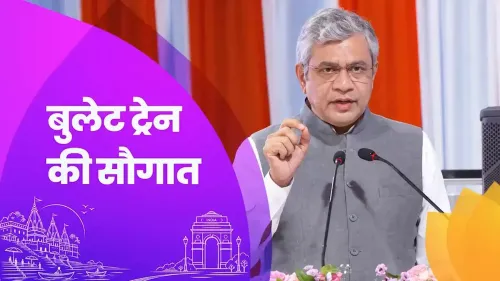
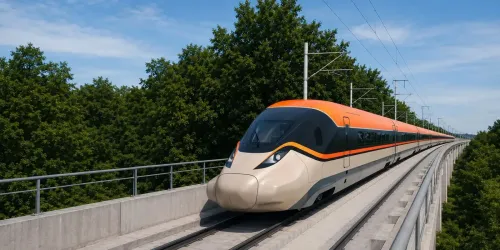
A bullet train corridor that once stopped well short of the Northeast has now been extended all the way to Guwahati — and Assam Chief Minister Dr Himanta Biswa Sarma is thanking the Centre for the landmark move. Prime Minister Narendra Modi has approved the expansion of the proposed high-speed rail corridor from Delhi to Guwahati, routed via Varanasi, Patna, and Siliguri, a decision that directly plugs Assam and the wider Northeast into India's emerging bullet-train map.
The route that changes the calculus for Northeast India
The corridor's revised alignment is what makes this announcement significant. Running through Varanasi — India's spiritual heartland and a politically high-profile constituency — then through Patna, Bihar's capital, and on to Siliguri, the narrow 'Chicken's Neck' corridor that is the only land gateway to Northeast India, the route stitches together four major population and commercial hubs before reaching Guwahati. Siliguri's inclusion is especially consequential: it is the pinch-point through which virtually all surface freight and passenger movement between mainland India and the seven Northeastern states must pass. A high-speed link at that node would dramatically compress travel time and logistics costs for the entire region.
Northeast connectivity: a long-pending national promise
India's high-speed rail ambitions were formally launched with the Mumbai-Ahmedabad corridor, which received cabinet approval in 2015 and remains the country's only bullet train project under active construction. That project's long gestation — spanning land acquisition battles, funding negotiations, and engineering challenges — set the template for the complexity that corridor extensions of this kind entail. Extending the bullet-train network to the Northeast, a region that has historically lagged on rail connectivity relative to its strategic and demographic importance, represents a qualitatively different political and logistical undertaking. Successive governments have pledged to close the infrastructure gap; this approval, if it moves to a funded Detailed Project Report, would be among the most concrete steps yet.
What CM Sarma's gratitude signals
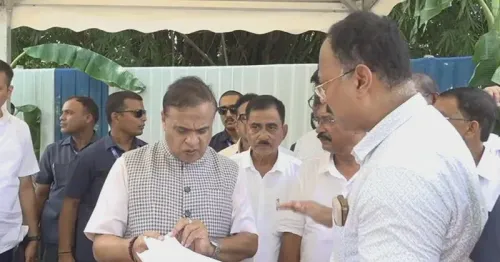
Chief Minister Himanta Biswa Sarma, who has consistently positioned improved physical connectivity as the centrepiece of Assam's economic growth agenda, publicly thanked the Centre following the announcement. His acknowledgement underlines the political weight the decision carries within the state — and the pressure his government had been placing on New Delhi to extend high-speed rail beyond the Indo-Gangetic Plain. For Assam's residents, who currently face rail journey times of roughly 36-40 hours between Delhi and Guwahati on conventional trains, the corridor's promise is viscerally real.
Funding, land, and the road from approval to rail
Approvals of this nature mark the beginning of a long process, not the end. The critical next steps — funding sanctions from the Ministry of Railways, commissioning of a Detailed Project Report, and land acquisition across multiple states including Uttar Pradesh, Bihar, West Bengal, and Assam — will determine whether this corridor moves at bullet speed or stalls at station. Each of those states brings its own land-acquisition politics and administrative bandwidth to the table. Watchers of Indian rail policy will track whether a DPR timeline and budgetary allocation follow swiftly, or whether the announcement stays at the vision stage through the next budget cycle.
If it does move, the Delhi-Guwahati bullet train would not just cut travel time — it would reframe the Northeast's relationship with the rest of India, one kilometre of high-speed track at a time.
Point of View
Signalling a deliberate effort to use infrastructure as a tool for Northeast integration — a region that has long been promised but under-delivered connectivity. Routing the corridor through Varanasi and Patna also layers political geography onto the engineering logic, ensuring the line serves two electorally significant states before it reaches Assam. CM Sarma's public gratitude reflects how central physical connectivity has become to the BJP's Northeast governance narrative. Whether the approval translates into a funded, time-bound project will be the real test — and the budget cycle and DPR timeline will tell that story.
NationPress
2 Nov 2026
Frequently Asked Questions
What is the Delhi-Guwahati bullet train corridor?
It is a proposed high-speed rail link from Delhi to Guwahati, now approved with a route via Varanasi, Patna, and Siliguri, that would connect the Northeast to India's national bullet-train network for the first time.
Which cities does the Delhi-Guwahati bullet train pass through?
The approved corridor runs from Delhi through Varanasi, Patna, and Siliguri before terminating at Guwahati in Assam.
Why is Siliguri important in the bullet train route?
Siliguri sits at the 'Chicken's Neck', the narrow land corridor that is the only surface link between mainland India and all seven Northeastern states, making it a critical strategic and logistical node.
What did Assam CM Himanta Biswa Sarma say about the bullet train approval?
CM Himanta Biswa Sarma publicly thanked the Centre — led by PM Narendra Modi — for approving the corridor extension to Assam, calling it a significant step for the state's connectivity.
When will the Delhi-Guwahati bullet train be built?
No construction timeline has been confirmed yet. The critical next steps are funding sanctions, a Detailed Project Report from the Ministry of Railways, and land acquisition across multiple states.