PM Modi Pitches 'Technology for Humanity' at BharatInnov2026
Synopsis
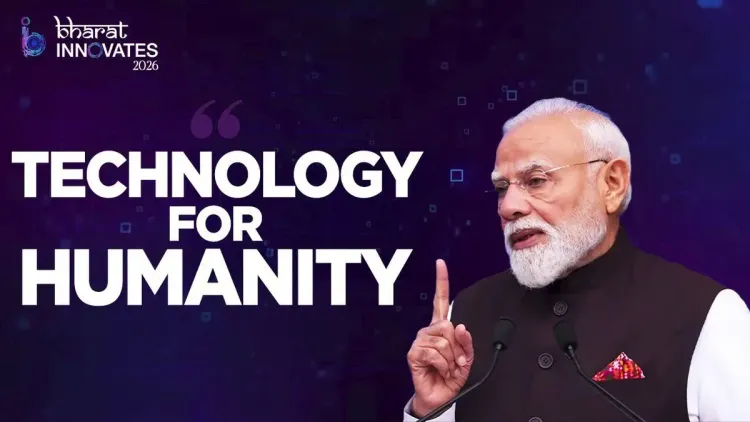
Prime Minister Narendra Modi on 14 June 2026 declared India's technology priority as 'Technology for Humanity and Human-Centric Innovation,' positioning the country as a global champion of trusted, inclusive digital solutions through the BharatInnov2026 platform. The statement builds on India's AI-for-All and Digital Public Infrastructure legacy.
Key Takeaways
PM Narendra Modi on 14 June 2026 publicly stated India's technology priority as 'Technology for Humanity and Human-Centric Innovation.' The post was directed at @BharatInnov2026 , linking the message to an emerging innovation initiative under that banner.
NITI Aayog 's #AIforAll strategy, published in 2018 , first enshrined human-centric and inclusive principles as official Indian AI policy.
India's 2023 G20 presidency advanced a Digital Public Infrastructure agenda promoting trusted technologies for the Global South .
Platforms such as Aadhaar and UPI serve as India's flagship examples of large-scale, inclusive digital infrastructure.
Follow-up partnerships and policy positions at global AI governance summits will determine how the 'Technology for Humanity' vision is operationalised.
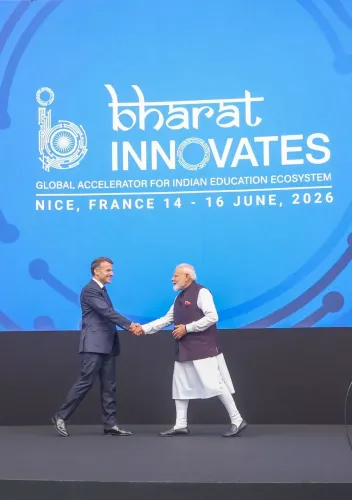
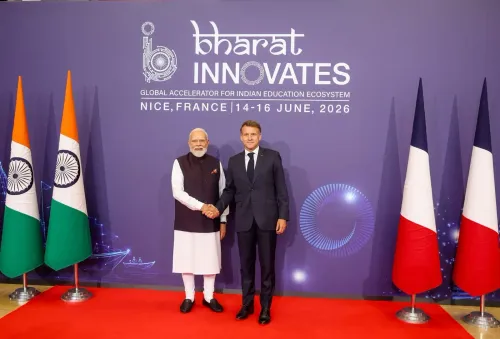
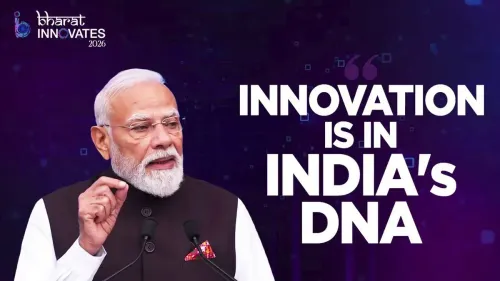
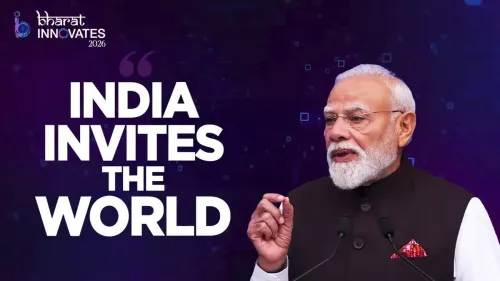
Prime Minister Narendra Modi on Sunday, 14 June 2026 articulated India's technology vision to a global audience, declaring that the country's priority is 'Technology for Humanity and Human-Centric Innovation' as the world seeks trusted and inclusive digital solutions. The statement, posted on X, was directed at the BharatInnov2026 platform and accompanied by a video underscoring the message.
Context
In the post, Modi observed that 'the world is looking towards technologies that are trusted, inclusive, human-centric and dedicated to the global good.' He positioned India as a nation with a clear answer to that demand, framing the country's approach not merely as domestic policy but as a contribution to global welfare. The remarks align with a long-running effort by New Delhi to present its digital governance model as a credible alternative for developing economies.
The post tags @BharatInnov2026, signalling that the statement is linked to an innovation-focused initiative or event under that banner, though full details of the platform remain emerging.
Policy Backdrop
India's human-centric technology doctrine has deep institutional roots. In 2018, government think-tank NITI Aayog released the National Strategy for Artificial Intelligence under the banner #AIforAll, enshrining inclusive and rights-respecting principles as the foundation of India's AI policy. That framework explicitly prioritised social impact over pure commercial or strategic gain.
During India's G20 presidency in 2023, New Delhi advanced the New Delhi Declaration and a Digital Public Infrastructure agenda that pushed trusted, inclusive technologies as a model for the Global South. Homegrown platforms such as Aadhaar and UPI were held up as proof that large-scale, interoperable digital systems can be built with inclusion at their core. The IndiaAI Mission has since extended this logic into compute, datasets, and safety research.
Stakeholders and Impact
The immediate audience for Modi's message spans Indian startups seeking a policy signal, Global South governments evaluating which technology governance models to adopt, and AI ethics researchers watching whether rhetoric translates into binding commitments. For domestic innovators, the framing offers a soft-power narrative that can open doors in markets wary of both Western platform dominance and opaque state-controlled alternatives.
Internationally, India occupies a deliberate middle position — championing open, rights-respecting digital infrastructure that neither mirrors the heavily commercialised Western model nor the state-surveillance-heavy approach associated with some other large technology powers. Modi's statement reinforces that positioning at a moment when global AI governance negotiations are intensifying at the United Nations and in bilateral tech dialogues.
What's Next
Observers will watch for concrete announcements and partnerships emerging from the BharatInnov2026 platform, including any new agreements on digital public infrastructure exports or AI safety cooperation. India's positions at upcoming global AI safety and governance summits will be the next test of whether the 'Technology for Humanity' principle is codified into multilateral commitments. The emphasis on human-centric innovation suggests New Delhi intends to remain an active norm-setter, not merely a norm-taker, in the evolving global technology order.
Point of View
Reinforcing a policy arc that stretches from the 2018 AIforAll strategy through the 2023 G20 Digital Public Infrastructure push. By anchoring India's identity in 'trusted and inclusive' technology, New Delhi continues to carve out a governance lane distinct from both Silicon Valley commercialism and authoritarian state-tech models. The framing is also a bid for norm-setting leadership at a moment when global AI governance rules are still being written. Whether BharatInnov2026 produces concrete multilateral commitments will be the real measure of whether this vision moves from rhetoric to architecture.
NationPress
13 Sept 2026
Frequently Asked Questions
What is India's 'Technology for Humanity' policy?
'Technology for Humanity' is India's stated approach to digital innovation, prioritising trusted, inclusive, and human-centric technologies that serve social good rather than purely commercial or strategic interests. PM Modi articulated this as India's core technology priority in a post on 14 June 2026.
What is BharatInnov2026?
BharatInnov2026 appears to be an innovation-focused initiative or platform that PM Modi tagged in his 14 June 2026 post on X. Full details of the platform, its organisers, and agenda are still emerging.
What is India's AIforAll strategy?
AIforAll is the banner under which NITI Aayog published India's National Strategy for Artificial Intelligence in 2018. It established inclusive, human-centric principles as the foundation of India's approach to AI development and governance.
How has India promoted digital public infrastructure globally?
During its G20 presidency in 2023, India advanced the New Delhi Declaration and a Digital Public Infrastructure agenda, promoting open and interoperable systems like Aadhaar and UPI as models for developing countries to adopt trusted, inclusive digital platforms.
Why does India position itself as a 'bridge' in global technology governance?
India seeks to offer developing nations an alternative to both heavily commercialised Western platforms and opaque state-controlled technology systems. By championing open, rights-respecting digital infrastructure, New Delhi aims to be a norm-setter in global AI and technology governance forums such as the UN and G20.