PM Modi forms exam reform task force, Nandan Nilekani to lead
Synopsis
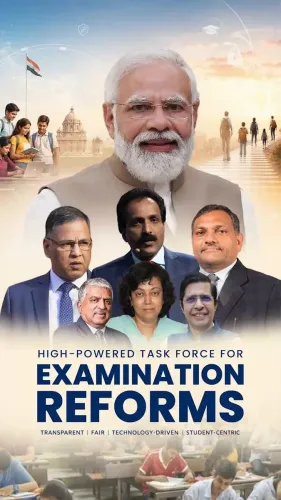
Prime Minister Narendra Modi has constituted a task force to reform India's examination system, with Infosys co-founder and Aadhaar architect Nandan Nilekani named as its head. Union Textiles Minister Giriraj Singh shared the announcement on 27 July 2026, marking a significant step in implementing the vision of the National Education Policy 2020.
Key Takeaways
Prime Minister Narendra Modi has formed a task force specifically to recommend reforms in India's examination system.
Nandan Nilekani , co-founder of Infosys and former chairman of UIDAI (the body behind Aadhaar), will lead the task force.
The announcement was shared by Union Textiles Minister Giriraj Singh on 27 July 2026 via the NaMo App.
The move aligns with the National Education Policy 2020 , which called for shifting assessments from rote-based to competency-based learning.
Key stakeholders include India's school students, state education boards, CBSE , UGC , and the multi-thousand-crore coaching industry.
Task force recommendations could shape CBSE and UGC rule changes as early as the 2027 Budget Session of Parliament.
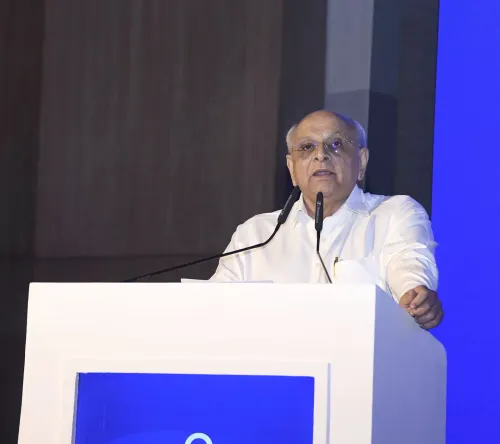
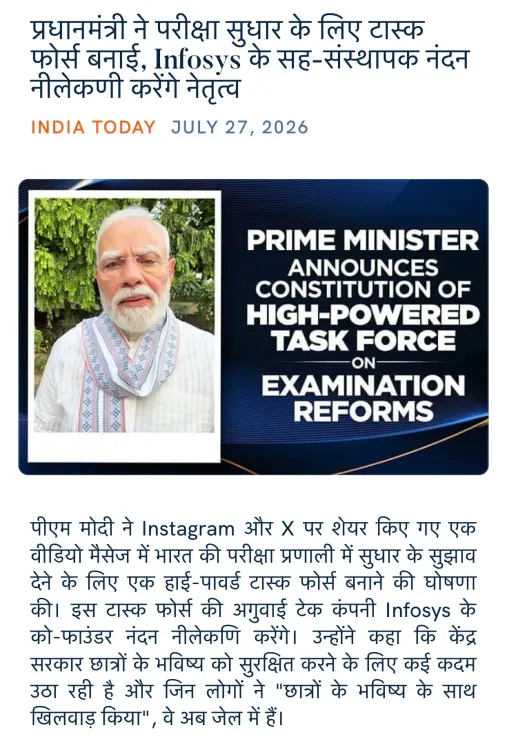
Union Textiles Minister Giriraj Singh on Monday, 27 July 2026, shared that Prime Minister Narendra Modi has constituted a task force to recommend reforms in India's examination system, with Infosys co-founder Nandan Nilekani appointed to head the body.
Singh's post, shared via the NaMo App, states in Hindi: 'Pradhan Mantri ne pariksha sudhar ke liye task force banayi, Infosys ke sah-sansthaapak Nandan Nilekani karenge netritva' ('The Prime Minister has formed a task force for examination reforms; Infosys co-founder Nandan Nilekani will lead it'). The announcement signals the government's intent to bring private-sector technology expertise to bear on one of India's most consequential public systems.
Context
Nandan Nilekani is among India's most prominent technology statesmen. As the founding chairman of the Unique Identification Authority of India (UIDAI), he architected the Aadhaar biometric identity platform, which now covers over a billion residents. He subsequently played an advisory role in the development of the Unified Payments Interface (UPI) and other digital public infrastructure. His appointment to lead an examination-reform body continues a pattern of successive central governments engaging private-sector leaders to redesign large-scale public systems.
Policy Backdrop
The move builds on the National Education Policy (NEP) 2020, which explicitly called for transforming India's assessment architecture — shifting away from rote memorisation toward competency-based and conceptual learning. The NEP had flagged the dominance of high-stakes board examinations as a driver of the country's vast, often high-pressure coaching industry. As early as 2019, the Ministry of Education had constituted a high-level committee on examination stress, whose recommendations fed into subsequent policy discussions. The new task force appears to be the operational follow-through on those earlier deliberations.
India's examination ecosystem is vast and complex: it encompasses CBSE, state boards, entrance tests such as JEE and NEET, and university-level assessments under UGC. Any structural reform would require coordination across multiple regulators and state governments, making the choice of a technology-and-systems leader like Nilekani strategically significant.
Stakeholders and Impact
The most directly affected group is India's estimated 250 million school-going students, along with their families, teachers, and school administrators. The coaching industry — a multi-thousand-crore sector concentrated in cities such as Kota, Delhi, and Hyderabad — stands to face structural disruption if reforms reduce the primacy of single-sitting, high-stakes tests. State education boards, which operate independently of CBSE, will be key interlocutors in any national standardisation effort.
For Infosys and the broader Indian technology sector, Nilekani's appointment reinforces the template of using digital tools — data analytics, adaptive testing platforms, and transparent result systems — to modernise public services. Civil society groups focused on education equity will watch closely to ensure that any digital-first reform does not widen the gap between urban and rural students.
What's Next
The task force is expected to study existing examination frameworks, consult stakeholders across states, and submit recommendations that could inform changes to CBSE and UGC regulations, potentially as early as the 2027 Budget Session of Parliament. Legislative or regulatory amendments flowing from the report would need to navigate the concurrent-list status of education in India's Constitution, requiring Centre-state consensus. Observers will track whether the task force's mandate extends to entrance examinations or remains confined to school-board assessments.
The appointment of a figure with Nilekani's cross-party credibility and proven track record in large-scale system design suggests the government is positioning this reform as a technocratic, consensus-building exercise rather than a politically contentious overhaul — a framing that could ease passage through Parliament and state legislatures alike.
Point of View
It also allows PM Modi to demonstrate tangible follow-through on the NEP 2020 promise of assessment reform ahead of state election cycles. The real test will be whether the task force's writ extends to politically sensitive entrance examinations like NEET and JEE, or stays within the safer terrain of school-board restructuring.
NationPress
25 Oct 2026
Frequently Asked Questions
Who is heading the exam reform task force announced by PM Modi?
Nandan Nilekani, co-founder of Infosys and former chairman of UIDAI (the body that built Aadhaar), has been appointed to head the task force on examination reforms announced by Prime Minister Narendra Modi.
What is the purpose of the PM Modi exam reform task force?
The task force has been constituted to recommend reforms in India's examination system, building on the National Education Policy 2020's goal of moving from rote-based to competency-based assessment.
Will the exam reform task force affect NEET and JEE?
The scope of the task force has not been officially detailed yet. Observers are watching whether it will cover high-stakes entrance examinations like NEET and JEE or focus primarily on school-board assessments under CBSE and state boards.
What is Nandan Nilekani's background in government work?
Nandan Nilekani served as the founding chairman of UIDAI, where he led the creation of the Aadhaar biometric identity system. He has also been closely associated with the development of UPI and other digital public infrastructure initiatives.
When could the exam reform task force submit its recommendations?
While no official deadline has been announced, policy observers expect the task force's recommendations could feed into legislative or regulatory changes as early as the 2027 Budget Session of Parliament.