Smriti Irani backs Nilekani-led task force on exam reforms
Synopsis
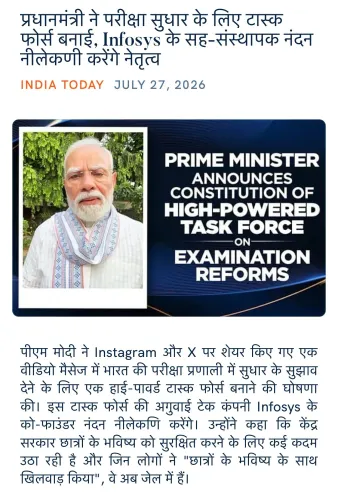
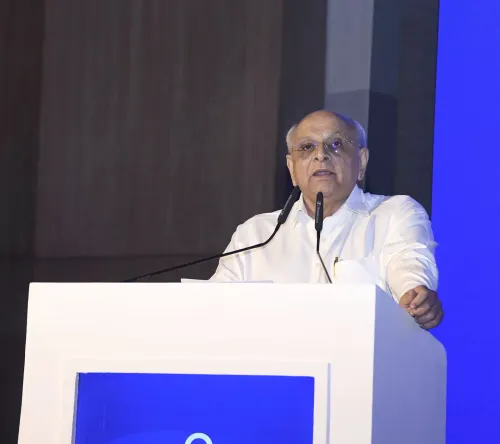
BJP leader Smriti Irani has backed a High-Powered Task Force led by Infosys co-founder and Aadhaar architect Nandan Nilekani, calling it a decisive step toward a transparent and future-ready national examination system under the Modi government.
Key Takeaways
BJP leader Smriti Irani publicly endorsed a High-Powered Task Force on national examination reform on 26 July 2026 .
The task force is led by Nandan Nilekani , co-founder of Infosys and architect of the Aadhaar biometric ID system.
Irani described the initiative as a 'decisive step' toward a 'robust, transparent, and future-ready examination ecosystem.' The National Testing Agency (NTA) , established in 2017 , was the earlier attempt to centralise and standardise national entrance examinations.
The National Education Policy 2020 had already called for an overhaul of assessment systems to improve transparency and reduce high-stakes pressure.
The task force's terms of reference, membership list, and recommendation timeline are yet to be formally released by the Ministry of Education .
BJP leader and former Union Minister Smriti Irani on Sunday, 26 July 2026 publicly endorsed a High-Powered Task Force constituted under the leadership of Nandan Nilekani, calling it a 'decisive step' toward building a 'robust, transparent, and future-ready examination ecosystem' under the Modi government.
Context
Irani's post on X described the task force as reinforcing what she termed the Modi government's 'commitment to systemic overhauls and lasting institutional reforms.' The endorsement signals broad political backing within the ruling party for the initiative, which places a technology veteran at the helm of a sensitive policy domain affecting millions of students annually.
Nandan Nilekani, co-founder of Infosys and former chairman of the Unique Identification Authority of India (UIDAI), is widely credited with designing and scaling the Aadhaar biometric identity programme — one of the largest digital public infrastructure projects in the world. His appointment to lead the examination task force signals the government's intent to bring large-scale systems-design thinking to the national testing architecture.
Policy Backdrop
India's centralised examination framework has faced recurring questions about integrity, standardisation, and scale. The National Testing Agency (NTA), established in 2017, was created specifically to consolidate entrance examinations previously administered by multiple independent bodies, aiming to reduce inconsistency and leakage risks.
The National Education Policy (NEP) 2020 further called for a fundamental overhaul of assessment systems, emphasising reduced high-stakes pressure, greater transparency, and technology-enabled delivery. The Nilekani-led task force appears to be a downstream institutional response to that policy mandate, extending the government's pattern of deploying digital-infrastructure expertise to redesign public service delivery systems.
This approach mirrors earlier initiatives in which technology leaders were brought in to architect solutions for welfare delivery, direct benefit transfers, and health data systems — domains where scale, identity verification, and fraud prevention overlap with examination integrity concerns.
Stakeholders and Impact
The task force's work has direct implications for crores of students who appear annually in national-level entrance examinations for higher education, including competitive tests for medical, engineering, and civil services admissions. Any structural reforms it recommends could reshape how these examinations are designed, administered, and audited.
Higher education institutions, examination boards, coaching industries, and state governments all have a stake in the outcome. Reforms that introduce biometric verification, digital proctoring, or decentralised test delivery — approaches consistent with Nilekani's prior work — could significantly alter the examination landscape.
What's Next
The immediate focus will be on the formal release of the task force's terms of reference, its full membership list, and the timeline for submitting recommendations to the Ministry of Education. Political endorsements such as Irani's are likely to build momentum for swift implementation once those recommendations are tabled.
With the Modi government framing examination reform as a pillar of institutional modernisation, the task force's findings are expected to carry significant policy weight — and its recommendations, when published, will be closely watched by students, educators, and opposition parties alike.
Point of View
And whether they address root causes of examination integrity failures, will determine whether this becomes a genuine institutional turning point or another procedural exercise.
NationPress
25 Oct 2026
Frequently Asked Questions
Who is leading the High-Powered Task Force on examination reform in India?
The task force is led by Nandan Nilekani , co-founder of Infosys and former chairman of UIDAI, who oversaw the creation of the Aadhaar biometric identity system.
What did Smriti Irani say about the examination task force?
Smriti Irani called the task force a 'decisive step' toward building a 'robust, transparent, and future-ready examination ecosystem,' and linked it to the Modi government's commitment to institutional reform.
Why was the National Testing Agency (NTA) set up?
The NTA was established in 2017 to centralise and standardise national entrance examinations that were previously administered by multiple separate bodies, with the aim of improving consistency and reducing malpractice.
What does the National Education Policy 2020 say about examinations?
The NEP 2020 called for a comprehensive overhaul of assessment systems to reduce high-stakes pressure on students, improve transparency, and enable technology-driven delivery of examinations.
What will the Nilekani-led task force recommend?
The task force's specific mandate and recommendations are not yet public. Observers expect its terms of reference, membership details, and submission timeline to be released by the Ministry of Education in the coming weeks.