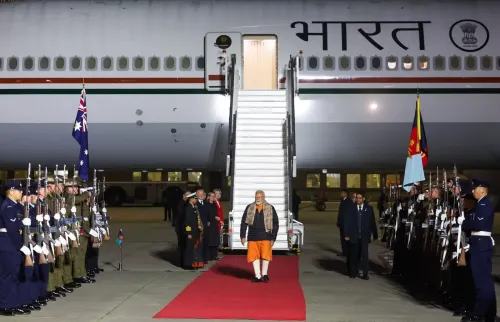
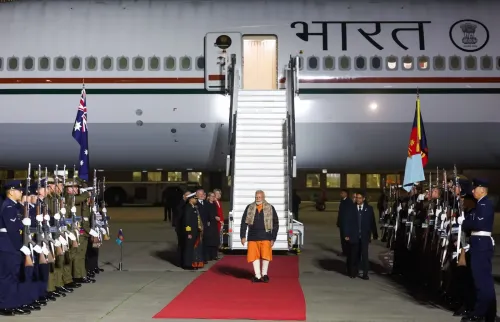
PM Modi arrives in Australia for Annual Leaders' Summit with Albanese
Synopsis
Modi's third visit to Australia in a decade is more than diplomatic routine — it is a signal that the India-Australia Comprehensive Strategic Partnership, formalised in 2020, is now a load-bearing pillar of Indo-Pacific strategy. With defence, clean energy, and technology on the table alongside trade, the Melbourne summit could redefine what 'comprehensive' actually means in practice.
Key Takeaways
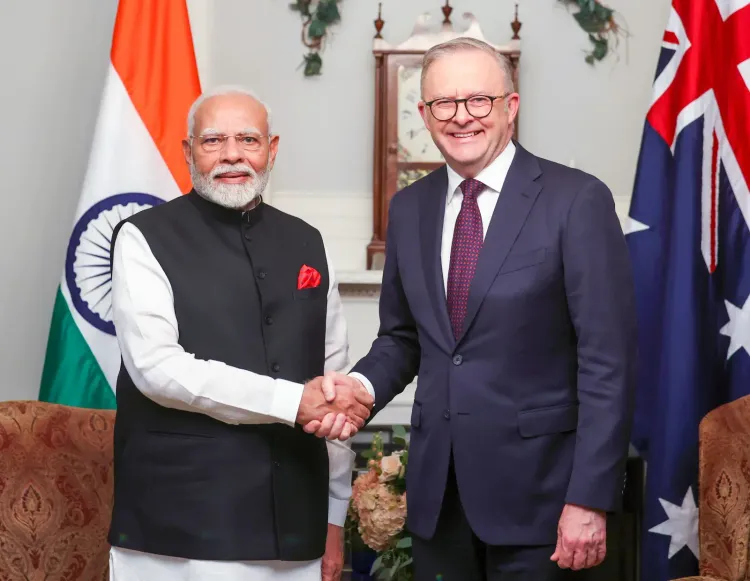
PM Narendra Modi arrived in Melbourne on 8 July for a three-day visit at the invitation of Australian PM Anthony Albanese .
The visit runs from 8 to 10 July and centres on the Annual Leaders' Summit under the India-Australia Comprehensive Strategic Partnership.
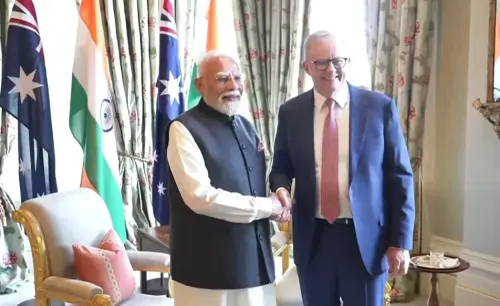
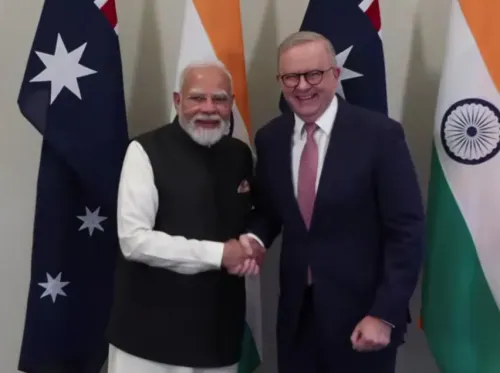
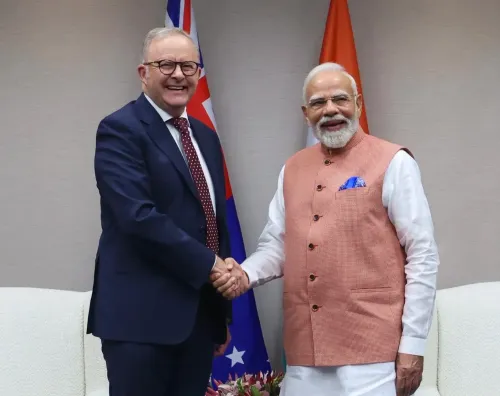
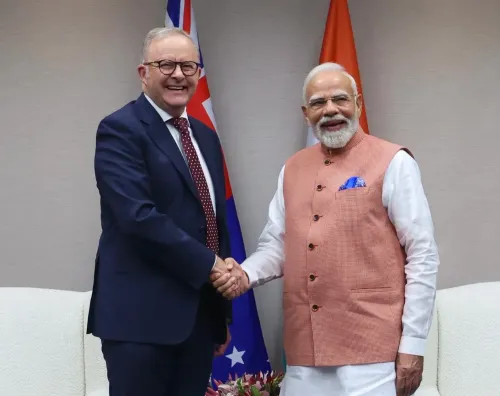
Modi will hold bilateral talks with Albanese, call on Governor-General Sam Mostyn , address the India-Australia CEOs Forum , and meet the Indian diaspora.
Australia's PM described India as a critical economic partner and the world's fourth-largest and fastest-growing economy .
This is Modi's third visit to Australia in 10 years , according to India's High Commissioner Nagesh Singh .
The Comprehensive Strategic Partnership, formalised in 2020 , covers defence, trade, clean energy, education, emerging technologies, and people-to-people ties.
Prime Minister Narendra Modi arrived in Melbourne on 8 July for a three-day state visit at the invitation of Australian Prime Minister Anthony Albanese, with the trip aimed at injecting fresh momentum into the India-Australia Comprehensive Strategic Partnership. The visit, running from 8 to 10 July, marks Modi's third trip to Australia in a decade — a frequency that diplomats say is itself a measure of how swiftly the bilateral relationship has deepened.
Key Engagements on the Agenda
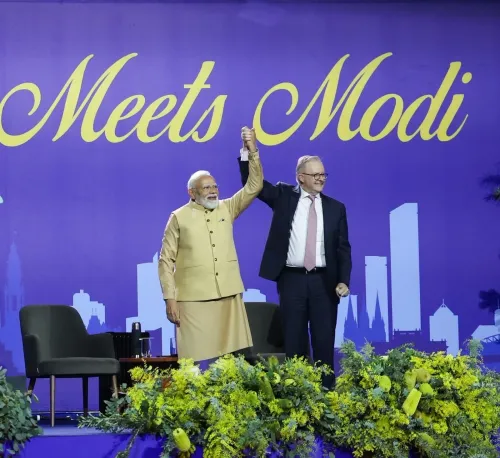
During the Melbourne visit, Prime Minister Modi is scheduled to hold formal bilateral discussions with Prime Minister Albanese and call on Australia's Governor-General Sam Mostyn. He will also participate in the India-Australia CEOs Forum, addressing senior business leaders from both countries, and is expected to speak at a large gathering of the Indian diaspora in Melbourne. The diaspora event underscores the people-to-people dimension that both governments have increasingly foregrounded in summit diplomacy.
What Albanese Said Ahead of the Summit
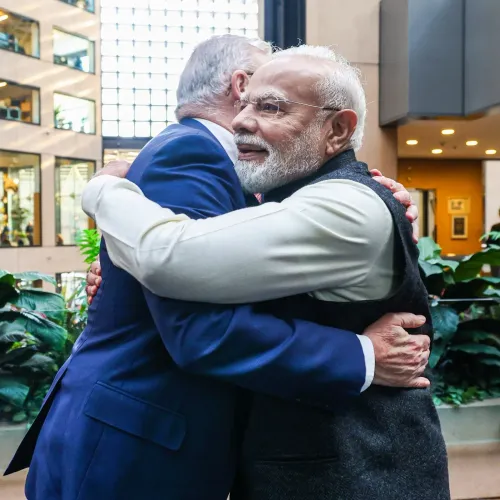
Australian Prime Minister Albanese set the tone for the summit with a formal statement from his office, describing India as a critical economic partner for Australia, noting its status as the world's fourth-largest and fastest-growing economy. 'I am honoured to welcome my friend Prime Minister Modi to Australia for our Annual Leaders' Summit,' Albanese said. 'The Australia-India relationship has never been more consequential, and our partnership fosters peace, stability and prosperity in the Indo-Pacific,' he added, signalling that strategic considerations — not just trade — are driving the summit's agenda.
India's High Commissioner on the Significance of the Visit
India's High Commissioner to Australia, Nagesh Singh, described the visit as a significant reflection of the rapid growth in bilateral ties over the past decade. 'Prime Minister Modi coming to Australia for the third time in 10 years is a very important indicator of how the relationship between India and Australia has been growing very rapidly,' Singh said. He noted that the partnership — elevated to a Comprehensive Strategic Partnership in 2020 — now spans defence and security, trade and investment, clean energy, education and skilling, emerging technologies, and mobility. 'When we call it comprehensive, then literally, whether it is defence and security, trade and investment, or people-to-people connect, new and emerging technologies, clean energy, education and skilling, mobility, is what we talk about,' he said.
Community Sentiment and Diplomatic Backdrop
Ahead of Modi's arrival, members of Melbourne's Indian community performed a Vedic Havan on Tuesday, reflecting the strong cultural ties that complement the formal diplomatic agenda. This comes amid a broader recalibration of Indo-Pacific alliances, with both India and Australia deepening defence and technology cooperation under frameworks including the Quad. The visit is the latest in a series of high-level engagements that have accelerated since the Comprehensive Strategic Partnership was formalised five years ago.
What to Watch Next
Outcomes from the bilateral talks — particularly on trade, defence, and clean energy — are expected to be announced before Modi departs on 10 July. Any joint statement on Indo-Pacific security or a new sectoral agreement would signal how far the partnership has moved beyond its earlier trade-centric framing.
Point of View
But the real test is whether the CEOs Forum and bilateral talks produce binding commitments on trade market access and defence co-production, or remain a framework of intent. India and Australia have been circling a free trade agreement expansion for years; the Melbourne summit is an opportunity to move from ambition to implementation. The Indo-Pacific framing, meanwhile, is doing considerable work — it allows both governments to deepen security cooperation without triggering the blunter language of alliance politics.
NationPress
6 Oct 2026
Frequently Asked Questions
Why is PM Modi visiting Australia in July 2025?
PM Modi is visiting Australia from 8 to 10 July for the Annual Leaders' Summit with Australian Prime Minister Anthony Albanese, aimed at strengthening the India-Australia Comprehensive Strategic Partnership across defence, trade, clean energy, and technology.
What is the India-Australia Comprehensive Strategic Partnership?
The India-Australia Comprehensive Strategic Partnership is a bilateral framework formalised in 2020 that covers defence and security, trade and investment, clean energy, education and skilling, emerging technologies, mobility, and people-to-people ties. It forms the institutional backbone of all high-level engagement between the two countries.
How many times has PM Modi visited Australia?
This is PM Modi's third visit to Australia in 10 years, according to India's High Commissioner Nagesh Singh, who described the frequency as a significant indicator of the rapid growth in bilateral ties over the past decade.
What events will PM Modi attend in Melbourne?
PM Modi will hold bilateral talks with PM Albanese, call on Governor-General Sam Mostyn, participate in the India-Australia CEOs Forum alongside senior business leaders from both countries, and address a large gathering of the Indian diaspora in Melbourne.
What did Australian PM Albanese say about the India-Australia relationship?
Albanese described India as a critical economic partner and the world's fourth-largest and fastest-growing economy. He said 'the Australia-India relationship has never been more consequential' and that the partnership fosters peace, stability, and prosperity in the Indo-Pacific.