NIA raids Vijayawada terror network linked to AQIS, ISIS handler
Synopsis
The NIA's raids on Vijayawada's Vinchipeta area on 8 July expose a sprawling alleged terror network — spanning 8 states, directed by a foreign handler via social media, with plans to recruit, train, and deploy youth for attacks inside India. The case is a rare window into how AQIS and ISIS allegedly attempt to build ground-level infrastructure in South India.
Key Takeaways
NIA launched search operations in Vijayawada's Vinchipeta area on 8 July in a transferred terror links case.
Five people were arrested in April , including three from Vijayawada, one from Hyderabad, and one from Bellary; the FIR names 12 accused across 8 states .
Accused allegedly worked to expand AQIS and ISIS activities in India under the direction of foreign handler Al-Hakeem Shukoor , contacted via social media.
The group allegedly created Instagram and Telegram channels under the name 'BENX COM' to recruit and radicalise youth.
Case registered under UAPA , BNS , and the IT Act ; recently transferred to the NIA for further investigation.
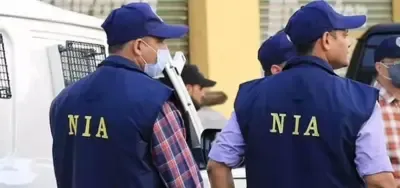
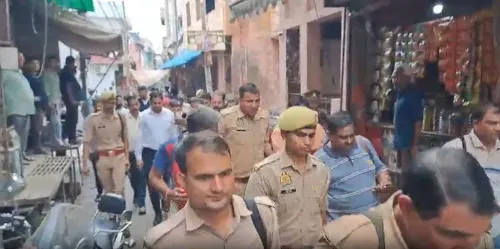
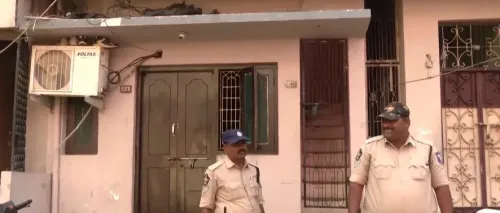
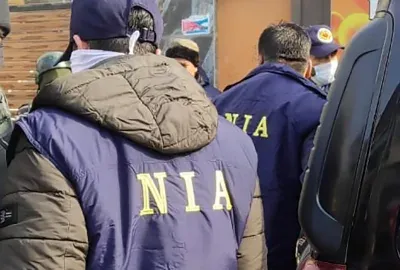
The National Investigation Agency (NIA) launched search operations in Vijayawada, Andhra Pradesh, on 8 July, targeting locations linked to accused in a terror network case that has been recently transferred to the agency. Officials confirmed the raids are underway in the Vinchipeta area, as investigators look to establish whether the accused maintained links with other individuals or organisations beyond those already identified.
The Accused and Their Alleged Network
Five individuals were arrested in connection with the case in April: Mohammad Rahamatullah Sharif, 23, Md. Danish, 27, and Mirza Sohail Baig, 23 — all residents of Vijayawada — along with Sayeeda Begum, 38, from Hyderabad, and Abdul Salam from Bellary, Karnataka. The FIR in the case names 12 accused in total, hailing from Andhra Pradesh, Telangana, Bihar, Delhi, Rajasthan, Karnataka, Maharashtra, and West Bengal.
According to investigators, the accused had formed a group called 'Al-Malik Islamic Youth' and were allegedly working to expand the activities of Al-Qaeda in the Indian Subcontinent (AQIS) and ISIS in India on the direction of a foreign handler identified as Al-Hakeem Shukoor. The accused reportedly told officials they came in contact with Shukoor through social media and never met him in person.
Social Media Recruitment and Radicalisation
Investigators allege the group created Instagram and Telegram channels under the name 'BENX COM', which were used to recruit individuals willing to carry out terror attacks or 'lay down their lives for jihad', according to the accused's statements to officials. Some Pakistani nationals were also reportedly members of these groups.
The accused allegedly told investigators that Shukoor had directed them to lure youth into terror activities and send them to Pakistan and Afghanistan for training. They were also allegedly working toward 'Ghazwa-e-Hind' — a concept invoked in extremist circles — and had plans to train recruits in sniper rifles, guns, black powder bombs, and improvised explosive devices (IEDs).
The Women's Wing and Broader Plans
According to officials, the accused, on the direction of the foreign handler, had planned a dedicated women's wing of the network, to be headed by Sayeeda Begum. Investigators say the accused disclosed a goal of turning India into an Islamic nation, including replacing the Indian flag with the ISIS flag — statements attributed directly to the accused during interrogation.
The counter-intelligence cell had been monitoring the group's social media activity before making the initial arrests. Sayeeda Begum was arrested from Hyderabad last month, while other accused were picked up from multiple states.
Legal Action and Case Transfer
A case has been registered against the accused under multiple sections of the Unlawful Activities (Prevention) Act (UAPA), the Bharatiya Nyaya Sanhita (BNS), and the Information Technology Act at Vijayawada Two Town Police Station. The case was subsequently transferred to the NIA, which is now conducting the current round of search operations to map the full extent of the network.
With raids still underway, investigators are expected to examine digital devices, documents, and financial records at the searched premises as the probe widens.
Point of View
Training pipelines to Pakistan and Afghanistan, a dedicated women's wing, and multi-platform social media infrastructure — all reportedly built without a single in-person meeting with the handler. That model, if verified, reflects a shift in how transnational terror networks allegedly attempt to operate in India: decentralised, digitally mediated, and geographically dispersed across 8 states. The mainstream coverage will focus on the arrests; the harder question is what the NIA's raids reveal about nodes not yet identified.
NationPress
6 Oct 2026
Frequently Asked Questions
Why is the NIA raiding locations in Vijayawada?
The NIA is conducting search operations in Vijayawada's Vinchipeta area on 8 July as part of a terror links case recently transferred to it. Investigators are searching the residences of accused to determine whether they had connections with other individuals or organisations beyond those already arrested.
Who are the accused in the Vijayawada terror network case?
Five people were arrested in April: Mohammad Rahamatullah Sharif, Md. Danish, and Mirza Sohail Baig from Vijayawada; Sayeeda Begum from Hyderabad; and Abdul Salam from Bellary, Karnataka. The FIR names 12 accused in total, drawn from Andhra Pradesh, Telangana, Bihar, Delhi, Rajasthan, Karnataka, Maharashtra, and West Bengal.
What is AQIS and what is its alleged role in this case?
Al-Qaeda in the Indian Subcontinent (AQIS) is a regional affiliate of Al-Qaeda. In this case, investigators allege the accused were directed by a foreign handler named Al-Hakeem Shukoor to expand both AQIS and ISIS activities inside India, recruit youth, and send them to Pakistan and Afghanistan for training.
What charges have been filed against the accused?
The accused have been charged under the Unlawful Activities (Prevention) Act (UAPA), the Bharatiya Nyaya Sanhita (BNS), and the Information Technology Act. The case was initially registered at Vijayawada Two Town Police Station before being transferred to the NIA.
How did the accused allegedly recruit members?
According to investigators, the accused created Instagram and Telegram groups under the name 'BENX COM' to recruit individuals willing to carry out terror attacks. They allegedly used these platforms to radicalise youth and were in regular contact with members, some of whom were reportedly Pakistani nationals.