Did the NIA File a Chargesheet Against Five Individuals for Online Radicalisation by the Gujarat AQIS Unit?
Synopsis
The NIA has charged five individuals in Gujarat for their alleged roles in online radicalisation, linking them to the AQIS terror group. This development highlights the ongoing battle against extremist ideologies propagated through social media, raising questions about national security and youth vulnerability.
Key Takeaways
NIA files a chargesheet against 5 individuals for online radicalisation.
Accused used social media to spread extremist ideologies .
The investigation revealed connections to the AQIS terror group.
Incriminating materials, including weapons, were seized.
Radicalisation of youth remains a critical concern for national security.
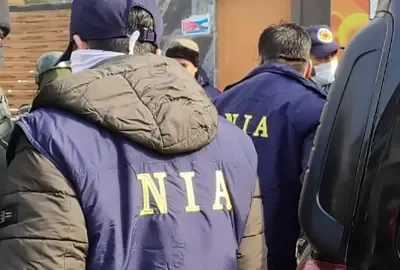
New Delhi, Jan 17 (NationPress) The National Investigation Agency (NIA) has submitted a chargesheet against five individuals in a Special Court, as part of an investigation into the online radicalisation of youth by the Al-Qaeda in the Indian Subcontinent (AQIS) terror faction operating in Gujarat, an official confirmed on Saturday.
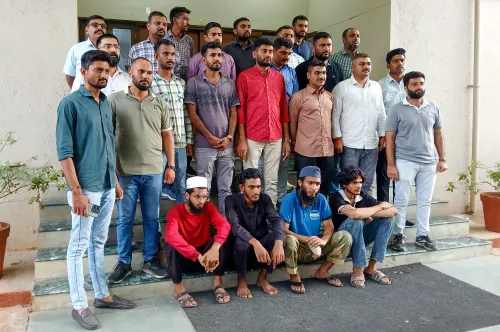
The accused—Mohammad Fardeen, Kureshi Sefulla, Mohammad Faique, Zeeshan Ali, and Shama Parveen—are facing prosecution under several provisions of the Unlawful Activities (Prevention) Act, the Indian Penal Code, and the Arms Act, as stated by the official.
According to the NIA’s probe into case RC-02/2025/NIA/AMD, the suspects leveraged social media to spread, endorse, and disseminate the anti-India ideologies propagated by the banned AQIS.
They shared incendiary posts, including videos, audio clips, and images, across various social media platforms, the statement detailed.
The investigation revealed that through these posts, the accused incited armed insurrection against the democratically elected Indian government and advocated for the establishment of a Caliphate governed by Sharia law.
They also advanced extremist ideologies from other outlawed terror groups to manipulate impressionable youth, the NIA reported.
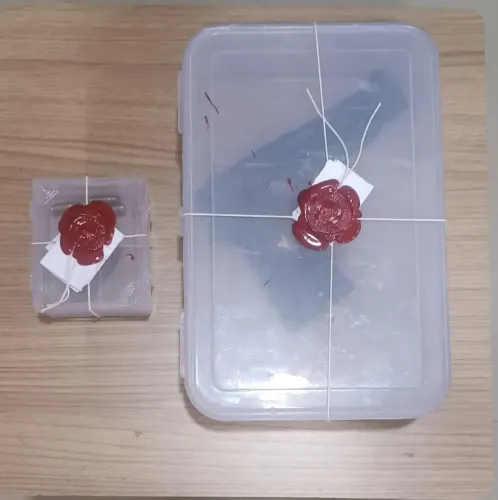
Having taken over the investigation from the Anti-Terrorism Squad (ATS) of Gujarat, the NIA noted that the state agency confiscated various incriminating materials in both physical and digital formats, alongside firearms, including a semi-automatic pistol with ammunition and a sword from two of the accused during their investigation.
Throughout the inquiry, the NIA traced digital activities and identified incriminating posts, bolstering the evidence against the accused.
The findings indicated that Mohammad Faique, hailing from Old Delhi, played a crucial role in the conspiracy by disseminating radical posts and provoking content regarding Jihad, Ghazwa-e-Hind, and violence against specific societal groups.
He shared excerpts from extremist literature endorsing the ideologies of AQIS and Jaish-e-Mohammed (JeM) leaders via his Instagram account and a social media group created for that purpose, according to the NIA.
He collaborated with the other accused to broadly disseminate violent ideologies and content.
Sheikh Mohammad Fardeen from Ahmedabad, Kureshi Sefulla from Modasa (Gujarat), and Zeeshan Ali from Noida were actively involved in promoting radical content, including audio, video, and other posts endorsing banned terror organisations, as stated in the NIA report.
They consistently liked, commented on, and collaborated on posts inciting Jihad, Ghazwa-e-Hind, and rebellion against the Indian government, while advocating for Khilafat and Sharia law.
The investigation further disclosed that Shama Parveen from Bengaluru (Karnataka) disseminated AQIS videos through her social media profiles and was actively involved in extremist groups promoting radical content following the Pahalgam attack and Operation Sindoor.
She maintained regular communication with a Pakistani national, Sumer Ali, to whom she forwarded screenshots and discussed banned literature and operations.
Incriminating books authored by extremist ideologues, along with videos and Pakistani contact numbers, were recovered from her mobile device during the investigation, according to the NIA.
Point of View
I believe this case underscores the urgent need for vigilance against online radicalisation. The NIA's efforts in uncovering these networks demonstrate a proactive approach to safeguarding our society from extremist influences, reaffirming our commitment to national security and social stability.
NationPress
28 Sept 2026
Frequently Asked Questions
What is the NIA's role in this case?
The NIA is responsible for investigating and prosecuting cases related to terrorism and national security, including the online radicalisation efforts by AQIS in this instance.
Who are the accused in the chargesheet?
The accused are Mohammad Fardeen, Kureshi Sefulla, Mohammad Faique, Zeeshan Ali, and Shama Parveen, charged under various laws related to terrorism.
How did the accused radicalise youth?
The accused used social media platforms to spread extremist ideologies, incite violence, and promote anti-India sentiments, targeting vulnerable youth.
What actions were taken by the ATS before the NIA took over?
The ATS of Gujarat conducted initial investigations and seized incriminating materials before the case was transferred to the NIA for further action.
What implications does this case have for national security?
This case highlights the ongoing threat of online radicalisation, emphasizing the need for enhanced monitoring and countermeasures to prevent youth from being influenced by extremist ideologies.