Can Ocean Science and Biotech Propel India's Economy, Environment, and Employment?
Synopsis
Integration of ocean science and biotechnology is set to revolutionize India's economy, environment, and employment landscape, states Minister Jitendra Singh. His visit to the Atal Centre for Ocean Science and Technology for Islands marks a significant step towards harnessing marine resources for national growth.
Key Takeaways
Ocean science and biotechnology are crucial for India's economic growth.
Implementation of the Blue Economy can create job opportunities.
India's biotechnology policy is among the most advanced globally.
There is a significant international market for sustainable marine products.
Empowering local communities is essential for the success of these initiatives.
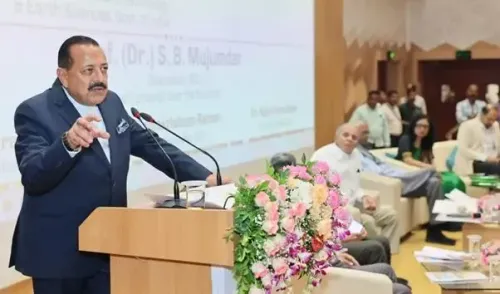
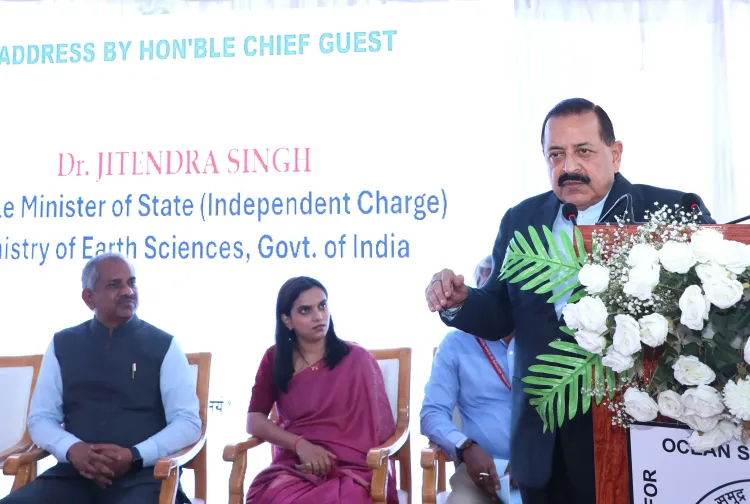
New Delhi, Jan 17 (NationPress) By merging ocean science with biotechnology, India can significantly enhance its economy, environment, and job opportunities, stated Jitendra Singh, the Union Minister of State (Independent Charge) for Science & Technology and Earth Sciences, during his visit on Saturday.
Singh made these remarks while touring the Atal Centre for Ocean Science and Technology for Islands (ACOSTI) to unveil and assess pivotal marine technology projects designed to fortify the Blue Economy and improve livelihoods in the Andaman & Nicobar Islands.
“India’s upcoming economic value enhancement will increasingly derive from unexplored marine resources as the nation progresses towards becoming one of the leading global economies,” the Minister emphasized.
He underscored the government’s robust commitment to the Blue Economy, aligning with Prime Minister Narendra Modi’s vision that India cannot thrive by solely concentrating on the mainland while neglecting island territories and coastal areas.
“Marine resources, long overlooked, are essential for sustaining India’s growth as traditional resources deplete. The Blue Economy will make a substantial contribution to job creation, exports, environmental sustainability, and overall economic resilience,” Singh affirmed.
Singh pointed out that India is among the few nations with a dedicated biotechnology policy, known as BioE3 (Biotechnology for Economy, Environment and Employment). Marine bioproducts can offer biodegradable substitutes for plastic, novel medicinal compounds, and high-value bio-products.
Such initiatives will simultaneously boost job creation, safeguard the environment, and reinforce the bioeconomy, he added.
The Minister also highlighted emerging sectors like non-animal food products, alternative marine-based nutrition, waste-to-wealth technologies, and export-oriented marine goods, emphasizing a surging international market, particularly in Europe.
He stressed the need to enhance participation from Self-Help Groups and women to ensure these initiatives bolster household incomes and support the “Vocal for Local” and “Local for Global” vision.
“Through institutional collaboration, including potential engagement from CSIR and biotechnology research centers, the Andaman & Nicobar Islands could become a major hub for India’s Blue Economy initiatives,” Singh stated.
He reaffirmed the government’s dedication to ongoing engagement with the region and expressed confidence that these initiatives will yield lasting scientific, environmental, and socio-economic benefits for the islands.
Point of View
This initiative stands as a significant advancement in India's strategic focus on sustainable development. By prioritizing the integration of ocean science and biotechnology, the government acknowledges the potential of our marine resources, ensuring that economic growth is both inclusive and environmentally sustainable. This approach aligns with national priorities and global standards for development.
NationPress
24 Sept 2026
Frequently Asked Questions
What is the Blue Economy?
The Blue Economy refers to the sustainable use of ocean resources for economic growth, improved livelihoods, and jobs while preserving the health of ocean ecosystems.
How will biotechnology impact India's economy?
Biotechnology has the potential to create biodegradable alternatives, develop new medicines, and enhance agricultural productivity, contributing significantly to economic growth.
What role do Self-Help Groups play in these initiatives?
Self-Help Groups can empower local communities, especially women, by providing them with opportunities to participate in marine-based initiatives, thus supplementing household incomes.
Why is the Andaman & Nicobar Islands significant for the Blue Economy?
The Andaman & Nicobar Islands possess rich marine biodiversity and potential resources that can be harnessed, making them a strategic location for developing the Blue Economy.
What are some emerging areas in marine biotechnology?
Emerging areas include non-animal food products, alternative marine-based nutrition, and technologies that convert waste into wealth, which are gaining traction in global markets.