PM Modi in Melbourne: India-Australia scale-expertise a win-win, CECA must move faster
Synopsis
Standing alongside Australian PM Anthony Albanese before more than 200 CEOs in Melbourne, Modi didn't just pitch India — he named the sectors, called for sub-national state-province partnerships, and pressed for CECA's early closure. The superannuation funds in the room represent exactly the patient capital India's infrastructure pipeline needs.
Key Takeaways
PM Narendra Modi addressed the Australia-India CEOs Forum and the Economic Roadmap Business event in Melbourne on 9 July .
Modi called India's scale and Australia's expertise a 'win-win proposition' and urged early conclusion of the proposed CECA .
Key sectors highlighted: clean energy, critical minerals, rare earths, EVs, semiconductors, AI, defence supply chains and fintech .
Modi welcomed the growing presence of Australian universities in India and called for deeper collaboration in research and skill development.
More than 200 CEOs , institutional investors, representatives of Australian superannuation funds and university vice-chancellors attended the events.
Modi called for Indian states and Australian provinces to forge direct economic partnerships based on core competencies.
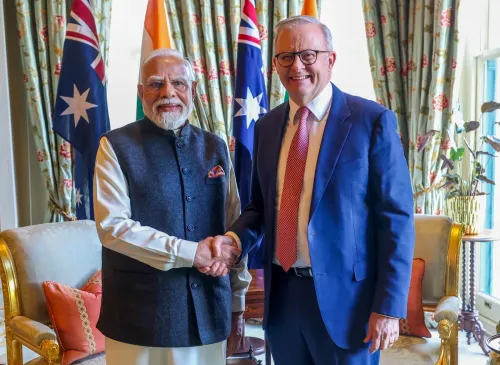
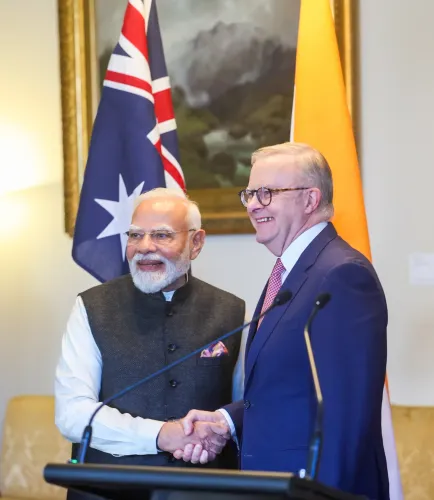
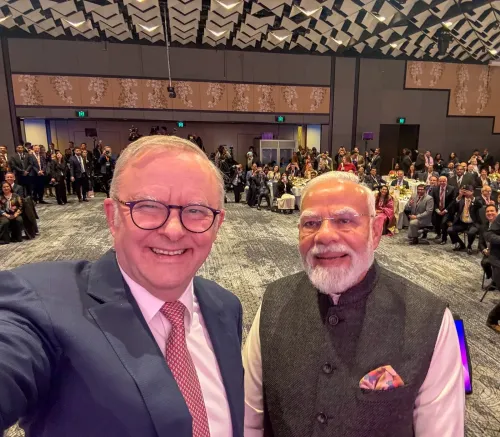
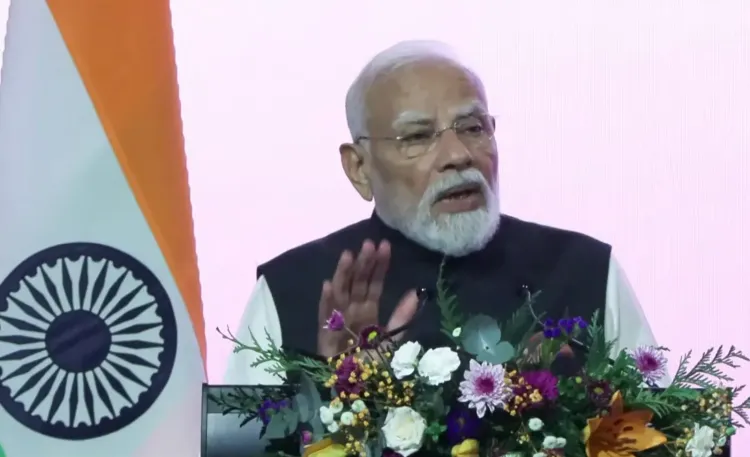
Prime Minister Narendra Modi on Thursday, 9 July made a direct pitch to Australian business leaders in Melbourne, describing India's scale and Australia's expertise as a 'win-win proposition' and pressing for the early conclusion of the proposed Comprehensive Economic Cooperation Agreement (CECA) to deepen bilateral economic ties.
Key Developments at the CEOs Forum
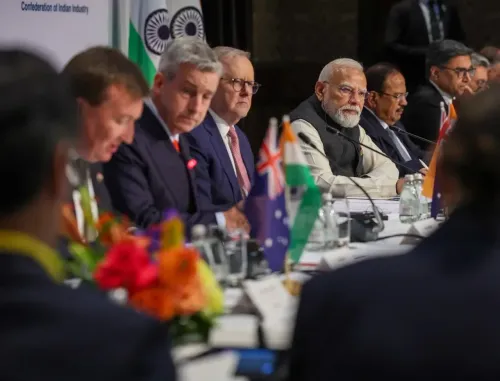
Jointly addressing the Australia-India CEOs Forum alongside Australian Prime Minister Anthony Albanese, Modi underscored India's strong economic growth, ongoing policy reforms, digital transformation, and an expanding innovation ecosystem as factors creating fresh openings for Australian companies. He invited Australian investors to capitalise on long-term opportunities across a broad swathe of sectors.
The sectors Modi highlighted included manufacturing, clean energy, critical minerals, mining, infrastructure, urban development, aviation, logistics, advanced technologies, artificial intelligence (AI), fintech, food processing and the digital economy — a list that maps closely onto Australia's export strengths and India's infrastructure deficit.
The Economic Roadmap Business Event
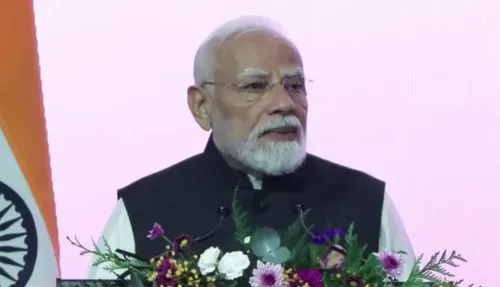
Later in the day, Modi addressed the Economic Roadmap Business event attended by more than 200 CEOs and business leaders from both countries, describing India and Australia as 'natural partners'. He cited shared democratic values, a common Indo-Pacific vision, strong people-to-people ties, and political alignment as the foundation for expanding commercial cooperation.
Expressing satisfaction over trade and investment growth under the Economic Cooperation and Trade Agreement (ECTA) signed in 2022, Modi called for the CECA's early conclusion to take bilateral business ties to the next level. He urged leaders to jointly develop global solutions in strategic sectors including rare earths, lithium, batteries, electronics, electric vehicles (EVs), semiconductors, AI and defence supply chains.
Education, Innovation and Sub-National Ties
Modi also welcomed the growing footprint of Australian universities in India, saying deeper collaboration in higher education, research, innovation and skill development would equip talent in both nations for future global opportunities. He added that for bilateral business ties to scale meaningfully, Indian states and Australian provinces must forge dynamic economic partnerships grounded in their respective core competencies — a call for sub-national engagement that goes beyond federal-level frameworks.
Who Was in the Room
The two events brought together leading Indian and Australian CEOs, representatives of major Australian superannuation funds and institutional investors, and vice-chancellors of leading Australian universities — signalling that capital deployment, not just trade in goods, is central to the bilateral agenda. With superannuation funds managing trillions in long-duration assets, India's infrastructure pipeline presents a natural match for patient capital seeking stable returns.
The push for CECA comes as both countries look to reduce supply-chain dependence on single geographies — a strategic imperative sharpened by global disruptions since 2020. Whether the agreement can be concluded quickly will depend on resolving longstanding differences on services, data flows and professional mobility.
Point of View
Australia's critical minerals and India's manufacturing scale are genuinely complementary — but complementarity on paper does not automatically translate into deals. The CECA has been in negotiation for years, and the sticking points around services trade and professional mobility remain unresolved. The inclusion of superannuation funds in the audience is the more consequential signal — if Australia's long-duration capital can be channelled into Indian infrastructure at scale, that would move the needle far more than another framework agreement. The sub-national partnership call is also notable; state-level buy-in has historically been the gap between federal-level announcements and ground-level investment flows.
NationPress
7 Oct 2026
Frequently Asked Questions
What is the India-Australia CECA and why is PM Modi pushing for it?
The Comprehensive Economic Cooperation Agreement (CECA) is a proposed full-scale free trade pact between India and Australia, building on the interim Economic Cooperation and Trade Agreement (ECTA) signed in 2022. Modi is pressing for its early conclusion to deepen trade in services, investment flows and strategic sectors such as critical minerals and defence supply chains.
What sectors did PM Modi highlight for India-Australia business cooperation?
Modi identified manufacturing, clean energy, critical minerals, mining, infrastructure, aviation, logistics, AI, fintech, food processing, rare earths, lithium, batteries, EVs, semiconductors and defence supply chains as priority areas for bilateral investment and joint global solutions.
What is the ECTA and how does it relate to the proposed CECA?
The Economic Cooperation and Trade Agreement (ECTA) was signed in 2022 as an interim bilateral trade pact between India and Australia. The proposed CECA is intended to be a more comprehensive successor agreement covering a wider range of goods, services and investment provisions.
Why were Australian superannuation funds invited to the Melbourne business events?
Australian superannuation funds manage large pools of long-duration capital that are well-suited to India's infrastructure investment pipeline. Their presence signals that the bilateral agenda is expanding beyond merchandise trade to include institutional capital deployment in Indian infrastructure and strategic sectors.
What did PM Modi say about Australian universities in India?
Modi welcomed the growing presence of Australian universities in India and called for deeper collaboration in higher education, research, innovation and skill development, saying such ties would prepare talent in both countries for future global opportunities.