Sensex rises 250 points despite Iran strikes, crude at $80

Synopsis
Indian equities defied geopolitical gravity on 9 July, with Sensex hitting 76,752 even as the US confirmed fresh strikes on Iran and Brent crude touched $80. The real story is the split market: financials and auto held firm on FII buying while IT bled, exposing a market navigating two conflicting forces — domestic resilience and global risk.
Key Takeaways
Sensex surged up to 250 points to an intraday high of 76,752 in early trade on 9 July .
Nifty50 climbed 46.90 points to 23,928.95 .
Nifty Consumer Durables led sectoral gains at 1.39% ; Nifty IT was the top loser, down more than 1% .
Infosys , HCLTech , TCS , and Tech Mahindra fell between 1% and 2% .
US President Donald Trump confirmed fresh overnight strikes on Iran over attacks on vessels in the Strait of Hormuz .
Brent crude rose 1.49% to around $80 a barrel ; experts say it is not yet a critical concern for India .
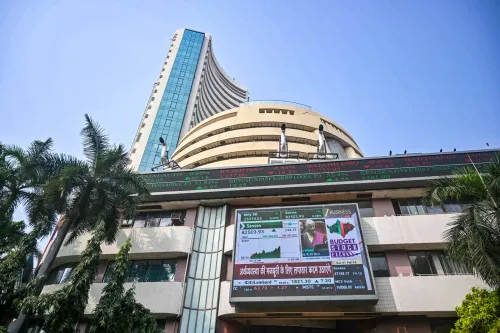
BSE Sensex surged as much as 250 points or 0.32% to an intraday high of 76,752 in early trade on Thursday, 9 July, even as renewed geopolitical tensions — triggered by fresh US strikes on Iran — and a rebound in crude oil to $80 a barrel kept global markets on edge. The broader Nifty50 climbed 46.90 points or 0.20% to 23,928.95, signalling selective resilience among domestic investors.
Sectors Leading the Gains
Nifty Consumer Durables topped sectoral gains, rising 1.39%, followed by Nifty Mid-Small Financial Services (0.95%), Nifty Cement (0.69%), Nifty Private Bank (0.66%), Nifty PSU Bank (0.64%), and Nifty Auto (0.62%). Financials and automobiles drew support from continued foreign institutional investor (FII) buying, according to market experts.
IT Stocks Under Pressure
Nifty IT emerged as the session's top sectoral loser, declining more than 1%. Among Nifty constituents, Infosys, HCLTech, Tech Mahindra, TCS, Dr Reddy's Laboratories, and Hindalco Industries fell between 1% and 2%. The IT drag mirrors a broader global pattern where US-exposed technology names bear the brunt of risk-off sentiment tied to geopolitical flare-ups.
Iran Strikes and Trump's Remarks Rattle Sentiment
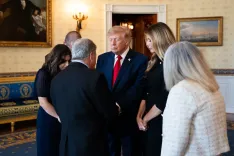
US President Donald Trump confirmed that the US had carried out fresh overnight strikes against Iran in response to what he described as Iranian attacks on commercial vessels transiting the Strait of Hormuz. In characteristically blunt remarks, Trump said: 'To me, I think it’s over. I don’t want to deal with them anymore... As far as I’m concerned, it’s just a waste of time dealing with them.'
Market experts noted that Trump's remarks have once again weighed on investor sentiment, introducing fresh uncertainty over the trajectory of the Iran conflict and its implications for energy supply routes. Notably, the Strait of Hormuz handles roughly 20% of global oil trade, making any sustained disruption a material risk for oil-import-dependent economies like India.
Crude Oil and Asian Market Snapshot
International benchmark Brent crude rose 1.49% to around $80 a barrel, while US West Texas Intermediate (WTI) crude gained more than 2% to $75 a barrel. Market experts said Brent at around $80 was not yet a major concern for India, though a sustained rise beyond that threshold could pressure the current account and revive inflation worries.
Asian markets were mixed: Japan's Nikkei rose nearly 2% and South Korea's Kospi edged higher, while Hong Kong's Hang Seng declined about 1%. India's relative outperformance against Hang Seng underscores ongoing FII preference for domestic-facing sectors over export-heavy or China-linked plays.
What to Watch
Investors will closely track crude oil's trajectory and any further escalation in the Iran situation. Sustained FII inflows and stable oil prices remain the two key variables that could keep large-cap financials and auto stocks resilient in the near term. Any move in Brent decisively above $80 could shift the narrative quickly.
Point of View
Which would simultaneously pressure the current account and corporate margins. The split between domestic-facing gainers and export-linked losers is a pattern worth watching — it suggests the market is pricing in a contained conflict, a bet that could unravel quickly if the Strait of Hormuz situation escalates.
NationPress
8 Oct 2026
Frequently Asked Questions
Why did Sensex rise despite Iran tensions on 9 July?
Sensex rose up to 250 points to 76,752 in early trade on 9 July, supported by continued FII buying in financials and auto stocks, which offset geopolitical anxiety. Market experts noted that Brent crude at around $80 a barrel was not yet seen as a critical threat to India's economy.
Which sectors gained and which fell in early trade on 9 July?
Nifty Consumer Durables led gains at 1.39%, followed by Nifty Mid-Small Financial Services, Cement, Private Bank, PSU Bank, and Auto. Nifty IT was the top loser, declining more than 1%, with Infosys, HCLTech, TCS, and Tech Mahindra each falling between 1% and 2%.
What did Trump say about the US strikes on Iran?
US President Donald Trump confirmed that the US had carried out fresh overnight strikes on Iran in response to alleged Iranian attacks on commercial vessels in the Strait of Hormuz. Trump said the situation was 'over' as far as he was concerned and dismissed further negotiations.
How did crude oil prices move and what does it mean for India?
Brent crude rose 1.49% to around $80 a barrel, while US WTI crude gained over 2% to $75 a barrel. Market experts said $80 Brent is not yet a major concern for India, but a sustained rise beyond that level could pressure the current account deficit and revive domestic inflation.
How did Asian markets perform on 9 July?
Asian markets were mixed: Japan's Nikkei rose nearly 2% and South Korea's Kospi edged higher, while Hong Kong's Hang Seng declined about 1%. India's early gains outpaced the Hang Seng, reflecting investor preference for domestic-facing sectors.