Sensex drops 364 points, Nifty at 24,259 as Middle East tensions spike

Synopsis
US military strikes on Iran over Strait of Hormuz attacks sent Brent crude surging 3% above $75 a barrel, dragging Indian equities lower at open on 8 July. With Nifty teetering near a critical 24,200 support level and geopolitical uncertainty unresolved, the next move in crude prices could determine whether this selloff deepens.
Key Takeaways
Sensex opened 364.27 points lower at 77,816.45 on 8 July ; Nifty50 slipped to 24,259.55 .
US Central Command (CENTCOM) launched strikes on Iran citing attacks on commercial vessels in the Strait of Hormuz .
Brent crude surged nearly 3% to $76.39 a barrel ; WTI crude rose over 3% to $72.72 a barrel .
Nifty Oil & Gas led sectoral losses, falling more than 1% ; Nifty Pharma bucked the trend, rising 0.73% .
Analysts see key Nifty support at 24,200 ; a breach could push the index toward 24,000 .
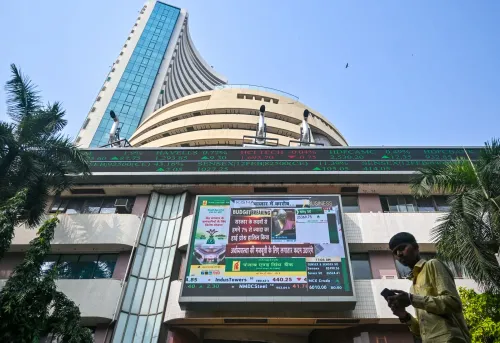
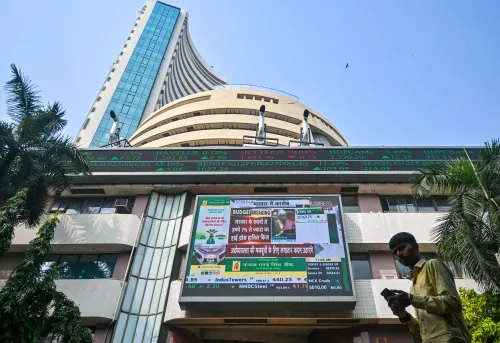
Sensex opened 364.27 points or 0.46% lower at 77,816.45 on Wednesday, 8 July, while the Nifty50 slipped 139.15 points or 0.57% to 24,259.55, as renewed geopolitical tensions in the Middle East rattled global risk appetite and pushed crude oil sharply higher. The selloff was broad-based, tracking a weak overnight session on Wall Street and subdued sentiment across Asian markets.
Sectors Under Pressure
Nifty Oil & Gas led sectoral losses, declining more than 1% at the open. Nifty Media, Nifty PSU Bank, Nifty Realty, Nifty Cement, Nifty Metal, Nifty Auto, and Nifty FMCG also fell by up to nearly 1%. Among individual Nifty 50 stocks, Shriram Finance, InterGlobe Aviation, Asian Paints, Bajaj Finance, Eicher Motors, Larsen & Toubro, and JSW Steel ranked among the top losers.
Bright Spots: Pharma and IT Hold Firm
Not all sectors were in the red. Nifty Pharma outperformed, rising 0.73%, as defensive positioning drove flows into healthcare stocks. Nifty IT also traded in the green, up 0.25%, suggesting selective risk-on sentiment within technology despite the broader weakness.
What Triggered the Fall
The primary catalyst was a fresh escalation in the Middle East. The US military launched a series of strikes against Iran, with US Central Command (CENTCOM) stating its forces had begun 'a series of powerful strikes to impose high costs on Iran for targeting and attacking commercial shipping.' The action was described as a response to alleged Iranian attacks on three commercial vessels transiting the Strait of Hormuz. The development sent Brent crude surging nearly 3% to $76.39 a barrel, while US West Texas Intermediate (WTI) crude gained more than 3% to $72.72 a barrel — crossing the psychologically significant $75 threshold. For India, a net oil importer, a sustained rise in crude prices compounds both the fiscal deficit and inflationary pressures.
Global Market Snapshot
Asian markets traded mixed. Japan's Nikkei edged lower, while Hong Kong's Hang Seng rose more than 2% and South Korea's KOSPI declined over 1%. The divergence reflected differing exposures to oil prices and US technology stocks, which sold off in the prior session.
Near-Term Outlook
Market analysts flagged a cautious near-term outlook, noting that Nifty faces resistance around the 24,450 level with immediate support at 24,200. A sustained breach below that support, analysts warned, could drag the index toward the key 24,000 mark. With geopolitical uncertainty likely to persist in the short term, crude price trajectory and any further CENTCOM developments will remain the dominant market variables.
Point of View
So every $5 rise in Brent is a direct hit to the current account and a latent inflation trigger — exactly when the Reserve Bank of India has been trying to anchor expectations. What is underappreciated is the Strait of Hormuz angle: roughly 20% of global oil transits that chokepoint, and US military involvement raises the probability of a prolonged disruption rather than a quick de-escalation. The outperformance of pharma is a classic flight-to-safety trade, but it masks the broader vulnerability of India's import-heavy economy to a sustained crude spike. If Brent holds above $80, the fiscal math for the Centre starts to look uncomfortable.
NationPress
6 Oct 2026
Frequently Asked Questions
Why did Sensex and Nifty fall on 8 July 2025?
Sensex dropped 364 points and Nifty fell 139 points at open on 8 July after the US military launched strikes on Iran in response to alleged attacks on commercial vessels in the Strait of Hormuz. The escalation pushed crude oil prices sharply higher and triggered a broad risk-off selloff across global markets.
How much did crude oil prices rise amid the Middle East tensions?
Brent crude surged nearly 3% to $76.39 a barrel, while US WTI crude gained more than 3% to $72.72 a barrel, crossing the $75 threshold. The spike was driven by fears of supply disruption through the Strait of Hormuz.
Which sectors were worst hit on the Indian markets?
Nifty Oil & Gas led losses with a decline of more than 1%. Nifty Media, PSU Bank, Realty, Cement, Metal, Auto, and FMCG also fell by up to nearly 1%. Pharma and IT were the exceptions, trading in the green.
What are the key Nifty support and resistance levels to watch?
Analysts have flagged immediate support for Nifty at 24,200 and resistance around 24,450. A sustained fall below 24,200 could pull the index toward the 24,000 mark, according to market experts.
What did the US say about the strikes on Iran?
US Central Command (CENTCOM) said its forces had begun a series of powerful strikes to impose high costs on Iran for targeting and attacking commercial shipping. The strikes were described as a response to alleged Iranian attacks on three commercial vessels in the Strait of Hormuz.