Env Minister Yadav visits Parambikulam Tiger Reserve frontline staff
Synopsis
Union Environment Minister Bhupender Yadav visited frontline forest staff at Parambikulam Tiger Reserve's Thoonakadavu beat in Kerala on July 9, 2026, highlighting the remote, network-restricted conditions in which teams protect elephants, leopards, and the Nilgiri Tahr along the Kerala-Tamil Nadu border.
Key Takeaways
Union Environment Minister Bhupender Yadav met frontline staff at Parambikulam Tiger Reserve , Thoonakadavu, Kerala on July 9, 2026 .
The reserve straddles the Kerala-Tamil Nadu border in the Western Ghats and shelters elephants, leopards , and the Nilgiri Tahr .
Staff operate in a 'highly remote, network-restricted environment,' facing challenges including poor connectivity and human-wildlife conflict.
India runs 54 tiger reserves under Project Tiger , launched in 1973 , with the NTCA providing statutory oversight since 2005 .
The 2022 All-India Tiger Estimation recorded a national tiger population of 3,167 , with Western Ghats reserves as key contributors.
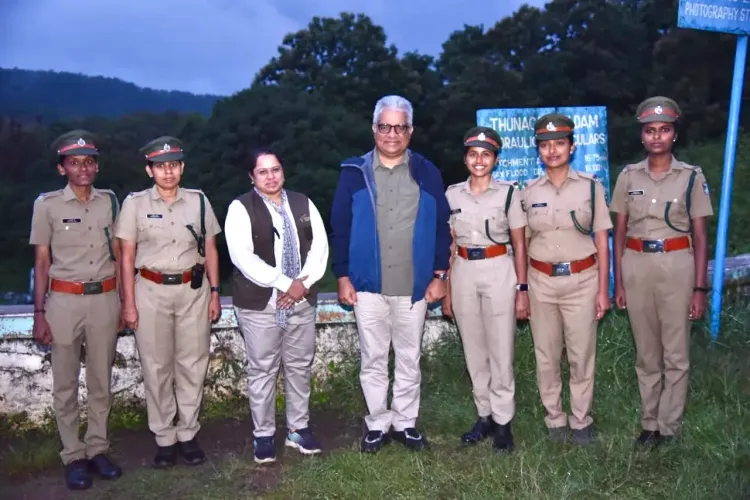
Union Environment Minister Bhupender Yadav on Thursday, July 9, 2026, met with frontline forest staff of Parambikulam Tiger Reserve at Thoonakadavu in Kerala, commending their work in one of India's most remote and connectivity-challenged wildlife zones along the Kerala-Tamil Nadu border.
Posting on X, the Minister said he 'interacted with frontline staff of Parambilukam Tiger Reserves at Thoonakadavu, Kerala,' noting that 'these dedicated teams operate in a highly remote, network-restricted environment bridging Tamil Nadu and Kerala to protect our wildlife like elephants, leopards, and the Nilgiri Tahr.' He added: 'Kudos to their unrelenting efforts.'
Context
Parambikulam Tiger Reserve, nestled in the Western Ghats, is one of India's ecologically sensitive reserves straddling the Kerala-Tamil Nadu boundary. It is home to flagship species including elephants, leopards, and the endangered Nilgiri Tahr — a mountain ungulate found almost exclusively in the southern Western Ghats. The reserve's terrain is dense and remote, making patrolling and communication particularly challenging for ground-level staff.
Frontline forest guards and field teams in such reserves routinely contend with poor mobile connectivity, difficult topography, and persistent threats including poaching and human-wildlife conflict. Minister Yadav's visit to Thoonakadavu — a deep-forest beat within the reserve — signals attention to the operational realities faced by personnel on the ground.
Policy Backdrop
India's tiger conservation architecture rests on Project Tiger, launched in 1973, which established a network of dedicated reserves for in-situ conservation. The programme now covers 54 tiger reserves across the country. The National Tiger Conservation Authority (NTCA), constituted in 2005 under the Wildlife Protection Act, provides statutory oversight for reserve governance, anti-poaching coordination, and staff deployment norms.
The 2022 All-India Tiger Estimation recorded a national tiger population of 3,167, with Western Ghats reserves contributing significantly to that count. Interstate reserves like Parambikulam are central to maintaining habitat corridors that allow tiger and elephant populations to move across state boundaries without fragmentation.
Stakeholders and Impact
Frontline forest staff — including forest guards, watchers, and beat officers — form the first line of defence against poaching and encroachment. In border reserves, their work involves coordination across two state forest departments, adding administrative complexity to an already demanding field role. Successive central governments have emphasised staff welfare, technology deployment such as camera traps and drone surveillance, and the strengthening of habitat corridors in the Western Ghats landscape.
Local and indigenous communities living in and around Parambikulam are also key stakeholders, often involved in eco-development committees and community-based monitoring efforts. The Minister's direct engagement with field personnel can bolster morale and draw attention to resource and infrastructure gaps that central policy can address.
What's Next
The next All-India Tiger Estimation — expected to provide updated population figures for reserves including those in the Western Ghats — will be closely watched as a measure of conservation effectiveness. Central budget allocations for frontline infrastructure in remote, border reserves, including communication technology and staff housing, remain a key policy lever. Minister Yadav's field visit may feed into ongoing discussions within the Ministry of Environment, Forest and Climate Change on improving operational support for personnel in connectivity-poor zones.
Point of View
Ahead of the next tiger census cycle, also positions the Centre to take credit for ground-level investment should population numbers improve. Overall, the visit fits a broader BJP pattern of using visible ministerial outreach to reinforce the party's conservation credentials ahead of state-level electoral cycles in both Kerala and Tamil Nadu.
NationPress
9 Jul 2026
Frequently Asked Questions
Where is Parambikulam Tiger Reserve located?
Parambikulam Tiger Reserve is located in the Palakkad district of Kerala , bordering Tamil Nadu in the southern Western Ghats . It is one of India's biodiversity-rich reserves protecting elephants, leopards, and the Nilgiri Tahr.
What is the Nilgiri Tahr and why is it significant?
The Nilgiri Tahr is an endangered mountain ungulate found almost exclusively in the southern Western Ghats of India. It is a Schedule I species under the Wildlife Protection Act and a key indicator of ecosystem health in high-altitude shola grasslands.
What is Project Tiger and how many reserves does India have?
Project Tiger is a central government scheme launched in 1973 to establish dedicated tiger reserves for in-situ conservation. India currently manages 54 tiger reserves under the programme, overseen by the National Tiger Conservation Authority (NTCA) .
What was India's tiger population as per the last census?
The 2022 All-India Tiger Estimation recorded a national tiger population of 3,167 , reflecting sustained growth, particularly in reserves across the Western Ghats landscape.
Why did Bhupender Yadav visit Parambikulam Tiger Reserve?
Union Environment Minister Bhupender Yadav visited Thoonakadavu within Parambikulam Tiger Reserve on July 9, 2026 to interact with frontline forest staff, acknowledging their work in a remote, network-restricted zone on the Kerala-Tamil Nadu border.