PM Modi invokes Nehru, Netaji, Ambedkar in 80th Independence Day address, calls for Viksit Bharat
Synopsis
On India's 80th Independence Day, Modi named ten freedom fighters spanning every ideological tradition — from Nehru to Mookerjee, Ambedkar to Birsa Munda — in a single breath, framing Viksit Bharat as a shared inheritance. The inclusive roll call, at a politically charged moment, is as much a nation-building signal as it is a policy statement.
Key Takeaways
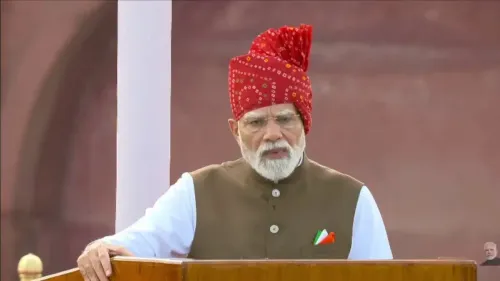
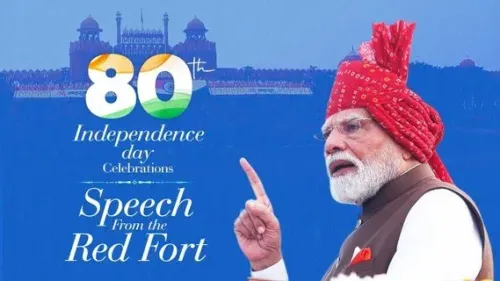
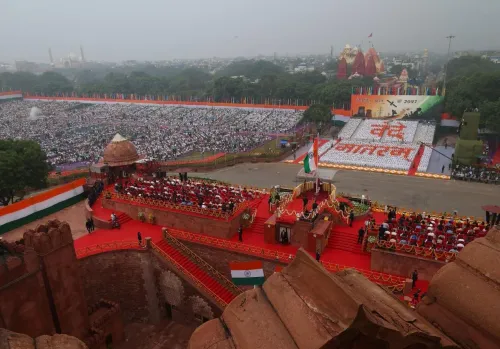
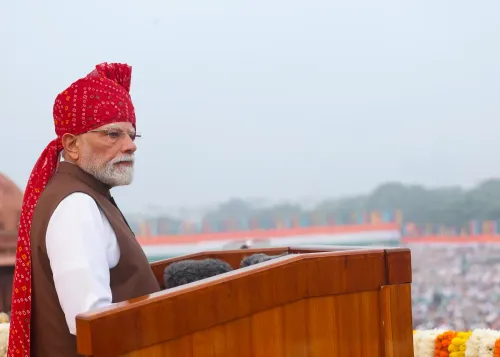
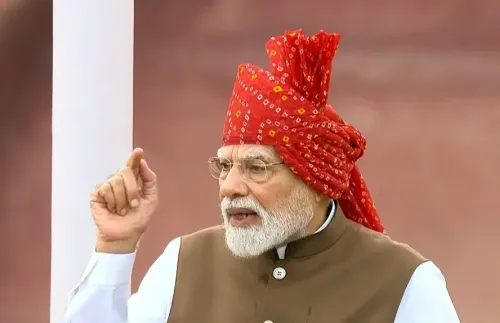
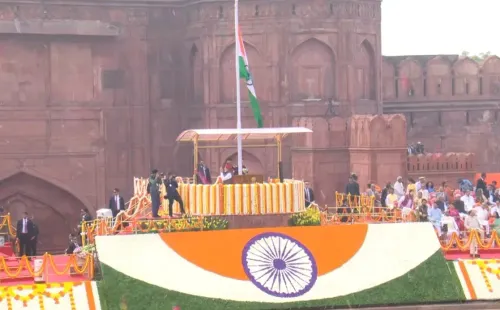
PM Narendra Modi addressed the nation from the Red Fort on 15 August 2025 , marking India's 80th Independence Day .
He invoked ten national icons including Netaji Subhash Chandra Bose , Jawaharlal Nehru , Babasaheb Ambedkar , Sardar Patel , Bhagat Singh , Dr Syama Prasad Mookerjee , and Bhagwan Birsa Munda .
Modi reaffirmed the 'Panch Pran' (Five Pledges) framework, first introduced in his 2022 Independence Day speech, as the country's guiding compass.
He called on citizens to unite behind the Viksit Bharat vision, targeting developed-nation status by 2047 .
The address stressed erasing the 'mindset of servitude' and placing national interest above self as core civic duties.
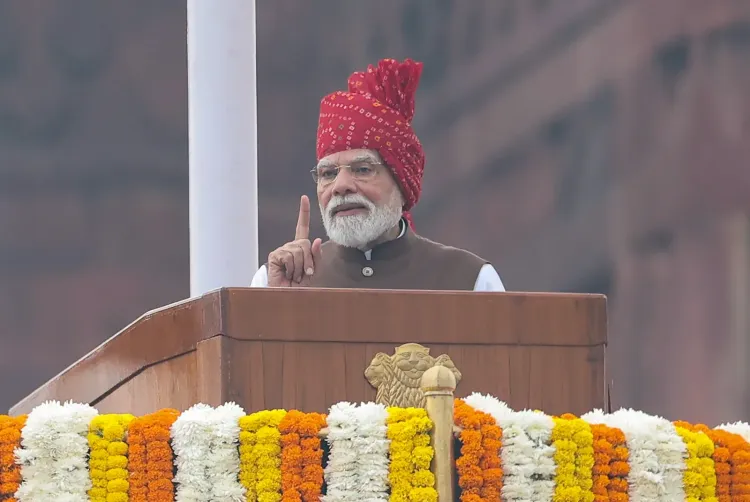
Prime Minister Narendra Modi on 15 August 2025 invoked the legacies of India's foremost freedom fighters and nation-builders — from Netaji Subhash Chandra Bose and Jawaharlal Nehru to Babasaheb Ambedkar, Sardar Vallabhbhai Patel, and Bhagat Singh — urging every citizen to draw strength from their ideals in pursuit of a Viksit Bharat (Developed India). Addressing the nation from the ramparts of the Red Fort during the 80th Independence Day celebrations, Modi framed the country's developmental journey as a collective moral obligation rooted in the sacrifices of those who shaped the republic.
The Panch Pran Reminder
Modi revisited his earlier call for the 'Panch Pran' — or Five Pledges — first articulated from the same Red Fort battlements, describing them as a source of national self-confidence and forward momentum. 'These Five Pledges have given the nation immense support to move forward with self-pride and with the strength to overcome and achieve our goals. We must continuously erase the mindset of servitude at every moment,' he said.
The Panch Pran framework, introduced in his 2022 Independence Day address, centres on a developed India, erasing the colonial mindset, pride in heritage, unity, and fulfilling civic duties — a rubric Modi has returned to repeatedly as a unifying national theme.
The Roll Call of Icons
In a notably inclusive invocation, the Prime Minister named a wide spectrum of historical figures cutting across ideological lines: Netaji Subhash Chandra Bose, Babasaheb Ambedkar, Pandit Nehru, Sardar Patel, Bhagat Singh, Sukhdev, Rajguru, Dr Syama Prasad Mookerjee, Bhagwan Birsa Munda, and Jyotiba Phule. 'Let us move forward with inspiration from all of them. Come, let us repeat this resolve — national interest above self, duty as our identity,' Modi said.
Notably, the list bridges figures from the Congress tradition, the socialist left, the Hindu nationalist lineage, the Dalit emancipation movement, and the Adivasi resistance — a rhetorical breadth that signals an attempt to construct an all-encompassing national narrative ahead of a period of intense political competition.
The Viksit Bharat Vision
Modi called on citizens to collectively transform aspirations into achievements, stressing that India possesses the time, opportunity, and determination required. 'Time is ours, opportunity is ours, resolve is ours — come, let's turn dreams into resolve, forge a resolve of capability, and keep transforming into that capability,' he declared.
He closed with a Hindi couplet that encapsulated the call to collective action: 'Har kadam ko vikas ka kadam banaye, kadam se kadam milaye, man se man milaye, lakshya se jude rahe. Ek deep se jale deep hazaaro, aao milke Viksit Bharat banaye' — rendered in English as: 'Let every step be a step towards progress; let us march in unison, unite our hearts, and remain steadfast in our goal. From one lamp, let thousands be lit — come, let us join hands to build a Viksit Bharat.'
Context and Significance
This comes amid sustained government messaging around the 2047 centenary of Independence as a target year for India to achieve developed-nation status. The 80th Independence Day marks a symbolic midpoint in that countdown, lending the address particular weight as a reaffirmation of long-term national intent. Modi's decision to name Nehru — whose legacy has often been contested in ruling-party discourse — alongside figures more traditionally associated with the Bharatiya Janata Party (BJP) worldview drew immediate attention from political observers.
Point of View
Now in its third consecutive year as the centrepiece theme, risks becoming ritual rather than roadmap without concrete milestones attached to it. The 80th Independence Day is a natural inflection point: with 22 years left to 2047, the gap between inspirational oratory and measurable developmental outcomes will only grow harder to paper over.
NationPress
29 Sept 2026
Frequently Asked Questions
What did PM Modi say in his 80th Independence Day speech?
Prime Minister Narendra Modi invoked ten freedom fighters and nation-builders — including Netaji Subhash Chandra Bose, Jawaharlal Nehru, Babasaheb Ambedkar, and Bhagat Singh — from the Red Fort on 15 August 2025, urging citizens to unite behind the Viksit Bharat vision. He also reaffirmed the Panch Pran framework as the country's guiding set of pledges.
What is Viksit Bharat and why did Modi invoke it?
Viksit Bharat, meaning 'Developed India', is the government's overarching goal of achieving developed-nation status by 2047 — the centenary of Independence. Modi has made it the central theme of his Independence Day addresses, framing it as the collective responsibility of every citizen inspired by the sacrifices of freedom fighters.
What are the Panch Pran or Five Pledges that Modi referenced?
The Panch Pran, introduced by Modi in his 2022 Independence Day address, are five national commitments: building a developed India, erasing the colonial mindset, taking pride in heritage, fostering unity, and fulfilling civic duties. Modi cited them on 15 August 2025 as a source of the country's self-confidence and forward momentum.
Why is Modi naming Nehru in his Independence Day speech significant?
Jawaharlal Nehru's legacy has frequently been a point of political contestation in ruling-party discourse. Modi's explicit naming of Nehru alongside figures more closely associated with the BJP worldview — such as Dr Syama Prasad Mookerjee — signals an attempt to construct a broad, cross-ideological national narrative.
Which freedom fighters did PM Modi name in his 2025 Independence Day address?
Modi named Netaji Subhash Chandra Bose, Babasaheb Ambedkar, Pandit Nehru, Sardar Patel, Bhagat Singh, Sukhdev, Rajguru, Dr Syama Prasad Mookerjee, Bhagwan Birsa Munda, and Jyotiba Phule — spanning the Congress tradition, the socialist left, the Hindu nationalist lineage, the Dalit emancipation movement, and Adivasi resistance.