Modi-Japan bond: From 1980s pen-pals to bullet trains and strategic alliance
Synopsis
Long before the bullet train or the industrial corridors, Modi was exchanging letters and a copy of the Bhagavad Gita with a pen-pal from Nagoya. Four decades later, that personal curiosity has translated into India's most strategically dense bilateral partnership — and Japanese PM Takaichi's visit is its latest expression.
Key Takeaways
PM Modi 's connection with Japan began in the early 1980s with a pen-pal friendship formed during a trip to Nepal .
As Chief Minister of Gujarat in 2007 , Modi led a 40-member delegation to Japan and first met the late Shinzo Abe .
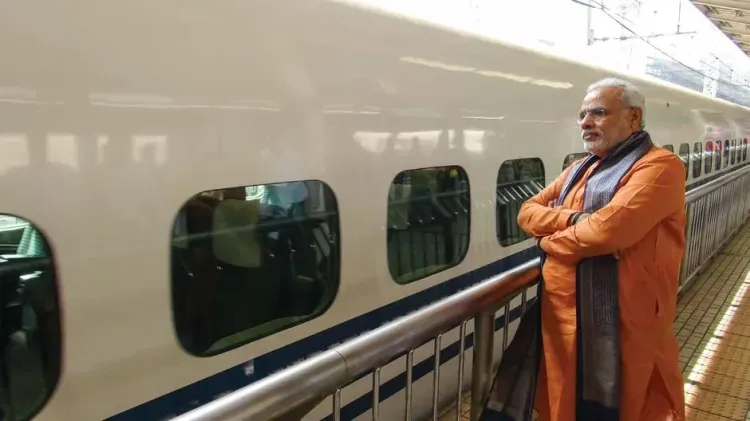
A Shinkansen bullet train ride during that visit directly inspired India's Mumbai-Ahmedabad High Speed Rail project.
Modi attended more than 40 programmes in five days during his 2012 Japan visit, coinciding with the 60th anniversary of India-Japan diplomatic ties.
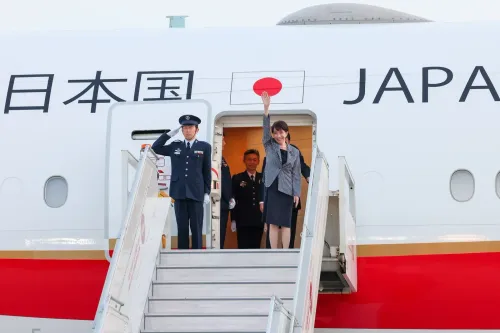
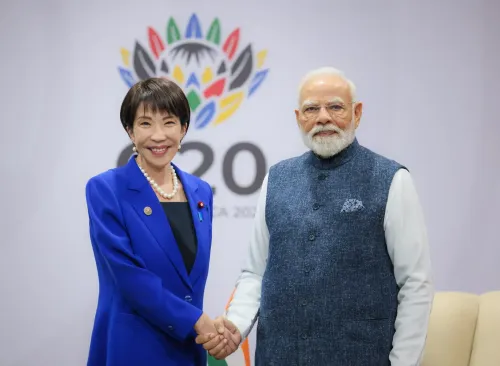
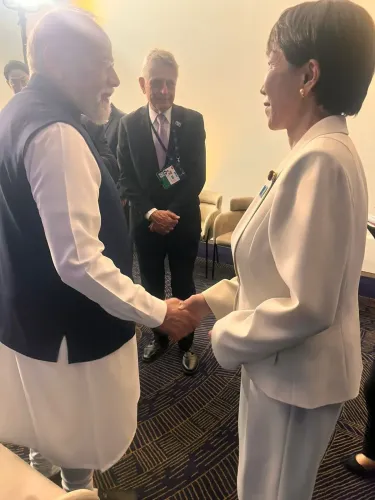
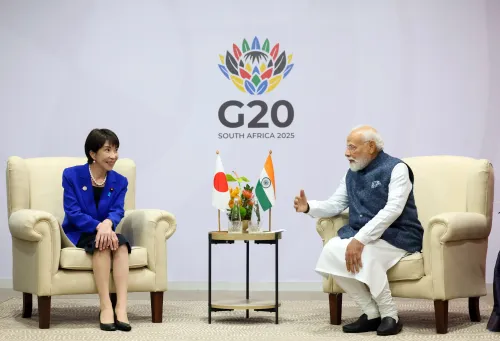
Japanese PM Sanae Takaichi 's India visit is expected to advance cooperation in semiconductors , clean energy , and defence supply chains .
Prime Minister Narendra Modi's relationship with Japan is one of the most consequential personal-turned-strategic bonds in modern Indian diplomacy — a journey that predates his entry into national politics by decades and has since shaped landmark projects from the Mumbai-Ahmedabad High Speed Rail to the Delhi-Mumbai Industrial Corridor. The visit of Japanese Prime Minister Sanae Takaichi to India is the latest chapter in a story that began, improbably, with a pen-pal friendship in the early 1980s.
The Early Connection: A Friendship Before Politics
Modi's earliest engagement with Japan traces back to the early 1980s, when, as a young Rashtriya Swayamsevak Sangh (RSS) pracharak, he befriended a Japanese visitor from Nagoya during a trip to Nepal. According to posts on the Modi Story X account, the bond evolved into a pen-pal exchange — Japanese shoes and T-shirts travelling one way, a copy of the Bhagavad Gita the other. Even at that stage, Modi reportedly viewed such exchanges as cultural bridges rather than casual correspondence.
The 2007 Gujarat Mission: Learning from Japan
By 2007, as Chief Minister of Gujarat, Modi's engagement had matured into a structured learning mission. He led a 40-member delegation through Tokyo, Osaka, Hiroshima, and Kobe, meeting corporate leaders at Mitsubishi, Suzuki, Toshiba, and Nippon Steel, and signing agreements with the Japan External Trade Organisation (JETRO) that laid the foundation for Gujarat's economic ties with Japan.
It was during this visit that Modi first met the late former Japanese Prime Minister Shinzo Abe — a meeting widely credited with seeding one of the closest bilateral relationships between two world leaders in the following decade. Modi's personal concern for Abe's health during the latter's illness later became a frequently cited example of the warmth behind the diplomacy.
A Shinkansen bullet train ride proved transformative. Seated in the driver's cockpit, Modi engaged engineers on earthquake-safety systems and punctuality protocols, reportedly envisioning a high-speed rail future for India. His curiosity extended to temples, universities, and conversations with Japanese schoolchildren — reflecting a conviction, as he articulated at a Japanese university, that 'darkness cannot be defeated with a sword; a small lamp can remove it.'
Practical Lessons That Shaped Gujarat
The learning was not merely philosophical. Post-Kutch earthquake reconstruction in Gujarat drew directly from Kobe's resilience model. The state's mid-day meal schemes borrowed elements from Japanese education nutrition programmes. During Gujarat's Golden Jubilee celebrations, soil and water from Japan were incorporated into the construction of Mahatma Mandir — a symbolic gesture of shared heritage.
Modi's 2012 visit to Japan, timed to the 60th anniversary of India-Japan diplomatic ties, further elevated his profile. Honoured by the Japanese government, he attended more than 40 programmes in five days and earned praise from Japanese media as a business-friendly leader. Fasting through Navratri, he nonetheless engaged investors relentlessly, toured Suzuki's manufacturing plant, and told JETRO: 'Japan has the strength of experience, Gujarat has the power of enterprise. Japan has technology, Gujarat has the talent to absorb it.' His remark at Kobe Port — 'One day, I will build Dholera like this' — foreshadowed the development of the Dholera Special Investment Region.
From Personal Vision to National Strategy
After assuming office as Prime Minister in 2014, Modi's accumulated exposure to Japan crystallised into state policy. The Mumbai-Ahmedabad High Speed Rail project — India's first bullet train corridor — is built on Japanese Shinkansen technology and backed by Japanese financing. The Delhi-Mumbai Industrial Corridor reflects the industrial-zone model Modi studied during his Gujarat visits. Defence and technology cooperation has deepened substantially, with India and Japan now conducting joint military exercises and collaborating on advanced manufacturing.
This comes amid a broader Indo-Pacific strategic realignment, in which the India-Japan partnership functions as a democratic counterweight in Asia — precisely the framing Modi articulated in his university address in Japan years before it became official foreign-policy language.
Takaichi's Visit and What Comes Next
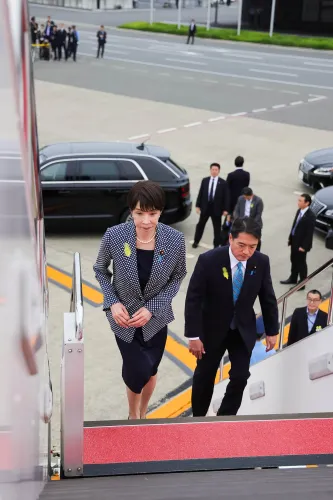
The arrival of Prime Minister Sanae Takaichi in India is being received as a continuation of this long arc rather than a standalone diplomatic event. Notably, Takaichi is among Japan's most prominent conservative leaders and a close associate of the late Abe — a connection that carries symbolic weight given Modi's personal bond with Abe. Analysts expect the visit to advance cooperation in semiconductors, clean energy, and defence supply chains, areas where both nations have identified strategic alignment. The bilateral relationship, built over four decades of personal and institutional investment, now ranks among India's most structurally significant global partnerships.
Point of View
The Abe friendship — but the more consequential thread is institutional. Modi systematically converted personal exposure into policy architecture: Kobe became Dholera, the Shinkansen became the bullet train corridor, JETRO agreements became industrial corridors. What mainstream coverage underplays is how unusual this is — most Indian leaders engage Japan transactionally. The risk now is that the relationship's depth is concentrated in Modi's personal investment. Takaichi's visit is an opportunity to institutionalise what has so far been personality-driven, particularly on semiconductors and defence supply chains where structural agreements matter more than summitry.
NationPress
1 Oct 2026
Frequently Asked Questions
When did PM Modi first develop a connection with Japan?
PM Modi's earliest connection with Japan dates to the early 1980s, when as an RSS pracharak he befriended a Japanese visitor from Nagoya during a trip to Nepal, leading to a pen-pal exchange of letters and gifts.
What was the significance of Modi's 2007 visit to Japan?
Modi's 2007 visit as Gujarat Chief Minister was a structured economic mission — he led a 40-member delegation, met major Japanese corporations, signed agreements with JETRO, and first met the late Shinzo Abe. A Shinkansen ride during the trip directly inspired his vision for India's high-speed rail.
How has the India-Japan relationship shaped specific infrastructure projects in India?
The Mumbai-Ahmedabad High Speed Rail, India's first bullet train corridor, is built on Japanese Shinkansen technology with Japanese financing. The Delhi-Mumbai Industrial Corridor also reflects the industrial-zone model Modi studied during his Gujarat-era visits to Japan.
Who is Japanese PM Sanae Takaichi and why does her India visit matter?
Sanae Takaichi is one of Japan's most prominent conservative leaders and a close associate of the late Shinzo Abe. Her India visit is seen as a continuation of the strong bilateral ties built under Modi and Abe, with expectations of advancing cooperation in semiconductors, clean energy, and defence supply chains.
What did Modi say during his Japan visits that reflected his vision for India?
At a Japanese university, Modi said 'darkness cannot be defeated with a sword; a small lamp can remove it' — framing India and Japan as democratic partners in Asia. At Kobe Port, he remarked 'One day, I will build Dholera like this,' foreshadowing the Dholera Special Investment Region.