PM Modi inaugurates RBI Data Centre in Bhubaneswar, pushes financial inclusion

Synopsis
Modi's Bhubaneswar visit was more than a ribbon-cutting — he used the RBI Data Centre inauguration to draw a sharp contrast between his government's digital banking drive and what he called the UPA's 'phone banking' era that he alleges caused the NPA crisis. The new facilities signal a deliberate push to decentralise India's critical financial infrastructure to eastern India.
Key Takeaways
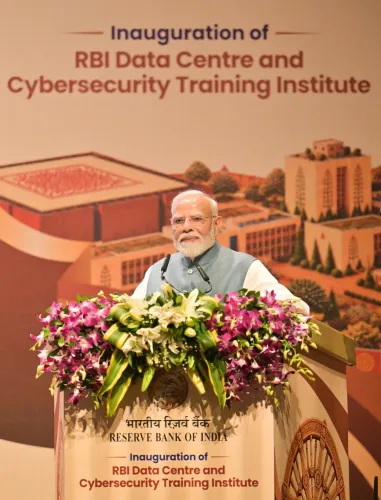
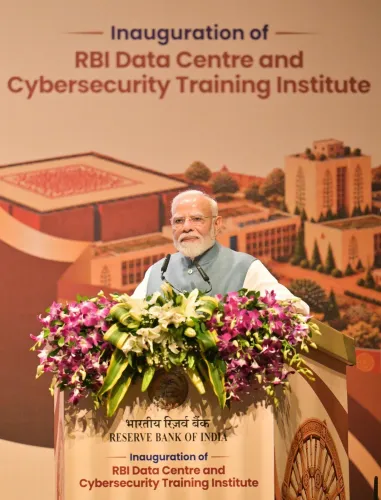
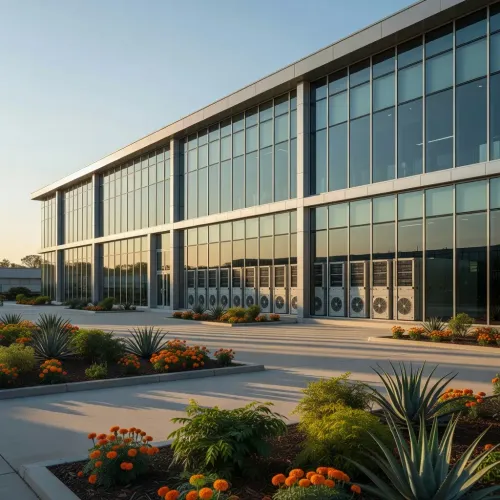
PM Modi inaugurated the RBI Data Centre and Cybersecurity Training Institute in Bhubaneswar, Odisha on 25 October 2025 .
Modi stated that until 2014 , more than half of India's population was outside the banking system; digital banking has since expanded access to 24-hour services .
The Prime Minister alleged that the previous Congress-led UPA government's 'phone banking' model favoured the wealthy and contributed to the NPA crisis .
The new RBI Data Centre is aimed at strengthening the security and resilience of India's digital banking infrastructure.
The Cybersecurity Training Institute is designed to build skilled human resources to counter evolving cyber threats to the banking sector.
Prime Minister Narendra Modi on Sunday, 25 October 2026, inaugurated the Reserve Bank of India (RBI) Data Centre and the Cybersecurity Training Institute in Bhubaneswar, Odisha, using the occasion to stress the importance of inclusive development and the government's commitment to ensuring that the benefits of growth reach every citizen.
Key Remarks at the Inauguration
Speaking at the inauguration ceremony, Prime Minister Modi said, 'With the blessings of Mahaprabhu (Lord Jagannath), Bhubaneswar is giving a new institution to a new India today.' He described the occasion as significant, noting that the two facilities would benefit both Odisha and the country at large.
Modi underscored a longstanding challenge in India's development story — that while large cities, hospitals, and airports grew rapidly after Independence, a substantial portion of the population remained without basic amenities. He framed his government's governance model as 'pro-people, proactive and good governance,' aimed at leaving no citizen behind.
Financial Inclusion: A Decade of Change
The Prime Minister cited banking access as a defining metric of inclusive growth. 'Banks were nationalised in the 1960s and 1970s in the name of the poor. Yet, until 2014, more than half of the country's population remained outside the banking system. Even bank loans were a distant dream for the middle class, while the poor, small farmers, landless people, sisters and daughters could not even think of accessing such facilities. Today, digital banking in India has connected everyone to 24-hour banking services,' he said.
Modi noted that poor and middle-class families once needed a guarantor merely to open a bank account — a structural barrier he attributed to policy failures of the previous administration.
Sharp Criticism of Previous Government
The Prime Minister took a pointed jibe at what he characterised as 'phone banking' under the previous Congress-led United Progressive Alliance (UPA) government. He alleged that the system disproportionately benefited the wealthy and those with political connections, while ordinary citizens were excluded from basic financial services. 'Under the Congress' phone banking system, thousands of crores of rupees were readily available to the rich. It was this mismanagement that brought India's banking system under the grip of non-performing assets (NPAs), pushing it to the brink of ruin,' he alleged.
Why the New RBI Facilities Matter
Turning to the significance of the new infrastructure, Modi said the next decade must be about making banking 'more efficient and trustworthy,' building on the previous decade's work of expanding access. He described the new RBI Data Centre in Odisha as a critical component of protecting the country's digital financial infrastructure.
He also stressed that as cyber threats continue to evolve, the new Cybersecurity Training Institute would help build the skilled human resources, modern tools, and updated training systems necessary to tackle emerging challenges. The institute is positioned as a national resource for cybersecurity capacity-building in the banking sector.
Broader Context
The inauguration comes as India's digital banking infrastructure has expanded significantly over the past decade, underpinned by schemes such as the Pradhan Mantri Jan Dhan Yojana (PMJDY). The establishment of a dedicated RBI data centre and cybersecurity institute in Bhubaneswar signals a continued push to decentralise critical financial infrastructure away from traditional metros. For Odisha, the development brings the profile of a state that has historically been on the periphery of India's financial architecture closer to its centre. All eyes will now be on how quickly the cybersecurity institute operationalises its training programmes and whether the data centre delivers measurable improvements in banking system resilience.
Point of View
But the underlying policy point is not without substance — the UPA years did see a significant accumulation of stressed assets in the banking system. The sharper question the event leaves unanswered is whether a new data centre and a cybersecurity institute in Bhubaneswar represent a genuine architectural shift in how India protects its financial infrastructure, or whether they are prestige projects. India's cyber threat surface in banking has expanded faster than its defensive capacity, and training institutes matter only if their graduates are absorbed into roles with real authority. The Bhubaneswar location is strategically significant for eastern India, but the proof will be in staffing, curriculum, and whether outputs are measured against actual incident-response outcomes.
NationPress
25 Oct 2026
Frequently Asked Questions
What did PM Modi inaugurate in Bhubaneswar on 25 October 2025?
Prime Minister Modi inaugurated the Reserve Bank of India (RBI) Data Centre and a Cybersecurity Training Institute in Bhubaneswar, Odisha. Both facilities are intended to strengthen India's digital banking infrastructure and build cybersecurity capacity in the financial sector.
What did PM Modi say about financial inclusion at the event?
Modi stated that until 2014, more than half of India's population remained outside the banking system, with the poor, small farmers, and women unable to access even basic banking facilities. He credited digital banking initiatives with connecting all citizens to 24-hour banking services.
Why did PM Modi criticise the previous Congress-led government?
Modi alleged that the UPA government's 'phone banking' model benefited the wealthy and those with political connections, while ordinary citizens faced barriers even to opening a bank account. He further claimed this mismanagement led to a surge in non-performing assets (NPAs) that threatened the banking system.
What is the significance of the new RBI Data Centre in Odisha?
The RBI Data Centre in Bhubaneswar is designed to protect and strengthen India's digital banking infrastructure against cyber threats. Modi described it as a key component of making the banking system more efficient and trustworthy in the coming decade.
What will the new Cybersecurity Training Institute do?
The Cybersecurity Training Institute in Bhubaneswar is set up to train skilled human resources equipped to tackle evolving cyber threats to India's banking sector. Modi said modern infrastructure, updated training systems, and qualified personnel are essential as digital threats grow more sophisticated.