PM Modi Plants Coco de Mer in Seychelles Climate Gesture
Synopsis
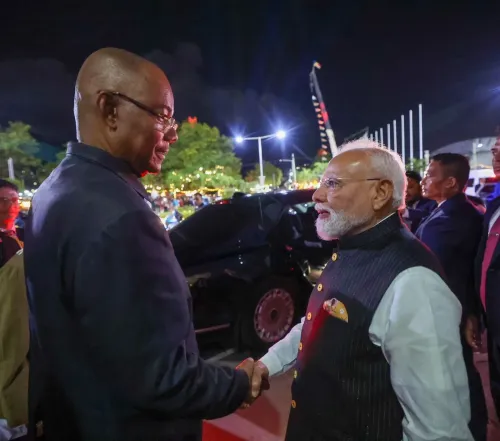
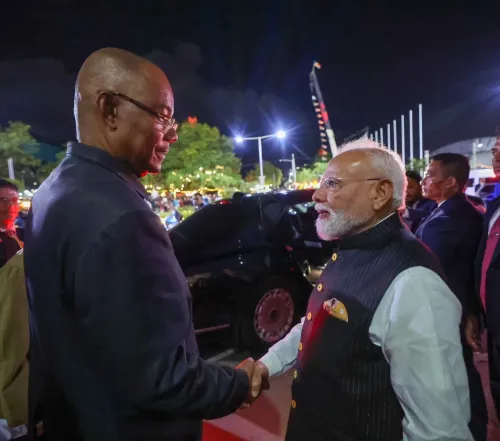
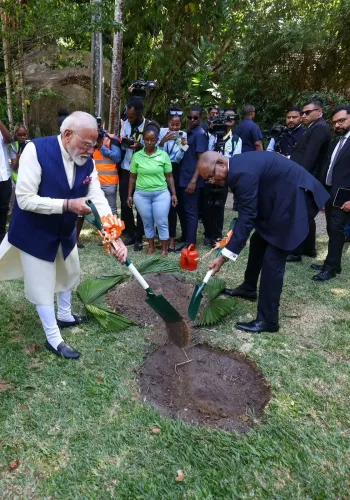
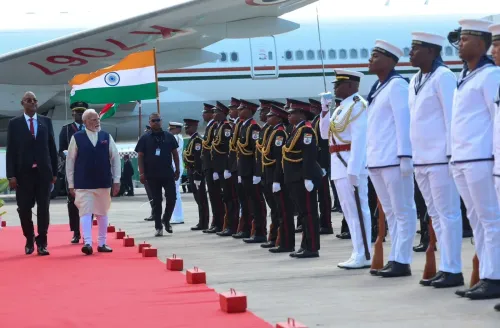
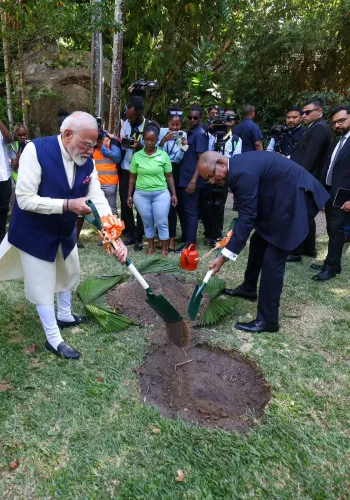
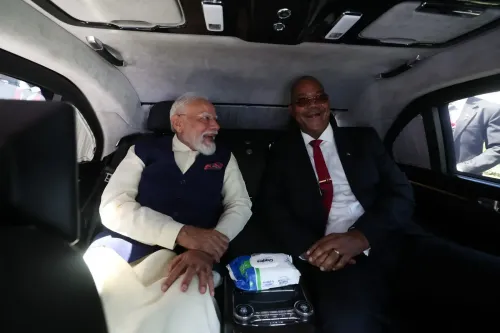
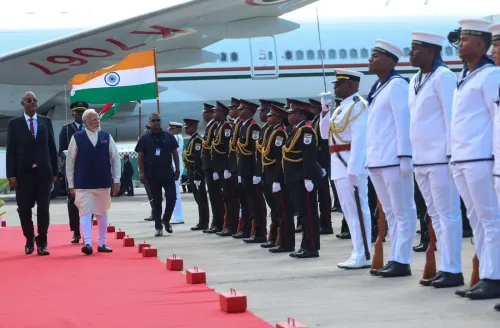
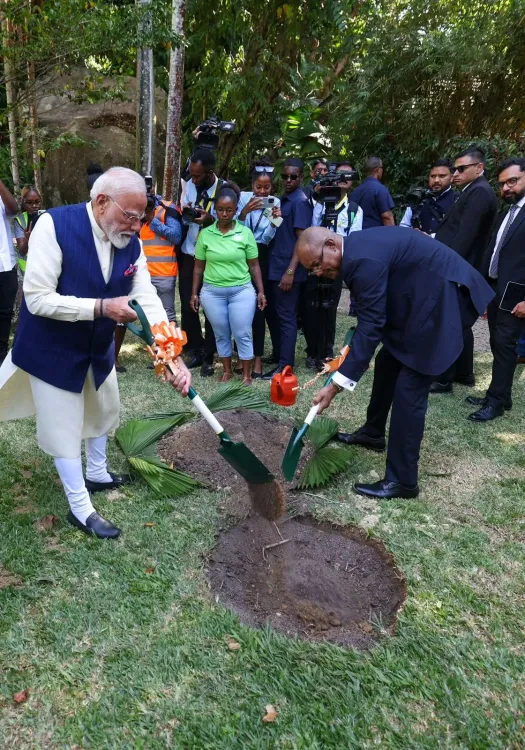
Prime Minister Narendra Modi joined Seychelles President Dr. Patrick Herminie on 27 June 2026 for a joint tree plantation ceremony at the Seychelles National Botanical Garden, planting the iconic Coco de Mer palm in a gesture of shared environmental commitment and bilateral goodwill.
Key Takeaways
Prime Minister Narendra Modi and President Dr.
Patrick Herminie jointly planted a Coco de Mer palm at the Seychelles National Botanical Garden on 27 June 2026 .
The Coco de Mer is endemic to Seychelles and holds deep ecological and cultural significance for the island nation.
The ceremony reflects India's consistent use of environmental symbolism in its Indian Ocean diplomacy , rooted in the SAGAR doctrine articulated in 2015 .
India's climate outreach to Small Island Developing States complements its multilateral commitments, including the International Solar Alliance and a net-zero by 2070 pledge.
Seychelles, an archipelago of 115 islands , is among the nations most exposed to climate-driven sea-level rise, making such bilateral gestures diplomatically significant.
Prime Minister Narendra Modi participated in a joint tree plantation ceremony at the Seychelles National Botanical Garden alongside President Dr. Patrick Herminie on Saturday, 27 June 2026, planting the iconic Coco de Mer — a palm species endemic to Seychelles — in a gesture underscoring both nations' shared commitment to environmental stewardship.
Context
Posting on X, Prime Minister Modi described the occasion as 'a very special ceremony, highlighting a shared commitment to a greener planet.' The Coco de Mer (Lodoicea maldivica), which produces the world's largest seed, is native exclusively to the Seychelles islands and holds deep cultural and ecological significance for the archipelago nation. Its selection for the joint planting carries deliberate symbolic weight, rooting the bilateral moment in Seychelles' own natural heritage.
The ceremony took place within the Seychelles National Botanical Garden, one of the oldest botanical gardens in the Indian Ocean region, located in the capital Victoria on Mahé island.
Policy Backdrop
India and Seychelles share longstanding ties built on maritime cooperation, development assistance, and climate-linked diplomacy. During his landmark March 2015 visit to Seychelles, Prime Minister Modi articulated the SAGAR doctrine — Security and Growth for All in the Region — which framed India's Indian Ocean engagement around inclusive development and environmental sustainability alongside strategic interests.
New Delhi has consistently integrated environmental gestures, including joint tree plantings, into its outreach to Small Island Developing States (SIDS) and African nations. This approach complements India's multilateral climate commitments, including its co-founding of the International Solar Alliance and its pledge to achieve net-zero emissions by 2070.
Stakeholders and Impact
Seychelles, an archipelago of 115 islands with a population of under 1 lakh, is acutely vulnerable to sea-level rise and coral bleaching driven by climate change. For such Small Island Developing States, visible commitments from large economies like India carry both diplomatic and practical significance, reinforcing calls for stronger climate finance and ecosystem protection.
The joint plantation also signals continuity in people-to-people and environment-to-environment diplomacy, a register India has used to deepen ties across the Indian Ocean littoral without framing every engagement in purely strategic or transactional terms.
What's Next
Observers will watch for any follow-up bilateral agreements on coastal ecosystem restoration, renewable energy, or blue economy cooperation emerging from the 2026 visit. India's engagement with Indian Ocean island states through forums such as the Indian Ocean Rim Association (IORA) and climate-focused multilateral platforms is likely to reference this visit as an example of its neighbourhood-first and climate-forward posture in the region.
Point of View
Reinforcing the SAGAR framework without requiring fresh treaty commitments. For Seychelles, the optics of a major continental power literally planting roots in its soil carries a message of solidarity that travels well domestically and internationally. The visit also subtly signals India's continued strategic interest in the western Indian Ocean, where maritime presence and soft-power cultivation reinforce each other.
NationPress
26 Sept 2026
Frequently Asked Questions
Why did PM Modi visit Seychelles in 2026?
Prime Minister Modi visited Seychelles in June 2026 as part of bilateral diplomatic engagement, participating in events including a joint tree plantation ceremony with President Dr. Patrick Herminie at the Seychelles National Botanical Garden.
What is the Coco de Mer tree that Modi planted?
The Coco de Mer ( Lodoicea maldivica ) is a palm tree unique to Seychelles that produces the world's largest seed. It is a national symbol of the archipelago and holds significant ecological and cultural importance.
What is India's SAGAR doctrine and how does it relate to Seychelles?
SAGAR stands for 'Security and Growth for All in the Region,' a framework articulated by PM Modi during his 2015 Seychelles visit. It guides India's Indian Ocean policy, combining strategic maritime cooperation with development assistance and environmental collaboration.
How does India engage with Small Island Developing States on climate?
India engages Small Island Developing States through initiatives like the International Solar Alliance, bilateral development lines of credit, and symbolic gestures such as joint tree plantations, all framed within its commitment to reaching net-zero emissions by 2070.
Where is the Seychelles National Botanical Garden located?
The Seychelles National Botanical Garden is located in Victoria, the capital city, on Mahé island — the largest island in the Seychelles archipelago.