PM Modi: Policies Must Be Pro-People, Pro-Growth, Pro-Development
Synopsis
Prime Minister Narendra Modi on 21 August 2026 restated his administration's core governing doctrine — that policies must be pro-people, pro-growth, and pro-development — in an X post accompanied by a video, echoing his long-held Sabka Saath, Sabka Vikas philosophy.
Key Takeaways
PM Narendra Modi posted on 21 August 2026 that 'Policies must be pro-people, pro-growth and pro-development.' The statement reflects his administration's longstanding Sabka Saath, Sabka Vikas governance philosophy.
The post was accompanied by a video whose specific contents were not independently verified at publication.
The three-pillar framing has historically accompanied major reforms including GST implementation and infrastructure expansion.
The message is directed at both Indian citizens and the broader business community.
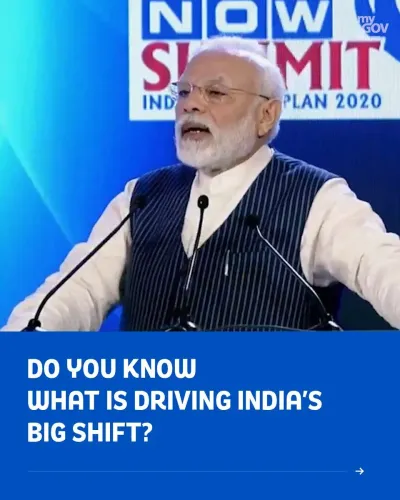
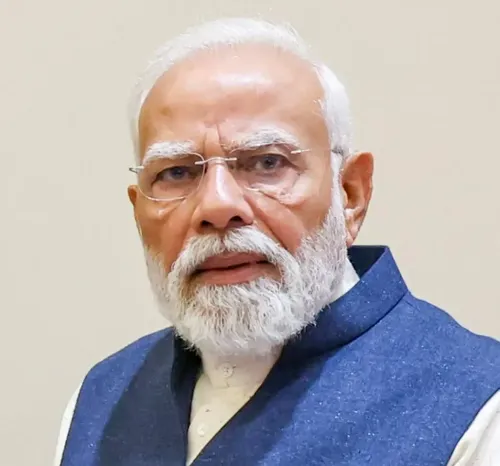
Three words — and a governing philosophy. Prime Minister Narendra Modi on Friday, 21 August 2026 distilled his administration's core policy doctrine into a single line: 'Policies must be pro-people, pro-growth and pro-development,' posting the statement on X alongside a video.
The three-pillar formula Modi keeps returning to
The formulation is not accidental. Since his first term, Modi has anchored his governance pitch around the Sabka Saath, Sabka Vikas ('Together with all, development for all') framework — a deliberate attempt to fuse social inclusion with economic ambition. The latest post restates that triangle: citizens first, growth as the engine, development as the destination.
That philosophy has underpinned landmark reforms — from the rollout of the Goods and Services Tax (GST), which unified India's fragmented indirect-tax regime, to successive infrastructure pushes that have reshaped highways, railways, and digital connectivity across the country.
Why the framing still carries political weight
Reducing a policy agenda to a crisp, memorable triplet is a deliberate communication choice. It signals to the business community that growth remains non-negotiable, while reassuring citizens that expansion will not bypass them. The BJP's electoral arithmetic has long rested on demonstrating that both promises can be kept simultaneously — a tension that every budget and every reform cycle must navigate afresh.
The video attached to the post, whose contents could not be independently verified at the time of publication, likely elaborates on one or more of these pillars in the Prime Minister's own words.
Point of View
Or welfare over growth. Whether the video attached to the post introduces a concrete new initiative will determine whether this is a rhetorical refresh or a substantive launch.
NationPress
6 Oct 2026
Frequently Asked Questions
What did PM Modi say in his 21 August 2026 X post?
PM Modi stated that 'Policies must be pro-people, pro-growth and pro-development,' reaffirming his administration's core governance doctrine.
What is Modi's Sabka Saath, Sabka Vikas philosophy?
Sabka Saath, Sabka Vikas — meaning 'Together with all, development for all' — is the guiding framework Modi introduced at the start of his first term, emphasising inclusive economic growth that benefits all sections of society.
What major reforms reflect Modi's pro-growth policy stance?
Key reforms include the rollout of the Goods and Services Tax (GST) , which unified India's indirect-tax structure, and large-scale infrastructure investments in roads, railways, and digital connectivity.
Why does Modi repeatedly use the pro-people, pro-growth framing?
The triplet serves as a political communication tool, signalling to citizens that welfare is prioritised while assuring the business community that economic expansion remains a core government objective.
What was in the video attached to Modi's post?
The specific contents of the video could not be independently verified at the time of publication.