PM Modi Champions India's Inclusive Growth Model on World Stage
Synopsis
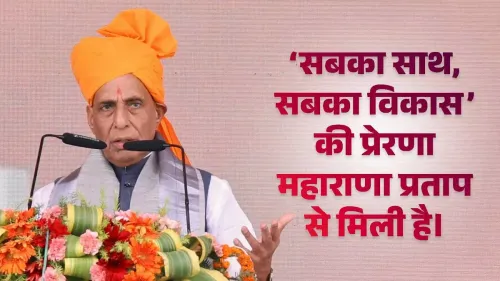
Prime Minister Narendra Modi on 17 June 2026 championed India's inclusive-growth model on X, invoking the 'Sabka Saath, Sabka Vikas, Sabka Vishwas, Sabka Prayas' philosophy to argue that shared development can convert aspiration into tangible reality — framing India as a replicable model for the Global South.
Key Takeaways
PM Modi posted on 17 June 2026 that India's experience shows 'shared development can help transform aspiration into reality.' He described India's growth story as built on 'inclusion, scale and democratic empowerment.' The post invokes Sabka Saath, Sabka Vikas, Sabka Vishwas, Sabka Prayas — the four-pillar BJP governance philosophy introduced from 2014 onwards.
The framework has served as the philosophical umbrella for flagship schemes in housing, sanitation, financial inclusion and energy access.
The messaging positions India as a development model for Global South nations, building on the narrative advanced during India's G20 Presidency in 2023 .
Upcoming international addresses and the next Union Budget will be watched for further articulation of this inclusive-growth agenda.
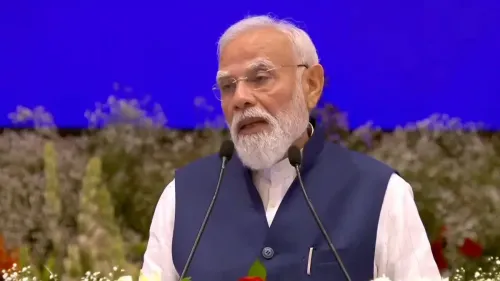
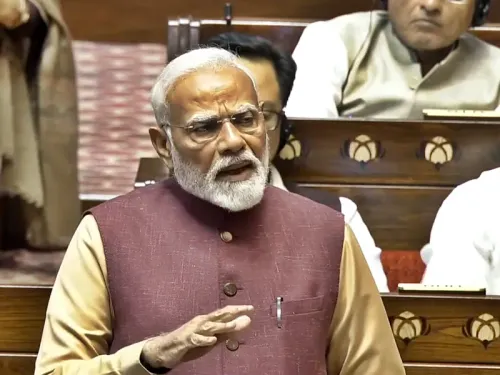
Prime Minister Narendra Modi on Wednesday, 17 June 2026 took to X to articulate India's development philosophy, asserting that the country's experience proves 'shared development can help transform aspiration into reality.'
Context
In the post, PM Modi described India's growth story as one rooted in 'inclusion, scale and democratic empowerment.' He anchored the message in the governing principle of Sabka Saath, Sabka Vikas, Sabka Vishwas, Sabka Prayas — translated as 'Together with all, development for all, trust of all, effort of all' — the four-pillar philosophy that has underpinned his administration's welfare and economic agenda since 2014.
The framing positions India not merely as a domestic success story but as a model whose lessons carry relevance for other developing nations, particularly in the context of the Global South.
Policy Backdrop
The slogan Sabka Saath, Sabka Vikas was first introduced during the BJP's 2014 general election campaign as a compact statement of inclusive development. It was subsequently expanded: Sabka Vishwas (trust of all) was added around 2018, and Sabka Prayas (effort of all) was incorporated in later years to emphasise collective citizen participation alongside state delivery.
Under this umbrella, successive Modi governments have launched and scaled programmes spanning housing, sanitation, financial inclusion and energy access — all framed as evidence that rapid economic growth and wide-scale welfare delivery can proceed simultaneously. Direct benefit transfers, Jan Dhan accounts, the Ujjwala cooking-gas scheme and the PM Awas Yojana housing programme are among the flagship initiatives cited in this narrative.
The same framework has been deployed in multilateral forums — most prominently during India's G20 Presidency in 2023 — to present the country as a credible voice advocating for development-centric global governance on behalf of emerging economies.
Stakeholders and Impact
The primary domestic beneficiaries of the policies grouped under this philosophy are marginalised communities, rural households and first-generation participants in the formal economy. The government's argument is that targeted, technology-enabled welfare delivery has brought hundreds of millions into the economic mainstream without sacrificing fiscal discipline.
On the international plane, the message is aimed at partner nations in the Global South — countries that face similar challenges of scale, resource constraints and democratic accountability. By presenting India's model as replicable, New Delhi signals its ambition to be a development partner, not merely a recipient of multilateral aid frameworks.
What's Next
Observers will watch for whether this statement is followed by specific international engagements — bilateral summits, multilateral addresses, or development-cooperation agreements — that operationalise the philosophy articulated in the post. The continued rollout of centrally sponsored welfare schemes and any references to this framework in the upcoming Union Budget will also be closely tracked as indicators of how the government intends to sustain and communicate the inclusive-growth narrative going forward.
Point of View
Sabka Vikas, Sabka Vishwas, Sabka Prayas in a globally accessible English-language post, the Prime Minister signals that the inclusive-growth narrative is being calibrated for an audience beyond Indian voters. This fits a consistent pattern of using multilateral moments — the G20 Presidency, UN addresses, bilateral summits — to position India as the voice of the Global South. The timing and platform choice suggest the statement may be a precursor to a formal international engagement where this philosophy will be presented as a replicable development model.
NationPress
18 Sept 2026
Frequently Asked Questions
What does 'Sabka Saath, Sabka Vikas, Sabka Vishwas, Sabka Prayas' mean?
The phrase translates as 'Together with all, development for all, trust of all, effort of all.' It is the four-part governing philosophy of Prime Minister Narendra Modi's BJP administration, introduced progressively from 2014 and used to brand India's welfare and economic programmes.
What did PM Modi say about India's growth model on 17 June 2026?
PM Modi posted on X that India's experience demonstrates 'shared development can help transform aspiration into reality,' describing the country's growth story as one of inclusion, scale and democratic empowerment anchored in the Sabka Saath, Sabka Vikas philosophy.
How is India's development model relevant to the Global South?
India's government has consistently argued that its combination of rapid economic growth and large-scale welfare delivery — through direct benefit transfers and targeted schemes — offers a replicable template for other developing nations facing similar challenges of scale and resource constraints.
When was 'Sabka Saath, Sabka Vikas' first introduced?
The slogan was introduced during the BJP's 2014 general election campaign. 'Sabka Vishwas' was added around 2018, and 'Sabka Prayas' was incorporated subsequently to emphasise collective citizen participation.
Which government schemes fall under the Sabka Saath, Sabka Vikas framework?
Flagship programmes including PM Awas Yojana (housing), Ujjwala (cooking gas), Jan Dhan (financial inclusion) and Swachh Bharat (sanitation) are among the schemes grouped under this inclusive-development philosophy.