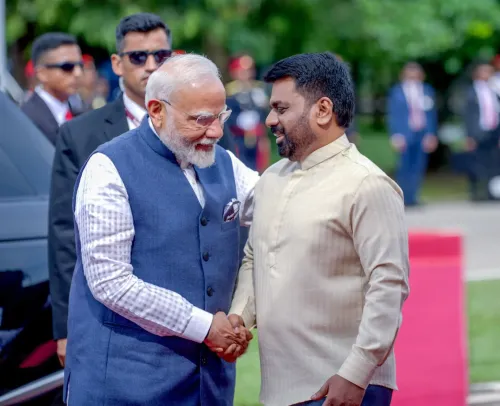
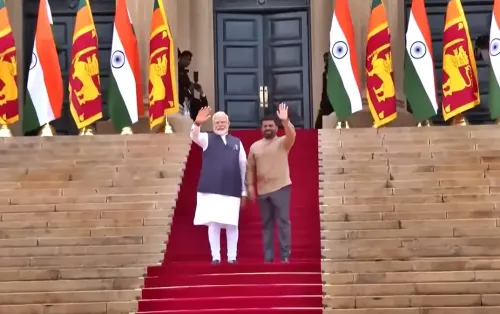
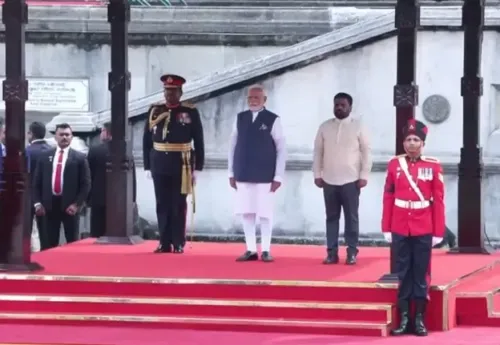
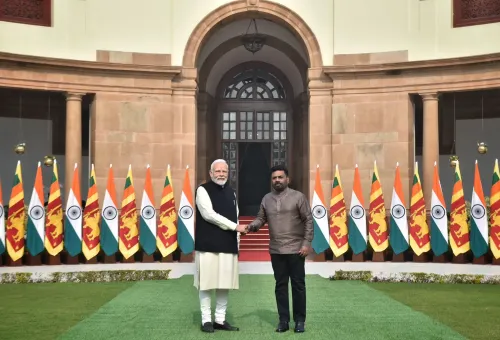
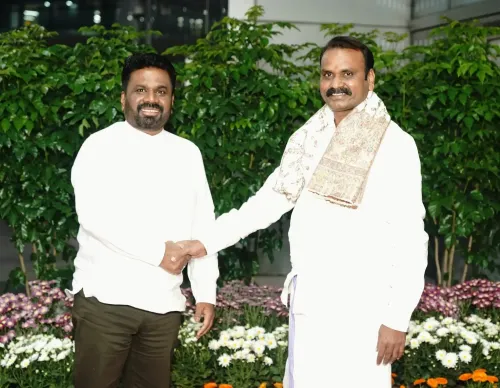
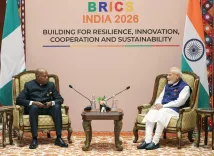
PM Modi thanks Sri Lanka's President Dissanayake, reaffirms bilateral ties

Synopsis
Prime Minister Narendra Modi publicly thanked Sri Lankan President Anura Kumara Dissanayake on 10 June 2026, reaffirming India's commitment to their 'special and multifaceted partnership.' The exchange underlines the enduring Neighbourhood First approach that has defined India's engagement with Colombo, backed by over USD 4 billion in crisis-era support.
Key Takeaways
PM Narendra Modi publicly thanked Sri Lankan President Anura Kumara Dissanayake on 10 June 2026 for warm wishes.
Modi reaffirmed India's commitment to a 'special and multifaceted partnership' with Sri Lanka .
India extended more than USD 4 billion in financial assistance to Sri Lanka during the 2022 economic crisis.
The engagement reflects India's 'Neighbourhood First' policy and the SAGAR doctrine for the Indian Ocean region.
Anura Kumara Dissanayake has been Sri Lanka's President since 2024 , leading a reform-focused administration.
Potential bilateral meetings at BIMSTEC or reciprocal visits could advance pending infrastructure and economic agreements.
Prime Minister Narendra Modi on Wednesday, 10 June 2026 responded to a message from Sri Lankan President Anura Kumara Dissanayake, thanking him for warm wishes and reaffirming India's commitment to the two countries' 'special and multifaceted partnership.'
Context
In his post on X, Modi addressed President Dissanayake directly, writing: 'Thank you, President Dissanayake, for your warm wishes. India deeply values its enduring friendship with Sri Lanka and remains committed to advancing our special and multifaceted partnership.' The exchange reflects the routine but symbolically significant diplomatic signalling that characterises India-Sri Lanka engagement at the highest level.
The exact occasion prompting Dissanayake's original message has not been independently confirmed, but such exchanges between the two leaders are consistent with the active bilateral dialogue that has marked ties since Dissanayake assumed the Sri Lankan presidency in 2024.
Policy Backdrop
India's relationship with Sri Lanka is anchored in its 'Neighbourhood First' policy and the SAGAR (Security and Growth for All in the Region) doctrine, both central planks of Modi's foreign policy since 2014. The framework prioritises development cooperation, maritime security, and people-to-people connectivity across the Indian Ocean neighbourhood.
The partnership gained renewed urgency during Sri Lanka's devastating economic crisis of 2022, when India extended more than USD 4 billion in financial assistance and credit lines — the largest single support package Colombo received from any bilateral partner. That intervention significantly deepened goodwill and positioned India as Sri Lanka's most consequential neighbour-partner. The 1987 Indo-Sri Lanka Accord continues to provide the foundational framework for devolution and security cooperation between the two nations.
Stakeholders and Impact
Sri Lanka's Tamil-speaking communities, concentrated in the Northern and Eastern provinces, remain a key constituency in bilateral conversations, given the shared ethnic and cultural ties with Tamil Nadu. India's consistent diplomatic posture — engaging successive governments in Colombo irrespective of their political complexion — has helped insulate the relationship from domestic political turbulence on either side.
Traders and logistics operators across the Indian Ocean also have a direct stake in stable India-Sri Lanka ties, as the two countries' ports and sea lanes are integral to regional supply chains. Infrastructure and connectivity agreements, including ferry services and energy grid linkages, remain works in progress that benefit both economies.
What's Next
Diplomatic observers will watch for a follow-up in-person meeting between Modi and Dissanayake at multilateral forums such as BIMSTEC, or through a reciprocal bilateral visit, where pending economic and infrastructure agreements could be advanced. The warm tenor of this public exchange suggests the political conditions for such progress are in place. As India continues to manage competition from external powers in the Indian Ocean region, sustaining close ties with Colombo under a reform-focused government will remain a strategic priority for New Delhi.
Point of View
Signalling continuity in India's engagement with Colombo regardless of which political formation holds power there. By invoking the phrase 'special and multifaceted partnership,' New Delhi is reinforcing a bilateral vocabulary that carries weight on connectivity, security, and economic cooperation. The exchange also serves a strategic purpose: as China deepens its footprint in the Indian Ocean, India's visible warmth toward a reform-minded Sri Lankan president helps consolidate influence at a critical juncture. Analysts will read this as a quiet but deliberate move to keep the bilateral relationship on a positive trajectory ahead of potential high-level meetings.
NationPress
13 Sept 2026
Frequently Asked Questions
What did PM Modi say to Sri Lanka's President Dissanayake?
PM Modi thanked President Anura Kumara Dissanayake for warm wishes and reaffirmed that India is committed to advancing its 'special and multifaceted partnership' with Sri Lanka.
Who is Anura Kumara Dissanayake?
Anura Kumara Dissanayake is the President of Sri Lanka since 2024 and leader of the National People's Power alliance, which came to power on a platform of domestic economic reforms.
What is India's Neighbourhood First policy?
India's Neighbourhood First policy, a cornerstone of PM Modi's foreign agenda since 2014, prioritises closer political, economic, and people-to-people ties with South Asian and Indian Ocean neighbours, including Sri Lanka.
How much aid did India give Sri Lanka during the 2022 crisis?
India extended more than USD 4 billion in financial assistance and credit lines to Sri Lanka during its 2022 economic crisis, making it the largest bilateral supporter during that period.
What is the SAGAR doctrine and how does it relate to Sri Lanka?
SAGAR stands for Security and Growth for All in the Region and is India's strategic framework for the Indian Ocean. Sri Lanka, as India's closest maritime neighbour, is central to this doctrine, which covers maritime security, trade, and development cooperation.