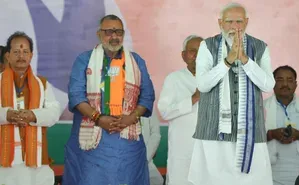
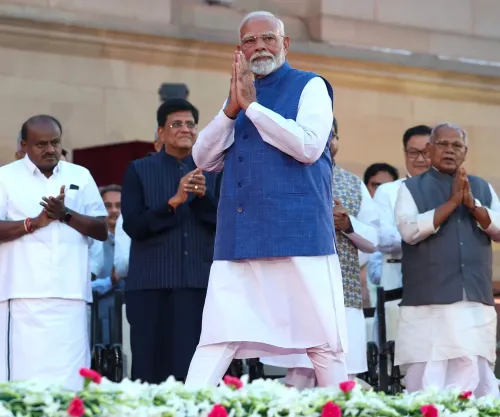
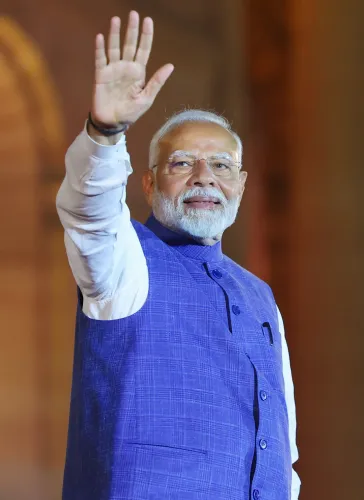
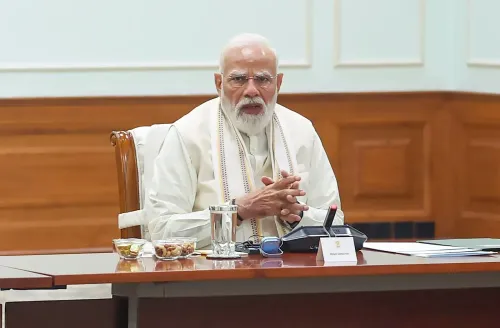
Modi surpasses Nehru as longest-serving PM: Kovind calls it a watershed
Synopsis
On 10 June 2026, Narendra Modi crossed a milestone no elected Indian PM had reached — surpassing Nehru's unbroken tenure. Former President Ram Nath Kovind used the occasion not merely to mark a record, but to argue that the last 12 years represent a civilisational reorientation: from Nehruvian 'quota-permit raj' and colonial cultural deference toward what he calls a confident, Indian-rooted democracy.
Key Takeaways
10 June 2026 : Narendra Modi became India's longest continuously serving democratically elected Prime Minister, surpassing Jawaharlal Nehru .
Former President Ram Nath Kovind wrote a special article in the Hindustan Times calling Modi's tenure a 'watershed period' for post-Independence India.
Kovind cited India's electorate of nearly 100 crore and 744 parties in the 2024 general election (vs 53 in 1951–52) as markers of democratic deepening.
Modi set a goal of mental decolonisation by 2035 at a November 2025 event, urging a decade-long national pledge to shed Macaulay's legacy.
Kovind described Modi as 'an exception to the global trend' of shorter political tenures, contrasting his sustained approval ratings with Nehru's declining popularity.
Former President Ram Nath Kovind has described 10 June 2026 as a landmark date in post-Independence India, marking the day Prime Minister Narendra Modi surpassed Jawaharlal Nehru to become the country's longest continuously serving democratically elected head of government. Writing in a special article in the Hindustan Times, Kovind argued that the milestone is only the surface of a deeper transformation India has undergone since 26 May 2014.
The Historic Milestone
'June 10, 2026, marks a special occasion in the history of India after Independence. On that date, Prime Minister Narendra Modi surpassed Jawaharlal Nehru to become the longest continuously serving democratically elected PM of India,' Kovind wrote. He was careful to note, however, that the raw longevity record 'does not capture the more important dimensions of what may be called the watershed period for India since Independence.'
A Shift Toward 'Indian-ness'
Kovind argued that since 2014, Indian polity has taken 'a decisive turn towards the Indian-ness of the kind advocated by Mahatma Gandhi, Sardar Patel, Babasaheb B.R. Ambedkar, Rajendra Prasad, C. Rajagopalachari, and K.M. Munshi.' He credited Modi with advancing what he described as C. Rajagopalachari's (Rajaji's) model of economic development — one strongly critical of the 'quota, permit and licence raj' that Kovind attributed to the Nehruvian political economy.
On democracy, Kovind noted that Modi has consistently asserted on global forums that 'India is the mother of democracy,' citing ancient democratic practices and referencing Ambedkar's own remarks in the Constituent Assembly on 25 November 1949 about Buddhist democratic institutions dating back 2,500 years. Kovind pointed out that India's electorate now stands at nearly 100 crore — roughly three times the country's total population at Independence — and that 744 political parties contested the 2024 general election, compared to just 53 in the 1951–52 polls.
Modi as a Global Exception
Kovind argued that Modi's sustained popularity sets him apart not just domestically but globally. 'The world of the 21st century has witnessed a much shorter shelf-life of political leaders. Modi stands as an exception to the global trend,' he wrote, contrasting Modi's consistently high approval ratings with what he described as 'severe erosion in stature and popularity' that Nehru experienced during his tenure.
Decolonisation and Cultural Pride
A substantial portion of Kovind's article focused on what he called the reversal of a colonial inferiority complex. He argued that the post-Independence elite — shaped by what he termed the legacy of Thomas Babington Macaulay — had marginalised Indian languages, cultural symbols, and traditions. 'People speaking, working, or expressing themselves in Indian languages were looked down upon as inferior cousins,' he wrote.
Kovind credited Modi with 'front-staging Indian languages, systems, symbols, and belief systems,' and cited a November 2025 event hosted by a leading English-language national daily where Modi urged Indians to undertake 'a 10-year national pledge to shed the colonial mindset rooted in Macaulay's legacy' and set a goal of 'mental decolonisation by 2035.' Kovind also recounted an anecdote about a young relative who told him: 'While I grew up in Nehru's India, he is growing up in Modi's Bharat' — and that his generation was 'better off for it.'
What It Signals Going Forward
Kovind's article, published on the precise date of the milestone, frames the tenure record less as a political trophy and more as evidence of a sustained public mandate. With Modi now into his third consecutive term, the former President's assessment — however sympathetic — raises the question of whether institutional and cultural shifts of this scale are durable beyond any single leader's tenure.
Point of View
On the very day of the milestone, in a mainstream English daily. The civilisational framing is deliberate: by invoking Gandhi, Patel, Ambedkar, and Rajaji alongside Modi, Kovind attempts to root the current government in a broader nationalist consensus that transcends the BJP. What the article does not engage with are the institutional stress-points of a long incumbency — press freedom indices, opposition space, and federal tensions — that independent assessments have flagged during the same period. The durability of the cultural and economic shifts Kovind describes will ultimately be tested not by the length of the tenure, but by whether they outlast it.
NationPress
26 Oct 2026
Frequently Asked Questions
When did Modi surpass Nehru as India's longest-serving elected PM?
Narendra Modi surpassed Jawaharlal Nehru on 10 June 2026, becoming India's longest continuously serving democratically elected Prime Minister. Modi has held office without interruption since 26 May 2014, now spanning three consecutive terms.
What did Ram Nath Kovind say about Modi's tenure?
Former President Ram Nath Kovind described Modi's tenure as a 'watershed period' for post-Independence India in a special article in the Hindustan Times. He argued that beyond the tenure record, the last 12 years represent a decisive shift toward Indian cultural identity, economic confidence, and a rejection of colonial-era mindsets.
What is Modi's 'mental decolonisation by 2035' pledge?
At a November 2025 event hosted by a leading English-language national daily, Modi urged Indians to take a 10-year national pledge to shed the colonial mindset rooted in what he called Macaulay's legacy, setting 2035 as the target year for achieving mental decolonisation. Kovind cited this as emblematic of the cultural reorientation of the Modi years.
How has India's democratic scale changed since Independence?
India's electorate has grown to nearly 100 crore voters — approximately three times the country's total population at Independence. The number of political parties contesting general elections has also risen sharply, from 53 in the 1951–52 election to 744 in the 2024 general election.
How does Kovind compare the Nehru and Modi eras?
Kovind argued that the Nehru years were marked by cultural and economic dependence on the West and a 'quota, permit and licence raj,' while the Modi years are characterised by domestic economic resilience and pride in Indian languages and traditions. He also contrasted Nehru's declining popularity during his tenure with Modi's consistently high approval ratings.