PM Modi visits Sri Ramakrishna Ashrama in Mysuru
Synopsis
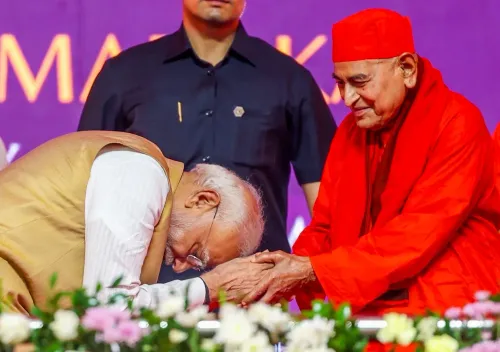
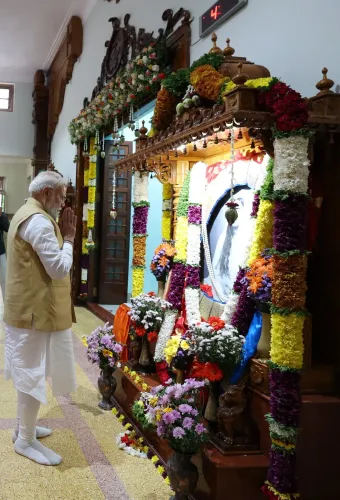
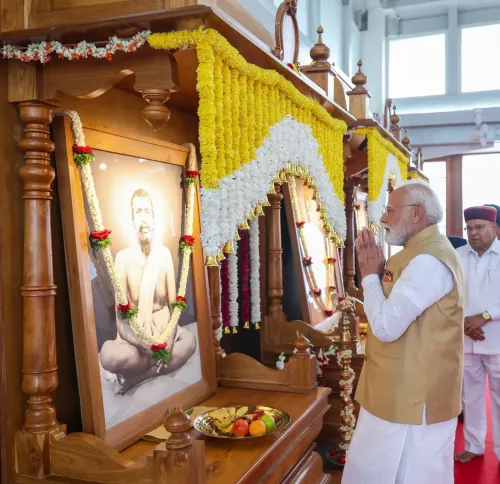
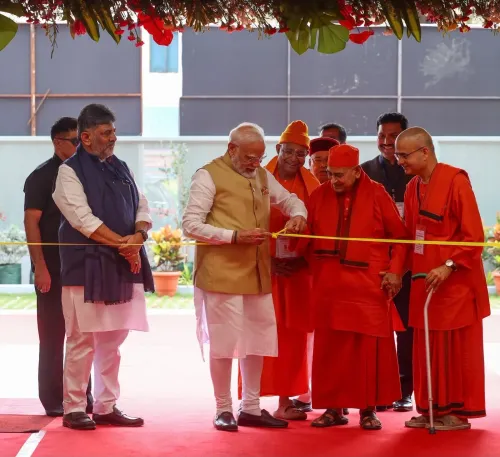
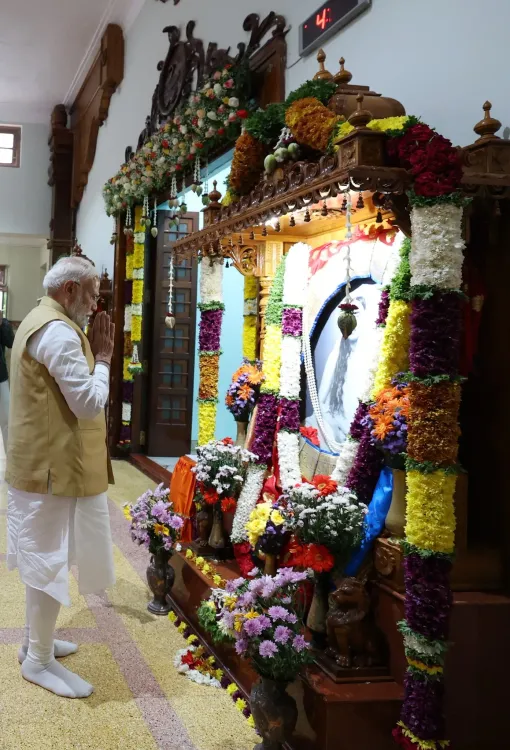
Prime Minister Narendra Modi visited the Sri Ramakrishna Ashrama in Mysuru on August 1, 2026, commending its long-standing social service work and its contributions to youth empowerment, continuing his pattern of engaging with the Ramakrishna Mission's institutions.
Key Takeaways
PM Narendra Modi visited the Sri Ramakrishna Ashrama in Mysuru on August 1, 2026 .
Modi praised the Ashrama's efforts in social service and its contribution to Yuva Shakti (youth empowerment).
The Mysuru Ashrama is a branch of the Ramakrishna Mission , active in education, healthcare, and community welfare since the early 20th century.
Modi has a pattern of visiting and acknowledging Ramakrishna Mission centres as part of his engagement with cultural and spiritual institutions.
The visit aligns with the BJP-led government's repeated emphasis on youth development and India's civilisational heritage.
A centuries-old tradition of seva met modern governance on Saturday, August 1, 2026, as Prime Minister Narendra Modi visited the Sri Ramakrishna Ashrama in Mysuru, praising its decades of social service and its role in shaping India's youth.
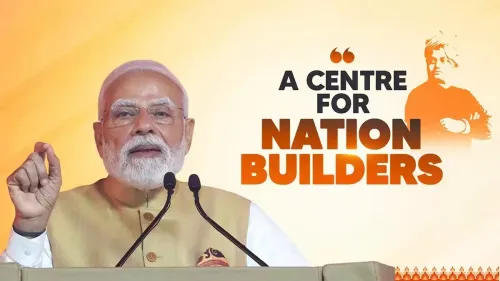
Modi called the Ashrama's efforts 'commendable', citing its contribution to what he termed Yuva Shakti — the strength of young India. The visit adds a cultural and spiritual dimension to what appears to be a broader Karnataka engagement.
A century of seva in the heart of Mysuru
The Sri Ramakrishna Ashrama, Mysuru is a branch of the globally recognised Ramakrishna Mission, rooted in the teachings of Sri Ramakrishna Paramahamsa and carried forward by Swami Vivekananda. Established in the early 20th century, the Mysuru centre has built a sustained presence in education, healthcare, and community welfare across Karnataka.
The Mission's model — spiritual grounding fused with practical service — has made it one of India's most enduring civil-society institutions. Its youth programmes in particular have drawn consistent recognition from successive governments.
Modi, the Mission, and Yuva Shakti
This is not the first time Prime Minister Modi has engaged with Ramakrishna Mission centres. He has periodically visited or acknowledged such institutions, framing their work within his government's broader emphasis on youth empowerment and nation-building through cultural roots. The invocation of Yuva Shakti — a phrase Modi has used repeatedly in policy contexts — signals that the Ashrama's youth-facing programmes resonated with him during the visit.
The Ramakrishna Mission's non-partisan, service-first identity gives such visits a cross-ideological legitimacy that few institutional engagements carry.
Point of View
The Prime Minister ties a spiritual visit to a recurring policy theme, reinforcing the BJP's framing that cultural institutions and youth development are two sides of the same coin. It is soft power politics executed through a temple visit — the optics of governance and heritage, neatly combined.
NationPress
16 Sept 2026
Frequently Asked Questions
Why did PM Modi visit the Sri Ramakrishna Ashrama in Mysuru?
PM Modi visited to acknowledge the Ashrama's social service work and its contribution to youth empowerment, which he described as 'commendable' during his August 1, 2026 visit.
What is the Sri Ramakrishna Ashrama in Mysuru?
It is a branch of the Ramakrishna Mission established in the early 20th century, engaged in spiritual education, healthcare, and community welfare in Mysuru, Karnataka.
What is Yuva Shakti that PM Modi mentioned?
'Yuva Shakti' translates to 'the strength of youth' and is a phrase PM Modi has used frequently to describe India's young population as a driver of national development.
Has PM Modi visited Ramakrishna Mission centres before?
Yes, PM Modi has periodically visited or publicly acknowledged Ramakrishna Mission institutions, recognising their role in social service and youth development.
Where is the Sri Ramakrishna Ashrama located in Mysuru?
The Sri Ramakrishna Ashrama is situated in Mysuru, Karnataka, a city known for its historical and cultural significance.