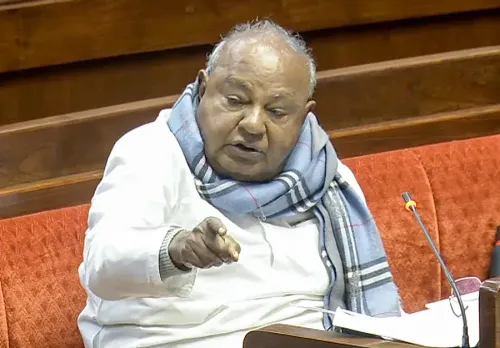
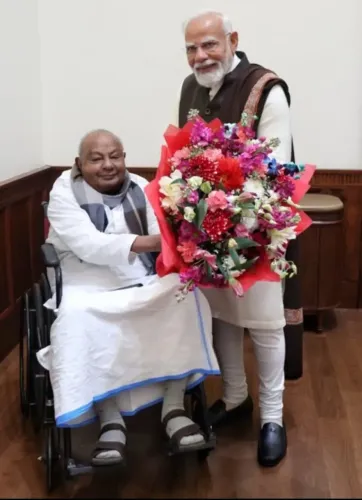
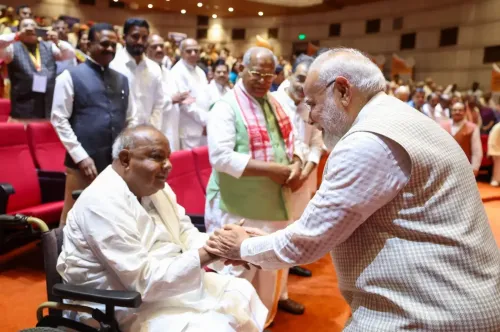
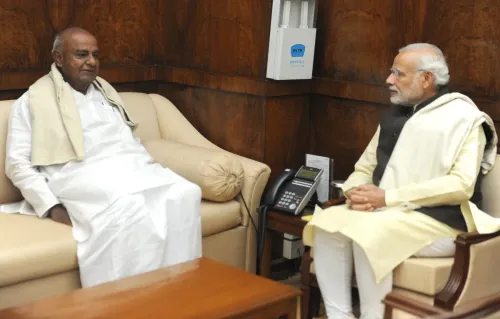
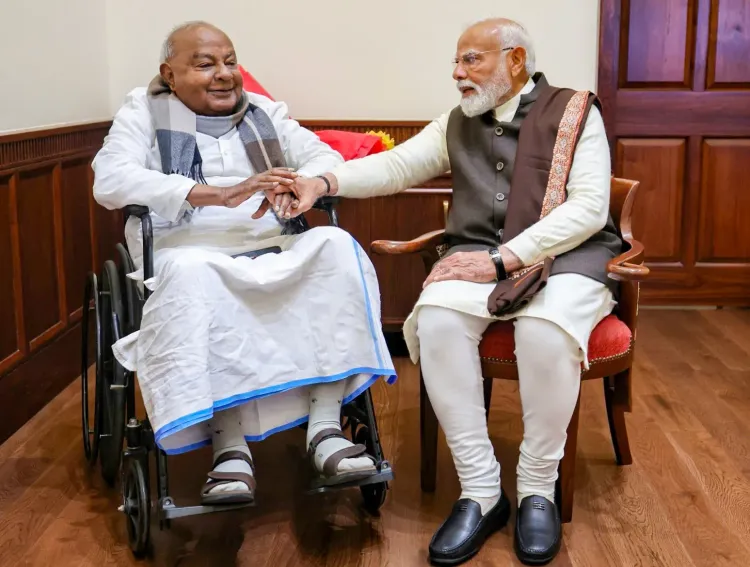
PM Modi wishes HD Deve Gowda on birthday, hails his farmer advocacy
Synopsis
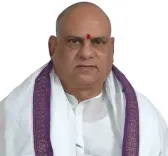
Cross-party tributes poured in as former Prime Minister HD Deve Gowda turned 92, with PM Modi, Home Minister Amit Shah, and Defence Minister Rajnath Singh all honouring his six-decade record of championing farmers and rural India — a legacy that took him from a village in Hassan district to the country's highest office.
Key Takeaways
Prime Minister Narendra Modi wished former PM H.D.
Deve Gowda on his birthday on 18 May , calling his contribution to the nation 'outstanding.' Deve Gowda was born on 18 May 1933 in Haradanahalli village, Hassan district, Karnataka .
He served as the 11th Prime Minister of India from 1 June 1996 , heading a United Front coalition for just under a year.
He was the 14th Chief Minister of Karnataka , elected on 11 December 1994 , and is credited with resolving the sensitive Idgah Maidan dispute in Hubballi.
Home Minister Amit Shah , Defence Minister Rajnath Singh , and BJP President Nitin Nabin also extended birthday greetings, highlighting his lifelong commitment to farmers.
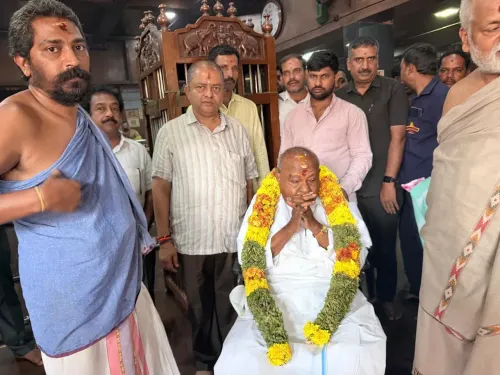
Prime Minister Narendra Modi on Monday extended birthday greetings to former Prime Minister H.D. Deve Gowda, praising his decades-long service to the nation and his deep commitment to farmers and rural communities. The wishes came as Deve Gowda turned 92, having been born on 18 May 1933 in Haradanahalli village, Holenarasipura taluk, Hassan district, Karnataka.
Modi and Senior Leaders Extend Greetings
Prime Minister Modi posted his wishes on social media platform X, writing: 'Best wishes to Shri HD Deve Gowda Ji on his birthday. He has made an outstanding contribution to our nation during his long years in public life. He is known for his deep understanding of policy-related issues and during his long years in public life. Praying for his long and healthy life.'
Union Home Minister Amit Shah called Deve Gowda 'a son of the soil in the truest sense,' adding: 'Your lifelong dedication to farmers and rural India has left an indelible mark on our nation. Wishing you a long, healthy and blessed life.'
Bharatiya Janata Party (BJP) President Nitin Nabin described the former PM as 'a veteran leader and a true Son of the Soil,' while Defence Minister Rajnath Singh credited him with 'noteworthy contribution to India's development, particularly in safeguarding the interests of farmers.'
From Grassroots Organiser to Prime Minister
Deve Gowda's political journey began at the age of 20, when he entered active politics after completing a civil engineering diploma. He joined the Congress Party in 1953 and remained a member until 1962, when he contested the Karnataka Legislative Assembly election as an Independent candidate from Holenarasipura and won. He went on to hold the seat for three more consecutive terms — in the Fourth (1967–71), Fifth (1972–77), and Sixth (1978–83) Assemblies.
His tenure as Leader of Opposition in the Karnataka Assembly from March 1972 to March 1976, and again from November 1976 to December 1977, built his reputation as a formidable parliamentary voice. He later served as Minister for Public Works and Irrigation, initiating several irrigation projects. In 1987, he resigned from the Cabinet in protest over what he described as insufficient budgetary allocation for irrigation.
Notably, Deve Gowda was imprisoned during the Emergency period (1975–76), a phase he reportedly used for extensive reading and political reflection. He emerged, by most accounts, more determined and ideologically sharpened.
Rise to the Nation's Highest Office
Elected to Parliament from the Hassan Lok Sabha constituency in 1991, Deve Gowda became a prominent national voice for farmers' concerns. He was elected the 14th Chief Minister of Karnataka on 11 December 1994, heading the Janata Dal government after the party's resurgence in the state. He is credited with facilitating a peaceful resolution to the politically sensitive Idgah Maidan dispute in Hubballi during his tenure.
Deve Gowda resigned as Chief Minister on 30 May 1996 and was sworn in as the 11th Prime Minister of India on 1 June 1996. He led a United Front coalition government for just under a year, stepping down after losing the support of the Congress party. His ascent to the Prime Minister's office came, by his own account, without active personal ambition for the post — a product of coalition arithmetic rather than individual campaign.
A Legacy Rooted in Agriculture and Rural India
Born to Dodde Gowda and Smt. Devamma, Deve Gowda has consistently drawn on his agrarian background in public life. He is married to Chennamma, and the couple has four sons and two daughters. One son has served as an MLA in Karnataka; another has been elected to the Lok Sabha.
His political philosophy — described by him as 'the politics of the people' — has centred on farmers, underprivileged communities, and rural welfare. Visits to Switzerland, Singapore, and several European and Middle Eastern countries during his tenure as Karnataka Chief Minister reflected his efforts to attract foreign investment and broaden the state's economic profile.
As Deve Gowda marks another birthday, the cross-party tributes underscore the enduring regard in which the veteran leader is held across political lines.
Point of View
A state where the Vokkaliga community vote remains a crucial variable. Praising Deve Gowda's 'farmer advocacy' also allows the ruling dispensation to reinforce its own agrarian credentials at a time when rural distress narratives continue to dog national politics. What the tributes do not address is the institutional legacy of coalition governance that Deve Gowda's United Front era represented — a model of power-sharing that today's majoritarian politics has largely displaced.
NationPress
14 Oct 2026
Frequently Asked Questions
How old is HD Deve Gowda in 2025?
HD Deve Gowda turned 92 on 18 May 2025, having been born on 18 May 1933 in Haradanahalli village, Hassan district, Karnataka.
What is HD Deve Gowda known for?
HD Deve Gowda is known for his lifelong advocacy for farmers and rural communities, his tenure as the 14th Chief Minister of Karnataka, and his role as the 11th Prime Minister of India from June 1996. He is widely regarded as a grassroots leader with deep roots in agrarian politics.
When did HD Deve Gowda become Prime Minister of India?
Deve Gowda was sworn in as the 11th Prime Minister of India on 1 June 1996, after resigning as Karnataka Chief Minister on 30 May 1996. He led a United Front coalition government for just under a year before losing Congress support.
Why did HD Deve Gowda resign as Karnataka's Irrigation Minister in 1987?
Deve Gowda resigned from the Karnataka Cabinet in 1987 in protest against what he described as insufficient budgetary allocation for irrigation projects, a stance consistent with his long-standing advocacy for agricultural infrastructure.
Which party does HD Deve Gowda belong to?
HD Deve Gowda is the patriarch of the Janata Dal (Secular), or JD(S), a regional party with significant influence in Karnataka. He began his political career in the Congress Party in 1953 before moving through various Janata formations.