PM Modi seeks Maa Mahagauri's blessings on Ashtami
Synopsis
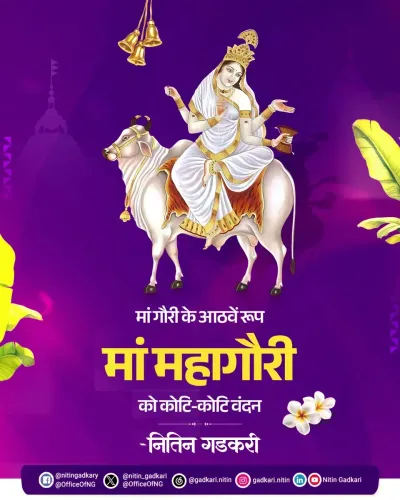
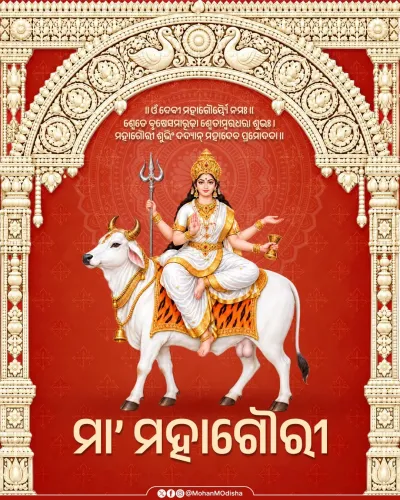
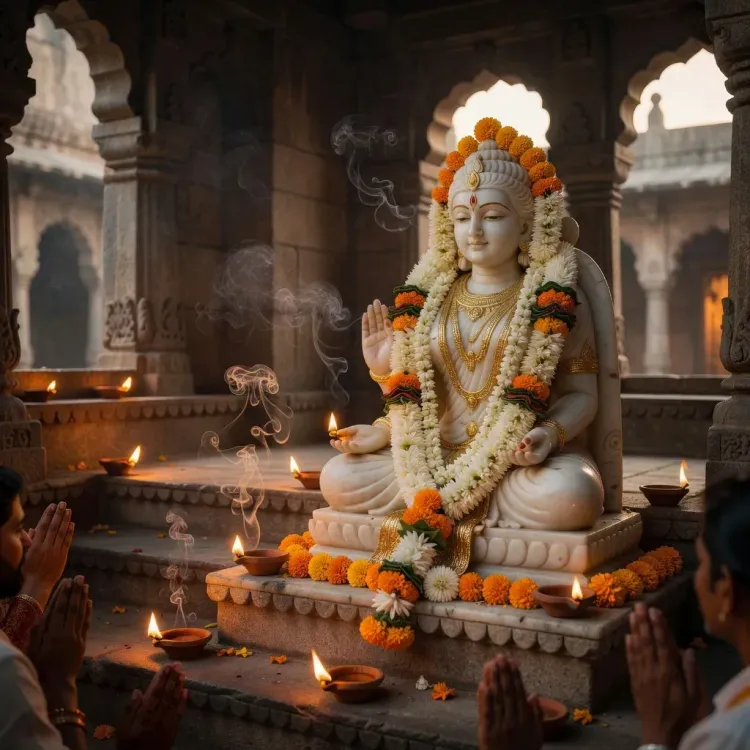
Prime Minister Narendra Modi marked Ashtami during Sharad Navratri 2026 by invoking the blessings of Maa Mahagauri, goddess of sacrifice and penance, wishing every Indian a bright future filled with fame and glory.
Key Takeaways
PM Narendra Modi posted Ashtami greetings on 19 October 2026 during Sharad Navratri.
Maa Mahagauri is the eighth form of Goddess Durga, symbolising purity, forgiveness, and spiritual penance.
The Prime Minister wished all Indians a 'radiant future' and attainment of 'fame and glory' in life.
Ashtami is one of the most significant nights of Navratri, observed with kanya pujan and special rituals across India.
Modi follows a consistent tradition of individually marking each night of Navratri with a dedicated divine greeting.
Dussehra follows Navratri, completing the festive season's peak in October.
On the eighth and most luminous night of Sharad Navratri, Prime Minister Narendra Modi invoked the blessings of Maa Mahagauri — the goddess of sacrifice and penance — wishing every Indian a future bright with glory and renown.
In a message posted on Monday, 19 October 2026, the Prime Minister wrote in Hindi: 'त्याग और तप की देवी मां महागौरी के आशीष से सबका भविष्य उज्ज्वल हो' — 'May the blessings of Maa Mahagauri, the goddess of sacrifice and penance, make everyone's future radiant. May everyone attain fame and glory in life — this is my heartfelt wish.'
Ashtami: The Eighth Night's Significance
Maa Mahagauri is the eighth of the nine divine forms of Goddess Durga venerated during Navratri. Her name means 'the extremely fair one' — symbolising absolute purity, forgiveness, and the spiritual power born of deep tapasya (penance). Devotees across India observe Ashtami with special prayers, kanya pujan, and elaborate rituals, making it one of the most emotionally charged nights of the festival cycle.
A Long Tradition of Public Devotional Messaging
Prime Minister Modi has consistently marked each of the nine nights of Navratri with individual greetings dedicated to the corresponding form of the goddess — a practice that mirrors a broader pattern of Indian leaders publicly honouring major cultural and religious observances. With Dussehra — marking the victory of good over evil — following closely on the heels of Navratri, the festive arc across the country reaches its emotional peak in the coming days.
Point of View
Broadcasting personal devotion to hundreds of millions of followers simultaneously. It also sustains public engagement during a festive period when political messaging naturally blends with cultural sentiment. The consistency of this pattern across years signals institutional intent, not just personal piety.
NationPress
19 Oct 2026
Frequently Asked Questions
Who is Maa Mahagauri and why is she worshipped on Ashtami?
Maa Mahagauri is the eighth of the nine forms of Goddess Durga venerated during Navratri. She symbolises purity, forgiveness, and the power of penance, and is specially worshipped on the eighth night, known as Ashtami, with prayers and kanya pujan .
What did PM Modi say on Navratri Ashtami 2026?
PM Modi wished that the blessings of Maa Mahagauri — goddess of sacrifice and penance — make everyone's future radiant, and that all attain fame and glory in life.
What is Sharad Navratri?
Sharad Navratri is a nine-night Hindu festival celebrated each autumn, dedicated to nine forms of Goddess Durga. It culminates with Dussehra, marking the triumph of good over evil.
Does PM Modi greet every day of Navratri?
Yes, Prime Minister Modi has a consistent practice of posting individual devotional greetings for each of the nine nights of Navratri, each dedicated to the corresponding form of the goddess.
When is Dussehra after Navratri 2026?
Dussehra follows immediately after the ninth day of Navratri, completing the festive arc in October 2026.