PM Modi: India's 'Kaizen' reforms make it top pick for Japanese investors
Synopsis
At the India-Japan Joint Economic Forum, PM Modi borrowed Japan's own Kaizen philosophy to make his investment pitch — a calculated cultural bridge. With India topping JBIC's most-promising-destination survey for four straight years and GDP growth at 7.7%, the message to Japanese CEOs was pointed: the policy groundwork is done; now put your capital to work.
Key Takeaways
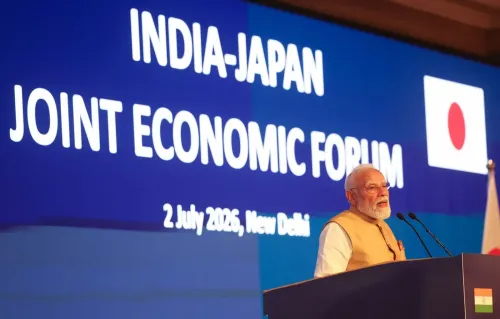
PM Modi addressed the India-Japan Joint Economic Forum in New Delhi on 2 July .
India's GDP growth stood at 7.7 per cent in the last financial year, making it the world's fastest-growing major economy.
Modi invoked Kaizen — Japan's continuous-improvement philosophy — to describe India's 12-year reform trajectory.
India has ranked as the most promising destination for Japanese businesses in the JBIC annual survey for four consecutive years .
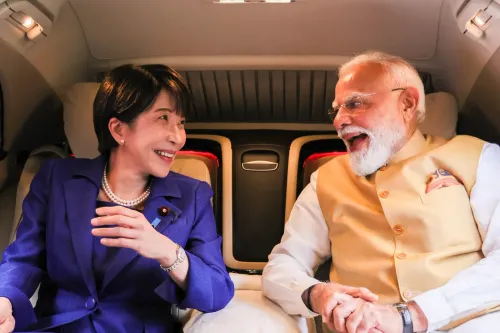
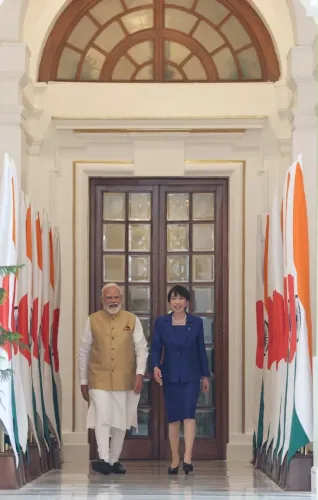
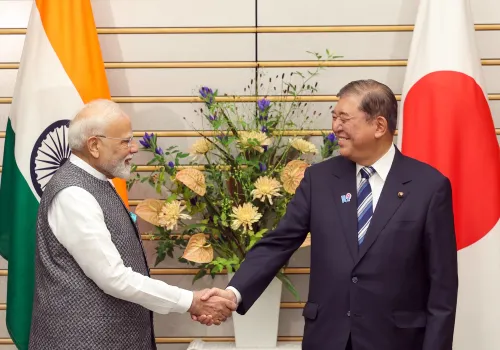
Modi and Japanese PM Sanae Takaichi agreed to deepen cooperation in AI , defence , economic security , and healthcare .
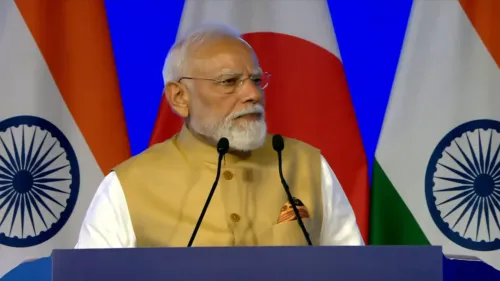
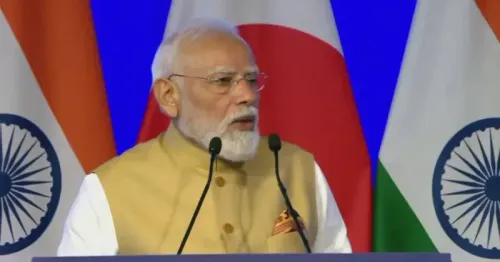
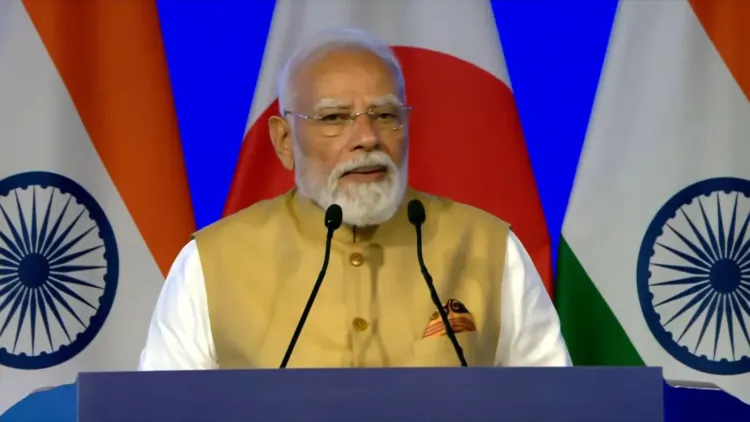
Prime Minister Narendra Modi on Thursday, 2 July told Japanese business leaders that India has been reshaping its economic DNA over the past 12 years by embracing the philosophy of Kaizen — the Japanese principle of continuous improvement — positioning the country as the premier destination for Japanese capital and enterprise. Addressing the India-Japan Joint Economic Forum in New Delhi, Modi cited India's 7.7 per cent GDP growth in the last financial year as evidence of the country's standing as the world's fastest-growing major economy.
The Kaizen Pitch
Drawing a deliberate parallel with Japanese business culture, Prime Minister Modi argued that India's reform trajectory mirrors Kaizen's core ethos — incremental, sustained improvement rather than one-off disruptions. He said the government's agenda has centred on continuous upgrades across governance, taxation, and ease of doing business, making the environment progressively more competitive and investment-friendly.
'Over the last 12 years, we have been transforming our economic DNA by pursuing the philosophy of Kaizen, i.e. continuous improvement in India,' Modi said.
Next-Generation Reforms and Private Sector Opening
Modi highlighted what he described as next-generation reforms in taxation, governance, and business regulations, adding that India is opening every sector to private participation and offering targeted incentive schemes. 'Recently, we did next-gen reforms in taxation, governance and ease of doing business. We are opening every sector to the private sector, and in many sectors we are providing incentives, and I believe you too can benefit from them,' he said, directly addressing the Japanese business audience.
He noted that these incentive structures create fresh entry points for Japanese companies seeking to expand their footprint in India.
India Tops Japan's Most-Promising Destination List
Citing the Japan Bank for International Cooperation (JBIC) annual survey, Modi said India has ranked as the most promising overseas business destination for Japanese firms for four consecutive years. The statistic underscores a structural shift in Japanese corporate sentiment toward India, driven by supply-chain diversification away from China and India's large domestic consumer base.
Notably, this sustained ranking comes at a time when Japan is actively seeking to reduce its manufacturing concentration risk — a dynamic that aligns closely with India's own push to attract high-value industrial investment.
Strategic Partnership: AI, Defence, and Healthcare
Prime Minister Modi said he and Japanese Prime Minister Sanae Takaichi had agreed to deepen bilateral cooperation across economic security, artificial intelligence, defence, and healthcare. He described these agreements as making the India-Japan partnership 'more futuristic and limitless.'
'Our governments have strategic synergy, confidence and, most importantly, clarity. Now, it is your responsibility to turn them into outcomes,' Modi told the assembled business representatives, urging them to convert policy commitments into concrete investments and collaborations.
What Comes Next
The forum signals a renewed push to accelerate Japanese foreign direct investment into India at a moment when bilateral ties are deepening across both economic and security dimensions. Industry observers will watch whether the forum produces specific deal announcements or investment pledges in the coming days, as both governments seek to move from strategic intent to measurable outcomes.
Point of View
Yet Japanese FDI inflows remain modest relative to the size of the bilateral relationship. The real question is whether next-generation reforms have actually reduced on-the-ground friction — land acquisition delays, contract enforcement gaps, and state-level regulatory inconsistency — or whether the improvement is concentrated at the policy-announcement layer. Kaizen, after all, is about verifiable, measurable change at every level of the system, not just at the top.
NationPress
1 Oct 2026
Frequently Asked Questions
What is the India-Japan Joint Economic Forum?
The India-Japan Joint Economic Forum is a bilateral platform where government leaders and business representatives from both countries discuss investment, trade, and economic cooperation. PM Modi addressed the forum in New Delhi on 2 July, using it to pitch India as the leading destination for Japanese businesses.
Why did PM Modi reference the Kaizen philosophy?
Modi used Kaizen — the Japanese principle of continuous, incremental improvement — to draw a cultural parallel between Japanese business values and India's reform approach over the past 12 years. The reference was a deliberate appeal to the Japanese business audience, framing India's governance and regulatory upgrades in terms familiar to Japanese corporate culture.
What does the JBIC survey say about India?
According to the Japan Bank for International Cooperation (JBIC) annual survey, India has been ranked the most promising overseas business destination for Japanese companies for four consecutive years. Modi cited this as evidence of sustained and growing confidence among Japanese investors in the Indian economy.
What sectors are being opened to private investment in India?
PM Modi said India is opening every sector to private participation and is offering incentive schemes in many of them. He specifically highlighted next-generation reforms in taxation, governance, and ease of doing business as creating new opportunities for Japanese companies.
What did Modi and Japanese PM Sanae Takaichi agree on?
Prime Minister Modi said he and Japanese Prime Minister Sanae Takaichi agreed to deepen bilateral cooperation in economic security, artificial intelligence, defence, and healthcare. Modi described these agreements as making the India-Japan partnership 'more futuristic and limitless.'