Kuno cheetah death reports withheld by MP Forest Dept under RTI
Synopsis
The Madhya Pradesh Forest Department has invoked a diplomatic secrecy clause — normally reserved for national security — to block release of cheetah post-mortem reports from Kuno National Park. The move raises pointed questions about accountability in Project Cheetah, a flagship programme that has seen multiple deaths since its 2022 launch.
Key Takeaways
The Kuno Wildlife Forest Division refused to disclose cheetah post-mortem reports, citing Section 8(1)(a) of the RTI Act, 2005 — a foreign-relations exemption.
The refusal was communicated in a letter dated 9 October by Divisional Forest Officer Amar Shrikrishna .
Wildlife activist Ajay Dubey originally filed the RTI on 28 January , seeking post-mortem data on cheetahs that died from 1 January 2024 onwards.
An appellate authority had already ordered the division to act, but the division defied that directive.
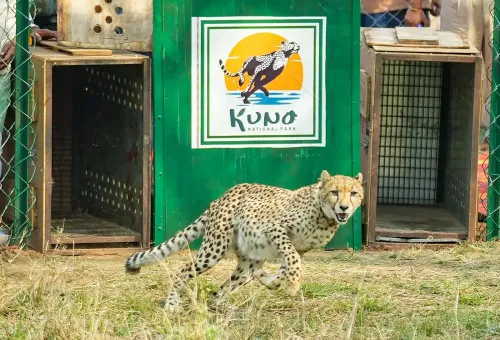
Project Cheetah began in September 2022 with 8 cheetahs from Namibia ; 12 more arrived from South Africa in February 2023 .
The department also reportedly stated no records of official foreign tours related to the project were available in its office.
The Madhya Pradesh Forest Department has refused to disclose post-mortem reports of cheetahs that died at Kuno National Park in Sheopur, invoking a national security exemption under the Right to Information Act to argue that releasing the data could damage India's relations with foreign countries. The refusal, delivered on 9 October 2026, has drawn sharp criticism from the wildlife activist who filed the original RTI application.
The RTI Refusal and Its Legal Basis
In its reply, the Kuno Wildlife Forest Division cited Section 8(1)(a) of the RTI Act, 2005, which permits withholding of information that could prejudice India's sovereignty, security, strategic interests, or relations with a foreign state. Public Information Officer and Divisional Forest Officer Amar Shrikrishna stated in the letter: 'Project Cheetah is a national project of the Government of India, being implemented with international cooperation.'
The reply further noted that the Government of India had signed formal Memorandums of Understanding (MoUs) with foreign countries in connection with the project. On that basis, the division concluded that it was 'not competent to disclose such information' as a regional field-level unit.
What the RTI Application Sought
Wildlife activist Ajay Dubey filed the RTI application on 28 January, seeking information on four aspects of Project Cheetah — including details of foreign tours undertaken by officials, and post-mortem reports along with related findings for cheetahs that died in Madhya Pradesh from 1 January 2024 onwards. After the division's initial response, Dubey filed a first appeal. An appellate order dated 17 September from the office of the Additional Principal Chief Conservator of Forests (Wildlife) and Chief Wildlife Warden, Madhya Pradesh, directed the Kuno division to take necessary action. The division nonetheless refused to provide the reports in its 9 October reply.
Activist's Pushback on Transparency
Dubey has publicly questioned the department's reasoning, arguing that making post-mortem reports available would not harm foreign relations and was instead essential to ensuring transparency and accountability in the conservation programme. He maintained that the findings should be placed in the public domain to establish the verified causes of death of the cheetahs.
According to Dubey, the department also stated that no records of official foreign tours related to the project were available in its office — a claim he found difficult to reconcile with the department's simultaneous assertion that the project involved extensive international cooperation.
Background: Project Cheetah and Its International Links
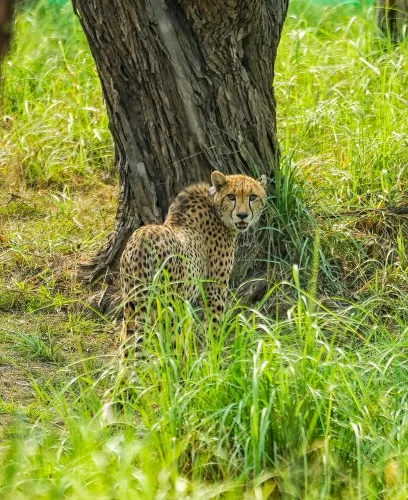
Project Cheetah was launched in September 2022 with the translocation of eight cheetahs from Namibia to Kuno National Park. Twelve more cheetahs were brought from South Africa in February 2023. The programme is coordinated across Kuno National Park, Gandhi Sagar Wildlife Sanctuary, and Veerangana Durgavati Tiger Reserve, with correspondence involving foreign delegations, the National Tiger Conservation Authority (NTCA), the Madhya Pradesh government, and the Union Environment Ministry.
This is the latest in a series of transparency disputes surrounding Project Cheetah, which has faced persistent scrutiny over the number of cheetah deaths since the programme's launch. Notably, the invocation of a foreign-relations exemption — typically reserved for diplomatic and security matters — to block disclosure of veterinary post-mortem reports is unusual and is likely to intensify calls for independent oversight of the project.
What Happens Next
Dubey is expected to escalate the matter to the State Information Commission or higher appellate authorities. Conservationists and opposition voices are likely to use this refusal to press for a broader independent review of Project Cheetah's mortality data. With India's cheetah reintroduction programme drawing global attention, the controversy over disclosure could complicate the government's efforts to present the initiative as a success story.
Point of View
And stonewalling transparency requests only deepens public distrust. The appellate authority had already ordered disclosure; the division's defiance of that order compounds the accountability failure. India cannot credibly pitch its conservation credentials to the world while simultaneously blocking domestic oversight of the very programme it is showcasing.
NationPress
12 Oct 2026
Frequently Asked Questions
Why did the Madhya Pradesh Forest Department refuse to share cheetah post-mortem reports?
The Kuno Wildlife Forest Division refused the RTI request by invoking Section 8(1)(a) of the RTI Act, 2005, arguing that disclosing the post-mortem reports could adversely affect India's relations with the foreign countries it has MoUs with under Project Cheetah — namely Namibia and South Africa. The division also stated it was not competent as a regional unit to release such information.
Who filed the RTI application and what did it ask for?
Wildlife activist Ajay Dubey filed the RTI application on 28 January, seeking four categories of information including official foreign tour details and post-mortem reports of cheetahs that died in Madhya Pradesh from 1 January 2024 onwards. After the initial refusal, he filed a first appeal, which resulted in an appellate order directing disclosure — but the division still refused.
What is Project Cheetah and why does it involve foreign countries?
Project Cheetah is a Government of India initiative to reintroduce cheetahs into India after the species went locally extinct in the 1950s. It launched in September 2022 with eight cheetahs translocated from Namibia to Kuno National Park, followed by twelve more from South Africa in February 2023. India has signed formal MoUs with both countries for the programme.
Can the RTI refusal be challenged further?
Yes. Ajay Dubey can escalate the matter to the Madhya Pradesh State Information Commission after the first appellate order was already issued and ignored. If unresolved, the matter could also be taken to a High Court. Legal experts note that using a diplomatic secrecy clause to block veterinary records is an unusual and contestable application of the RTI exemption.
How many cheetahs have died at Kuno National Park?
The source article does not specify the exact number of deaths but references post-mortem reports for cheetahs that died from 1 January 2024 onwards. Project Cheetah has faced repeated public scrutiny over cheetah mortality since its launch in September 2022, prompting the original RTI application seeking transparency on causes of death.