MP Cabinet Approves Ease of Doing Business Bill 2026
Synopsis
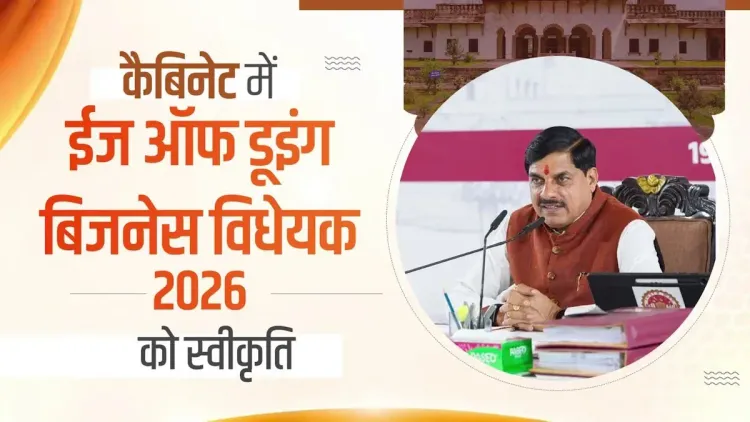
The Madhya Pradesh cabinet on 19 July 2026 approved the Ease of Doing Business Bill 2026, which will consolidate all trade and business approvals under a single-window system. CM Dr. Mohan Yadav announced the decision, marking a major step in the state's regulatory reform agenda.
Key Takeaways
The Madhya Pradesh cabinet approved the Ease of Doing Business Bill 2026 on 19 July 2026 .
Mohan Yadav announced that all business and trade approvals will now be available through a single-window system .
The bill builds on earlier business facilitation measures MP introduced between 2016 and 2020 under the central BRAP framework.
Primary beneficiaries include entrepreneurs, MSMEs , and large investors who currently navigate multiple departments for clearances.
Full implementation will require notification of rules and launch of an integrated single-window portal .
The bill could improve Madhya Pradesh's standing in the annual DPIIT Business Reforms Action Plan rankings.
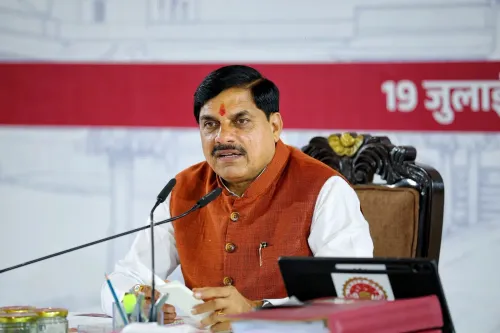
The Chief Minister's Office of Madhya Pradesh announced on Sunday, 19 July 2026 that the state cabinet has approved the Ease of Doing Business Bill 2026, a landmark legislation that will route all business and trade approvals through a single-window system. Chief Minister Dr. Mohan Yadav made the announcement following the cabinet meeting, signalling a significant push to simplify the regulatory environment for entrepreneurs and investors in the state.
Context
Addressing the outcome of the cabinet session, CM Dr. Mohan Yadav stated — 'aaj mantri-parishad ki baithak mein Ease of Doing Business Vidheyak 2026 ka anumodan kiya gaya hai' ['Today in the cabinet meeting the Ease of Doing Business Bill 2026 has been approved'] — and added that all trade and business approvals will henceforth be available through a single window. The bill represents a structural shift in how the state government interacts with businesses seeking regulatory clearances.
Madhya Pradesh has been aligning its business environment with the central government's reform agenda for over a decade. The approval of this bill in a formal cabinet session gives it institutional weight, moving it toward legislative enactment and eventual operational rollout.
Policy Backdrop
India's Department for Promotion of Industry and Internal Trade (DPIIT) has since 2015 ranked states annually on their business reform performance under the Business Reforms Action Plan (BRAP). Single-window clearance systems have been a core benchmark in these rankings, prompting states across the country to enact or update dedicated legislation. Madhya Pradesh had earlier introduced business facilitation measures aligned with the BRAP framework between 2016 and 2020.
The 2026 bill appears to consolidate and upgrade those earlier efforts into a comprehensive legislative framework. By centralising all approvals — spanning licences, registrations, and no-objection certificates across multiple departments — into one portal or counter, the state aims to cut red tape and reduce the time cost of starting or expanding a business.
Stakeholders and Impact
The primary beneficiaries of the bill are entrepreneurs, micro, small and medium enterprises (MSMEs), and large investors who currently navigate multiple departments to obtain clearances. Streamlining this process is expected to reduce compliance burden, lower informal transaction costs, and shorten project gestation periods.
For the state's investment climate, a functioning single-window system could strengthen Madhya Pradesh's position in the DPIIT annual rankings, which in turn influences investor perception and the state's ability to attract domestic and foreign capital. MSMEs in particular stand to gain, as they often lack the administrative bandwidth to manage multi-departmental approval processes.
What's Next
The bill's cabinet approval is a procedural milestone, but full implementation will depend on the notification of rules under the new legislation and the launch of an integrated single-window portal. Observers will watch closely to see how swiftly the state operationalises the system and whether it covers all major clearance categories in a unified interface.
The real test of the bill's impact will be reflected in Madhya Pradesh's subsequent DPIIT ranking and in measurable investment inflows. If the portal is made functional before the next assessment cycle, the state could see a meaningful improvement in its ease-of-doing-business score — and, more importantly, on the ground for businesses seeking to set up or expand operations.
Point of View
And states that lag on this metric risk being passed over in site-selection decisions. For CM Yadav, who took charge in December 2023, this bill also serves as a visible economic governance marker ahead of future electoral cycles. The real political dividend, however, will only materialise if the portal is operationalised swiftly and delivers measurable relief to MSMEs and entrepreneurs on the ground.
NationPress
20 Jul 2026
Frequently Asked Questions
What is the Ease of Doing Business Bill 2026 in Madhya Pradesh?
The Ease of Doing Business Bill 2026 is a legislation approved by the Madhya Pradesh cabinet on 19 July 2026 that consolidates all business and trade approvals under a single-window system, reducing the need for entrepreneurs to approach multiple government departments.
What does single-window clearance mean for businesses in MP?
Single-window clearance means that all licences, registrations, and no-objection certificates required to start or expand a business in Madhya Pradesh will be available through one portal or counter, cutting red tape and saving time.
Who announced the Ease of Doing Business Bill 2026 approval?
Chief Minister Dr. Mohan Yadav announced the cabinet's approval of the Ease of Doing Business Bill 2026 following the council of ministers meeting on 19 July 2026.
How does this bill affect MSMEs in Madhya Pradesh?
MSMEs stand to benefit significantly as they often lack the administrative resources to manage multi-departmental approval processes. The single-window system is expected to reduce compliance burden and lower the time and cost of obtaining business clearances.
What happens after the Madhya Pradesh cabinet approves the bill?
After cabinet approval, the bill will move toward legislative enactment. Full implementation will depend on the notification of rules and the launch of an integrated single-window portal. The state's DPIIT ranking in subsequent cycles will reflect the bill's real-world impact.