MP Cabinet clears 9 bills on UCC, labour, fire safety ahead of monsoon session
Synopsis
In a single cabinet sitting at Jagdishpur, Chief Minister Mohan Yadav's government cleared nine bills — including a Uniform Civil Code, a consolidated Labour Code, and sweeping ease-of-business reforms — setting up the 20 July monsoon session as possibly the most legislatively dense in Madhya Pradesh's recent history.
Key Takeaways
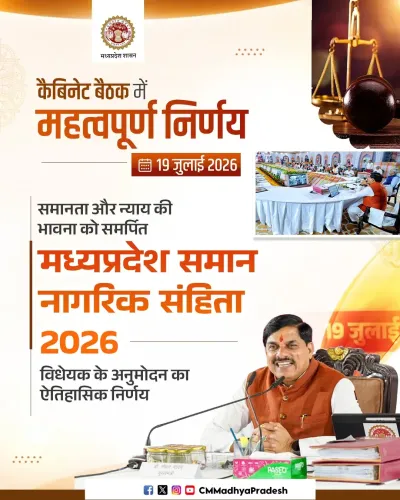
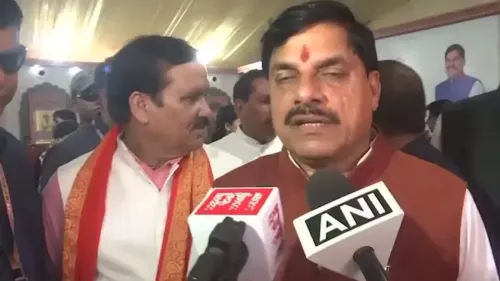
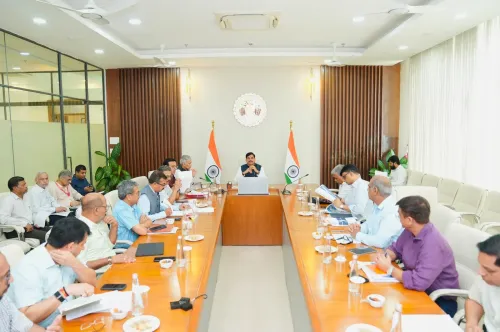
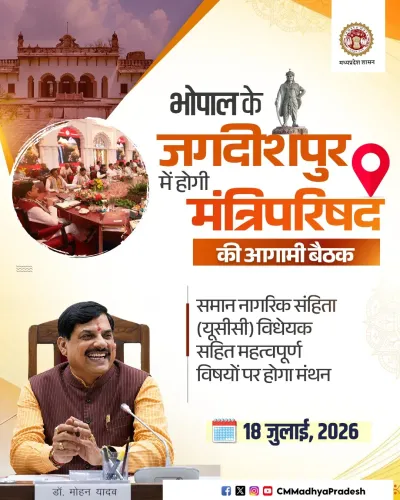
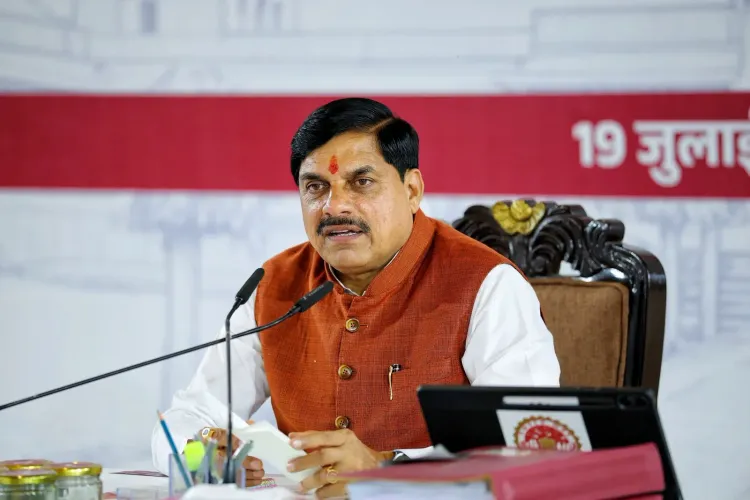
MP Cabinet approved nine bills on 19 July at a special meeting in Jagdishpur near Bhopal , chaired by CM Mohan Yadav .
The MP Uniform Civil Code Bill, 2026 proposes a unified framework for marriage, divorce, adoption, and inheritance across religions, with tribal communities exempted.
The MP Labour Code, 2026 merges six laws into one and allows 24/7 operations in theatres and restaurants under a three-shift system.
The Ease of Doing Business Act, 2026 creates a single-window EoDB Secretariat and waives the Pollution Control Board certificate requirement at the initial approval stage.
Private university land norms relaxed — 25-acre minimum replaced with 'adequate land' criterion to allow city-limit campuses.
All nine bills will be tabled in the MP Legislative Assembly during the monsoon session beginning 20 July .
The Madhya Pradesh Cabinet, chaired by Chief Minister Mohan Yadav, on 19 July approved nine significant bills at a special meeting held at Jagdishpur near Bhopal, laying the groundwork for what is expected to be a landmark monsoon session of the state Legislative Assembly commencing 20 July. The legislative package spans civil law, higher education, labour, industry, and public welfare — among the most sweeping single-session agendas in the state's recent history.
Uniform Civil Code and civil reforms
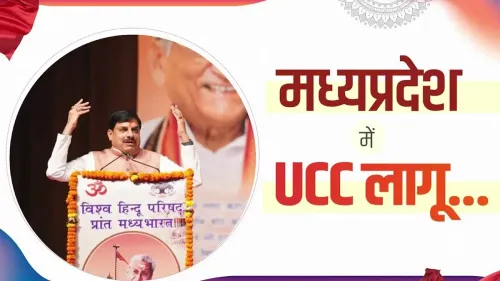
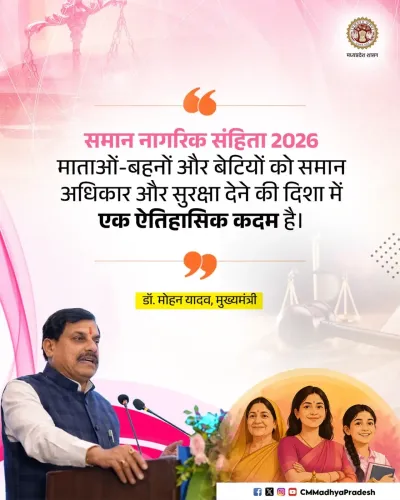
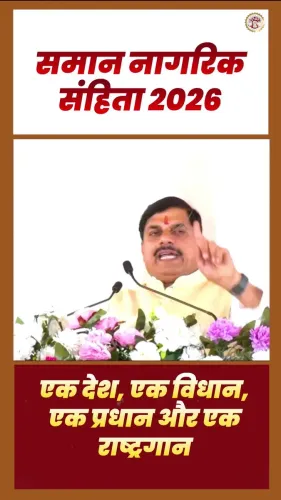
The most consequential of the nine is the Madhya Pradesh Uniform Civil Code Bill, 2026, which proposes a unified legal framework governing marriage, divorce, adoption, and inheritance across religious communities. The bill mandates registration of live-in relationships and guarantees equal property rights for men and women. Tribal communities have been explicitly exempted from its provisions. The move places Madhya Pradesh among a small group of states to have advanced such comprehensive civil legislation.
Education and private university reforms
The Private Universities (Establishment and Operation) Amendment Bill, 2026 relaxes existing land norms, replacing the earlier 25-acre minimum with a flexible 'adequate land' criterion. This change permits universities to come up within or adjacent to city limits, enabling multi-storey campuses and bringing private higher education in line with the priorities of the National Education Policy. The reform is expected to attract private investment and widen access for urban students.
A separate bill — the MP Private Coaching Institutes (Registration and Regulation) Bill, 2026 — prohibits enrolment of students below Class 11, mandates institutional registration, and enforces rules against misleading advertisements. Fee refunds for students who drop out must be processed within ten days, introducing a measure of accountability into the state's rapidly expanding coaching sector.
Labour code and ease of doing business
The MP Labour Code, 2026 consolidates six outdated laws into a single unified code aligned with central legislation. It permits round-the-clock operations in theatres and restaurants under a three-shift system and removes mandatory inspector verification for new establishments, aiming to boost operational flexibility.
The Ease of Doing Business Act, 2026 has been reinforced with the creation of a dedicated EoDB Secretariat under the MP Industrial Development Corporation. The single-window system will streamline industrial approvals, with investors receiving a 'Letter of Establishment' on self-declaration. Notably, the requirement for a Pollution Control Board certificate at the initial approval stage has been waived, potentially cutting months off procedural timelines.
Other key bills approved
The Cabinet also cleared the Madhya Pradesh Highways (Amendment) Bill, 2026, the Madhya Pradesh Repeal Bill, 2026, the Fire Act, 2026, and the Dhanvantari Health University Bill. Amendments to the Panchayat Raj and Cess Acts will exempt rural property registrations under the Swamitva Yojana from applicable levies, easing the financial burden on villagers participating in the land-titling programme.
What comes next
All nine bills are set to be tabled in the Madhya Pradesh Legislative Assembly during the monsoon session beginning 20 July. Analysts and industry bodies are expected to closely watch the passage of the UCC and the Labour Code, both of which carry significant social and economic implications for the state's 8.5 crore-plus population.
Point of View
Not just administrative housekeeping. The UCC is the headline move — but the Labour Code consolidation and the Pollution Control Board waiver for new industries may have more immediate economic impact. The coaching institute regulation is overdue, yet the Class 11 enrolment floor leaves younger students in an unregulated grey zone. What the agenda collectively reveals is a government betting that legislative volume, delivered fast, reads as governance momentum heading into a politically sensitive period.
NationPress
18 Oct 2026
Frequently Asked Questions
What bills did the Madhya Pradesh Cabinet approve on 19 July 2026?
The MP Cabinet approved nine bills including the Uniform Civil Code Bill, the MP Labour Code, the Ease of Doing Business Act, the Private Universities Amendment Bill, the Private Coaching Institutes Regulation Bill, the Fire Act, the Dhanvantari Health University Bill, the Highways Amendment Bill, and the Repeal Bill. All are set to be tabled in the Legislative Assembly from 20 July.
What does the Madhya Pradesh Uniform Civil Code Bill 2026 cover?
The bill proposes a single legal framework for marriage, divorce, adoption, and inheritance across all religious communities in Madhya Pradesh. It mandates registration of live-in relationships, ensures equal property rights for men and women, and exempts tribal communities from its provisions.
How does the MP Labour Code 2026 change existing law?
The MP Labour Code 2026 consolidates six existing labour laws into one unified code aligned with central legislation. It allows 24/7 operations in theatres and restaurants under a three-shift system and removes mandatory inspector verification for new establishments.
What changes has the Ease of Doing Business Act 2026 introduced?
The act establishes a dedicated EoDB Secretariat under the MP Industrial Development Corporation to serve as a single-window approval system. Investors can receive a 'Letter of Establishment' based on self-declaration, and the Pollution Control Board certificate requirement at the initial stage has been waived to reduce procedural delays.
Who is exempted from the Madhya Pradesh Uniform Civil Code?
Tribal communities in Madhya Pradesh have been explicitly exempted from the provisions of the Uniform Civil Code Bill 2026, according to the cabinet's decision.