MP UCC draft: Jagdishpur cabinet meet set to clear 404-section bill
Synopsis
Madhya Pradesh is days away from tabling a 404-section Uniform Civil Code bill that would, for the first time in the state, make live-in relationships legally registrable and oral divorces void. With the cabinet set to meet in historic Jagdishpur on Sunday and the Assembly session opening 20 July, MP could become only the third Indian state to enact a UCC — and the political battle lines are already drawn.
Key Takeaways
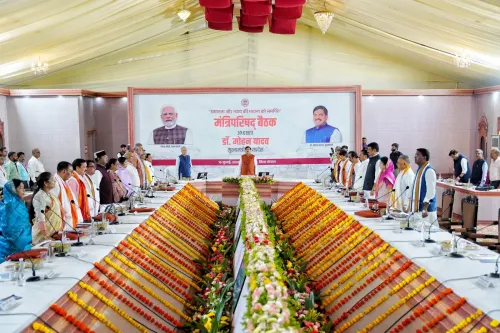
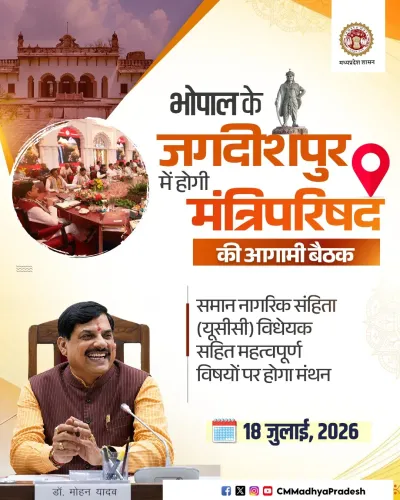
The Madhya Pradesh cabinet is expected to approve the UCC draft at a special meeting in Jagdishpur on Sunday .
The bill contains 404 sections and seven schedules , drafted by a committee chaired by retired Supreme Court Justice Ranjana Prakash Desai .
Live-in relationships must be registered before a registrar; unregistered cohabitation would be punishable.
Oral divorces would be invalidated; remarriage without legal divorce declared a criminal offence .
The Scheduled Tribe community is proposed to be kept outside the UCC's scope, mirroring Gujarat and Uttarakhand .
Over 9.58 lakh public suggestions were reviewed; the bill is set for tabling on 20 July .
Madhya Pradesh is on the verge of becoming the latest Indian state to adopt the Uniform Civil Code (UCC), with the state cabinet expected to approve the final draft at a special meeting on Sunday in Jagdishpur (historically known as Islamnagar), a town near Bhopal. The approved draft will then be tabled in the Legislative Assembly during the upcoming monsoon session, scheduled to begin on 20 July.
A high-level committee chaired by retired Supreme Court Justice Ranjana Prakash Desai has submitted its final report — spanning three volumes — to Chief Minister Mohan Yadav, proposing sweeping reforms to personal laws governing marriage, divorce, inheritance, and adoption for all citizens regardless of religion.
Key Provisions in the Draft Bill
The draft, comprising 404 sections and seven schedules, mandates registration of marriages across all faiths within one to two months of solemnisation. Oral divorces would be rendered legally invalid, and divorce would be recognised only upon completion of the formal legal process. Remarriage while a spouse is alive and without a legal divorce would be treated as a criminal offence under the proposed law.
In a significant provision, live-in relationships would require mandatory registration before a registrar. Cohabitation without such registration would be made punishable. Children born out of registered live-in relationships would be granted statutory rights to ancestral property.
Who Is Exempt and Why
Following the precedent set by Gujarat and Uttarakhand — the two states that have already enacted UCC legislation — the Madhya Pradesh draft recommends keeping the Scheduled Tribe (ST) community outside the code's ambit. This exemption is intended to protect indigenous customary practices that are constitutionally safeguarded.
Scale of Public Consultation
The committee's report includes a detailed analysis of over 9.58 lakh public suggestions gathered through various channels, lending the process a degree of democratic grounding that the government has highlighted as distinguishing this effort from top-down legislative mandates.
Political Responses
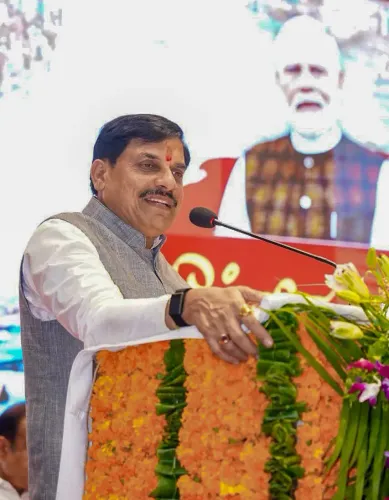
Chief Minister Mohan Yadav has framed the UCC as a measure to ensure equal legal rights for all citizens, with particular emphasis on strengthening women's rights. He has repeatedly pressed the Indian National Congress (INC) to publicly clarify its stance on the legislation.
State Congress President Jitu Patwari has criticised the move, alleging that the Bharatiya Janata Party (BJP) government is deploying the UCC to divert public attention from more pressing concerns — including inflation, unemployment, agrarian distress, and women's safety.
What Happens Next
Once the cabinet clears the draft, the Law Department will prepare the final bill for tabling in the Assembly on 20 July. Following passage and the Governor's assent, the UCC will be formally notified to come into force across Madhya Pradesh — potentially making it the third state in India to implement such a code.
Point of View
Renamed from Islamnagar, is a deliberate signal about cultural reclamation. The live-in registration clause is the most legally contested provision: critics argue it extends state surveillance into private domestic arrangements in ways that existing law does not. The ST exemption, while constitutionally prudent, also reveals the limits of 'uniformity' — a code that carves out the country's largest protected community is, by definition, partial. Whether the bill survives judicial scrutiny on the live-in and criminal-remarriage clauses will be the real test, not the Assembly vote.
NationPress
17 Oct 2026
Frequently Asked Questions
What is the Madhya Pradesh UCC bill?
It is a proposed Uniform Civil Code for Madhya Pradesh, comprising 404 sections and seven schedules, that would bring all citizens — irrespective of religion — under a single set of laws governing marriage, divorce, inheritance, adoption, and live-in relationships. The cabinet is expected to approve the draft on Sunday before it is tabled in the Assembly on 20 July.
What does the MP UCC say about live-in relationships?
The draft mandates that live-in couples register their relationship before a registrar. Cohabitation without registration would be made punishable under the code. Children born from such registered relationships would be entitled to statutory rights over ancestral property.
Who is exempt from the Madhya Pradesh UCC?
The Scheduled Tribe community is proposed to be kept outside the UCC's ambit, following the approach adopted by Gujarat and Uttarakhand. This is intended to protect constitutionally safeguarded indigenous customary practices.
What happens to oral divorces under the MP UCC?
Oral divorces would be legally invalidated under the proposed code. Divorce would be recognised only after completion of the formal legal process, and remarrying while a spouse is alive without a legal divorce would be treated as a criminal offence.
What is the Congress's position on the MP UCC?
State Congress President Jitu Patwari has criticised the move, alleging the BJP government is using the UCC to distract from issues such as inflation, unemployment, farmers' problems, and women's safety. The party has not publicly stated whether it will oppose the bill in the Assembly.